Cultural Norms vs. Inner Strength
Historically developed cultural norms frequently have cultural welfare as their primary aim ― not, therefore, necessarily the Inner Strength of individuals. History of Homo sapiens sapiens In the evolution of the human species, the need to make individual humans adhere to larger groups favored common (to the group) elements to adhere to and conform to. Read the full article…
What People Want or Need
Surface-level wanting is frequently very different from deeper-level needing ― even fundamentally different. This hampers inner growth and can lead to burnout and depression. Fundamentally With some openness, everybody can feel that in-depth wishes and desires somewhat differ from what shows at first sight. For instance, attaining a slightly deeper level during coaching may already Read the full article…

The Ethical Coach
AURELIS is a growth philosophy. AURELIS coaching is about growth. Being an AURELIS coach is about growth. This is an entirely ethical stance. Please read about AURELIS five ethical values. Note that this is not an ethics of “Thy must or thy may not.” Professional Being an ethical coach is not just relevant to professional Read the full article…
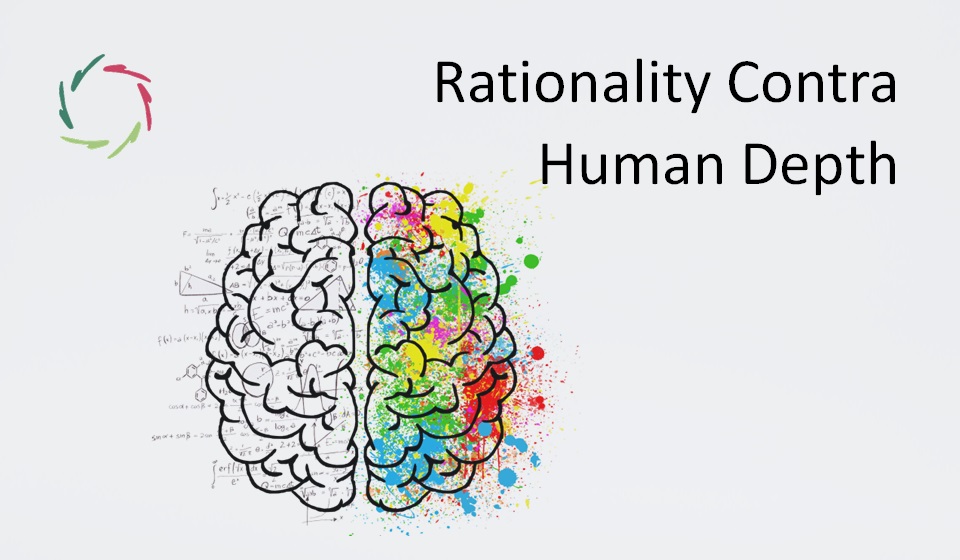
Rationality Contra Human Depth
For many people, rationality stands opposite to human depth ― a profound misunderstanding. This includes many scientists ― or even especially the latter. Difference conceptual – subconceptual This is a more relevant distinction. If we put merely conceptual versus merely subconceptual, we can talk rightfully about opposites. Of course, nothing is entirely the one or Read the full article…
The Cultures Thing
Can people from different cultures sufficiently understand each other to contribute significantly to the intercultural exchange of profound communications? In other words, does planetarianism presently make a chance? If so, will it make the world a better place? Toward a certain future I believe that people from any culture can evolve in their capability of Read the full article…
Flower Power vs. Uniform Power
We may need both ― without exaggeration in any. Flowery power Each flower is different. Yet none grow into the ground. There is uniformity even in flowers. Nevertheless, many flowers in a field don’t take advantage of each other’s strength. One danger in being flowery is therefore that each flower is fragile and can easily Read the full article…
From Inside Out
What comes from the inside out makes you stronger ― Inner Strength. What is imposed (even by yourself) from the outside makes you weaker. What is ‘from inside out’? The outside is the merely conceptual side. ‘From inside out’ is the potential to grasp something without pinning it down on the outside. It starts from Read the full article…
Dealing with Hard and Weak from Gentle and Strong
Strong-gentle people may be extra challenged by hard-weak ones. It’s good to understand causes and consequences beforehand. Please read Weak, Hard, Strong, Gentle. Misinterpretations may make the dealing pretty challenging. A hard-weak person is defensive by nature. His whole environment and worldview are tainted in a hard-weak fashion ― therefore, very anxiety-provoking in many ways. Read the full article…
Whirlpool Illness
From medical uni-causal to multicausal to whirlpool-causal thinking. No black or white Few people really think there is only one possible cause for each disease. Pragmatically however, many people act as if finding a cause is the end of the meaningful causal search. Including physicians. Being pragmatical With the cause found, proper management should be Read the full article…
The Case of Whatever
Too many people live in an unfortunate state of inner dissociation ― possibly provoking anxiety and self-defeat. Meanwhile, they try to explain the unexplainable to themselves and others with whatever means available. Inner dissociation: as if anything mental is directly available to conscious control. How many people? In my experience, more than enough. Of course, Read the full article…

Goodness, Badness, and Ugliness of Ego
A good appreciation of ego is indispensable for attaining a better world in which ego plays its proper part ― no less, no more. One may think that one has gotten rid of one’s ego. Yet, in that very sentence, look who’s talking and thinking ― ego itself? Indeed, ego is a master in disguise. Read the full article…
Labyrinthine
Ancient Greek myths frequently have symbolic value ― being about what may happen in the deeper layers of the human psyche. The Minotaur, half man, half godly bull This beast – held captive in an elaborate maze or labyrinth by King Minos at Knossos – was fed with human sacrifices from Athens. The Athenian prince Read the full article…
Compassion Flows from Self-Compassion
Compassion is impossible without self-Compassion. The former is an overflow of the latter. Please read Compassion, Basically. Overlap Compassion results from an interpersonal overlap of mental patterns. This comes down to activity of mental-neuronal patterns (MNPs) in each involved brain. Through the mental overlap, the happening is also an interpersonal MNP-overlap. Thus, technically, self-Compassion and Read the full article…
Grief
This text is a somewhat objectified gauge of the depths of grief. Within this understanding, one may hopefully also better grasp it emotionally. Sure it hurts. Don’t let this text make it hurt less but, perhaps, differently. Impermanence of being Grieving over a deceased loved one is principally grieving over loss. The loved one has Read the full article…
To be Free is to be Meaningful
Freedom may be a feeling or a being. It’s about being able to do what one wants to do ― this is, what one finds meaningful, one way or another. Being compelled to act For instance, out of patriotism, one may feel compelled to risk one’s life in battle. This ultimate sacrifice is given in Read the full article…
Practicalities of Free Will
Free will is a term that stands for many concepts, and within each concept for a cloud of meaningfulness. That doesn’t make it practically less important. Terms and concepts Also, this doesn’t mean there are many free will’s. That would mean one can fight about what is the correct free will. Such fighting is done Read the full article…
Let the Real Consciousness Come Forward
Besides many definitions of consciousness, there is a distinction between consciousness as something very worldly versus something magical. What will it be? Consciousness as a functionality Humans have received consciousness from Mother Nature because the pre-conscious era evolved toward a state in which consciousness was gradually becoming an asset for survival. In this sense, consciousness Read the full article…