What Schizophrenia Shows Us about Normal Thinking
When coherence weakens in schizophrenia, processes normally hidden beneath the surface become visible. These processes – prediction, symbolism, cultural resonance – shape every moment of human experience. By looking closely, we learn not only about psychosis but about the fragile and beautiful architecture of normal thought. This blog explores that shared terrain with depth and Read the full article…
Cultural Psychosis?
When shared narratives weaken and symbolic life becomes brittle, societies may drift toward rigidity or chaos in their attempt to make sense of overwhelming pressures. Cultures, like individuals, can lose coherence. By examining these processes with depth and Compassion, we can understand how cultural meaning fractures — and how it can be restored. When cultures Read the full article…
Is Compassion the Cure for Schizophrenia?
Behind symptoms of schizophrenia lies a human struggle for inner coherence. When that coherence wavers, life can swing between chaotic overflow and rigid shutdown. The question is then not only what medicine can do, but what we, as fellow human beings, can offer. Compassion, understood in depth, may not be the cure — yet without Read the full article…
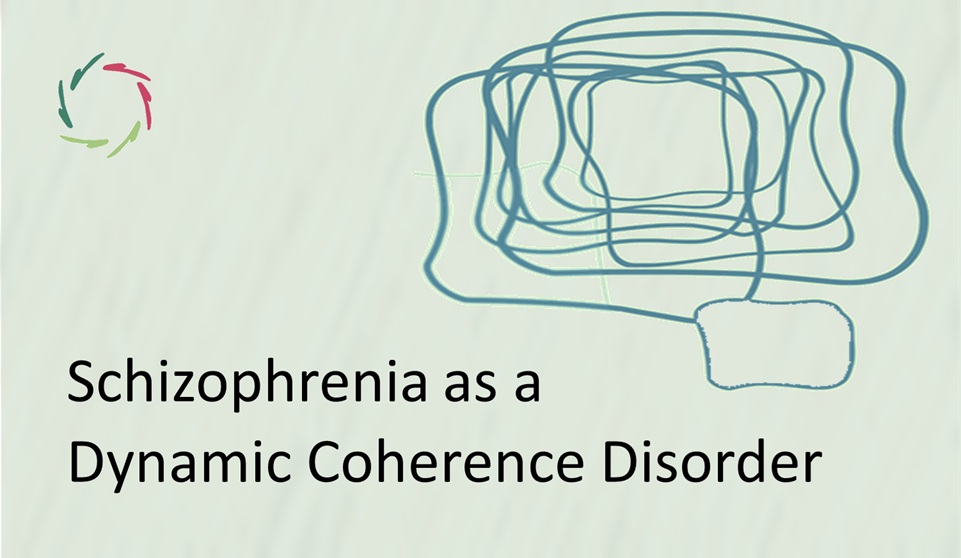
Schizophrenia as a Dynamic Coherence Disorder
Schizophrenia is usually approached through isolated lenses ― either singular or as a combination of singularities: biological, psychological, or social. Yet symptoms often reflect patterns that boldly cross these boundaries. This blog proposes a unified way of seeing schizophrenia as a Dynamic Coherence Disorder, where stability is at risk across the brain, symbolic meaning, and Read the full article…

Symbolism-Support in Schizophrenia
Schizophrenia involves a surge of symbolic material that can overwhelm a person when integration falters. Earlier blogs explored how such surges ‘break through the roof’ and how cultural environments shape the brain’s response. This blog focuses on how symbolic depth can be supported rather than suppressed. It describes a gentle, non-coercive stance that helps symbolic Read the full article…
Schizophrenia in Cultures and the Brain
Schizophrenia occurs in every part of the world, yet cultures differ remarkably in how the condition unfolds and how people live with it. These variations reveal that biology alone cannot explain the wide range of outcomes. This blog explores the rich interplay between cultural meaning and neuronal patterns, offering a broader view of schizophrenia’s many Read the full article…
Schizophrenia: Analogy Through the Roof
Schizophrenia has often been described as a disease of the brain, yet this tells little about what a person actually goes through. In the AURELIS view, the phenomenon becomes clearer when seen as analogy rising too strongly and too vertically, breaking the inner roof that usually contains symbolic experience. This perspective neither glorifies nor reduces Read the full article…
Psychosis Revisited
Psychosis is often framed as a static illness, a clinical condition defined by its symptoms and pathology. But what if psychosis could be understood as a dynamic imbalance within the human mind-body unity — a disruption in the intricate dance between logical, structured thought (conceptual) and intuitive, emotional depth (subconceptual)? Drawing from Paris Williams’ Rethinking Read the full article…
Schizoid Thinking
Schizoid thinking is characterized by detachment from immediate reality, allowing for abstract, imaginative, or emotionally distant thinking. It often involves withdrawing into one’s inner world to explore thoughts and ideas that are not bound by present, external circumstances. Gentle Caution: Before diving into this discussion, it’s essential to recognize that schizoid thinking, while a natural Read the full article…
From Symbolism to Psychosis?
I see a continuum between both. That should not be a reason to avoid symbols. Quite the contrary. Mainly: no blame to anyone! A continuum Working with symbols may in unfortunate circumstances lead to a darker progression. This needs to be managed. Actually, any symbolic experience [see: ‘Symbolism lost. Symbolism regained.’] can be seen as Read the full article…
31. Psychosis: a Needless Tsunami
A tsunami requires a surfboard About ripples and a tsunami Is an abnormality of the brain the cause of psychosis? One can at least search for that. Probably one will find, in due course, more and more elements that fit the bill. I am sure one will. Everything that happens at a psychological level, has Read the full article…
Schizophrenia (and Other Psychotic States)
Schizophrenia is not an AURELIS-indication. However, I personally think it would be a good one, helpful to schizophrenics. The absence of this indication has legal reasons: Suppose someone with an upcoming psychosis uses the indication and gets a psychotic episode… Is AURELIS to blame? At the same time I think this is (as I write Read the full article…