
Collective Morality
This is not about any concrete ‘habits and rules of moral behavior.’ Collective morality is about the thinking about such habits and rules. It should be based on rationality as much as possible. This rationality should be founded on two endeavors as always when rationality is optimally exercised: taking into account as much as possible Read the full article…

Morality VERY Broadly
Medicine, education, judicial system… morality is relevant not only towards any direct purpose but also in how things are done. This may be seen as the deeper purpose. VERY? Morality being about ‘relief of suffering’ – of oneself and others [see ‘Morality Is the Relief of Suffering’] – it is relevant in many domains, including Read the full article…
Don’t Think Too Fast: “I Do Know It”
AURELIS, or more generally the deeper self, is not easy to grasp. That is clear. Less obvious perhaps is that it is VASTLY not easy to grasp. According to me, the greatest difficulty is an ego that is standing in the way. Is it really necessary to thoroughly ‘grasp’ it? According to me, the greatest Read the full article…
A Symbol for the Deeper Self
Religions often find the use of symbols very important, not only in stories but also physically: using statues of wood or stone, special ‘sacred spaces’ with an altar, incense, and the like. There is also a community of people, who come together at certain times: these gatherings are ‘symbols’ too if they are meaningful for Read the full article…
A Synthesis of a Synthesis
Below are some of the things that, together, straightforwardly show the importance of AURELIS. They are put in a super direct way and so they lack some nuance. This is a synthesis of a synthesis: The placebo-effect is a proof of the huge power of the deeper self. Lots of cases of being-ill result from Read the full article…

The Real Power of a World Model
A world model is not only a model of the world. It is also a model that comes from the world (the world in a certain model) and that can act upon an individual in a very powerful way. First of all, dear reader, it can act upon you too. Allow me to be very Read the full article…

The ‘AURELIS Choice’
In short: this is about a conscious choice for the ‘total person’, in which ego at least has a very interesting place but is not standing in the way of the ‘deeper self’. It is a choice of ego itself to occasionally take a step aside. Team-play. AURELIS is an attempt to realize this in Read the full article…

AURELIS USP: ‘100% Rationality, 100% Depth’
USP: ‘Unique Selling Proposition’. A term from the hard business world. That is, of course, also this world. A USP induces someone to echo, in just a few words, the basis of what a product/project is about. It is a message, a ‘promise’. The AURELIS take goes to something that indicates: ‘100% rationality, 100% depth’. Read the full article…

Peace
It’s the people who create the war. Of course. A similar cliché is: peace only starts within yourself, and nowhere else. But what does that mean, ‘peace within yourself’? Peace does not start at the enemy, but at the enemy of the enemy. At yourself, thus. And then also at the enemy. Because even that Read the full article…
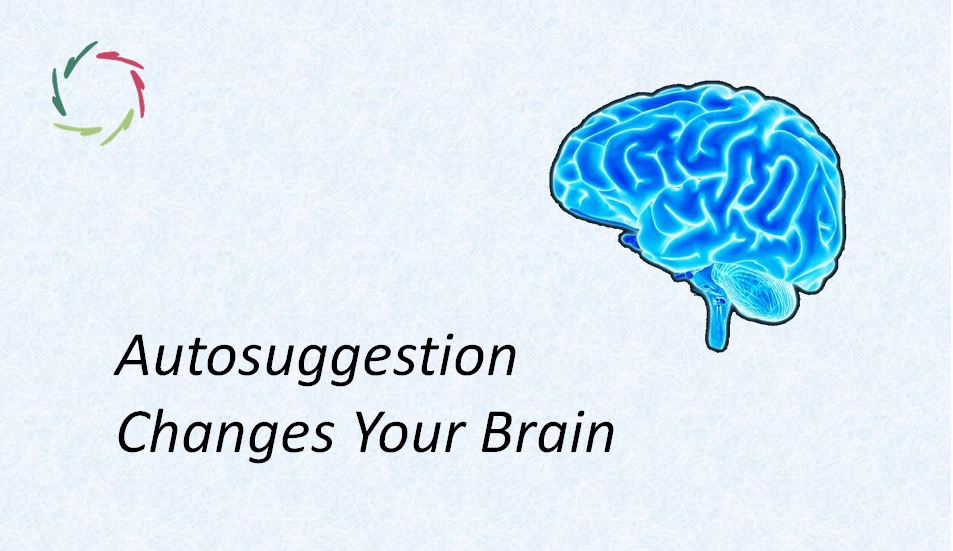
Autosuggestion Changes Your Brain
Something that may hold someone back from really being able to put faith in the influence of autosuggestion on the body, is the idea: psyche is abstract – how can this have an impact on the physical, concrete body? This is a question that’s on many people’s minds since long and probably many people will Read the full article…
Expansion of Consciousness
Curious how so many different worlds can live in one word People talk often about expansion of consciousness as something that is quite the opposite from what is my understanding of it. At the very least, I think, it is interesting to clarify this distinction. Because AURELIS is about expansion of consciousness from a to Read the full article…

Subconceptual Processing in Health and Healing (From My PhD Thesis)
People worldwide face enormous healthcare problems for which the more resources we focus on solving them, the worse they become. Many solutions give temporary relief, followed by further deterioration. [see About ‘Subconceptual’] Some examples are depression, obesity, psycho-somatic disorders and drug addiction. Looking at pharmaceutical drugs. In spite of the general view that these cure Read the full article…

Infinity
Mathematicians are working on the concept of ‘infinity’ and search it somewhere ‘at the end’ of an infinite series. In that case you may search for a very long time .. Though: the end of a series is still within that series and since that series, by definition, has no end, infinity doesn’t exist within Read the full article…

What Is Morality to A.I.?
Agreed: it’s not even evident what ‘morality’ means to us. Soon comes A.I. Will it be ‘morally good’? Humans have a natural propensity towards morality. Whether we tend towards ‘good’ or ‘bad’, we have feelings and generally recognize these in others too, in humans and in animals. We share organic roots. We recognize suffering and Read the full article…

Less Control is More Control
The urge to control can seem like an addiction. Though it is obvious that an addict, on the contrary, has lost all control! ‘Knowledge is power.’ It has always been like that and it will forever remain so. What is changeable is the meaning of these words. Does ‘knowledge’ solely contain information or does it Read the full article…
Burn the Flag. Disobey the Law. Criticize Your Group.
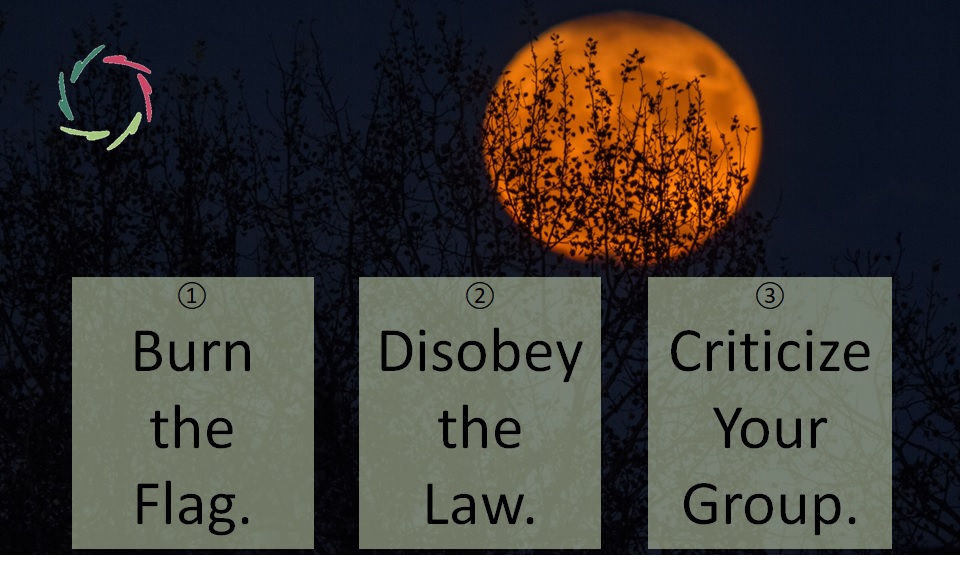
Dear reader, please bear with me on this journey Or don’t. But if you do, then it may be apparent to you that anything about these three is ‘relative’. And even that is relative. In reverse: not giving into them can be very profoundly a symbolic action. For instance, the flag is just a piece Read the full article…

Is AURELIS a Sect?
… in that case I would be a guru, with all its negative connotations… No, thank you, I would rather not. Originally ‘guru’ simply means ‘teacher’. Then I think: a good ‘teacher’ strives to educate his ‘students’ so that they become better than himself. In that case, there might be an element of truth in Read the full article…