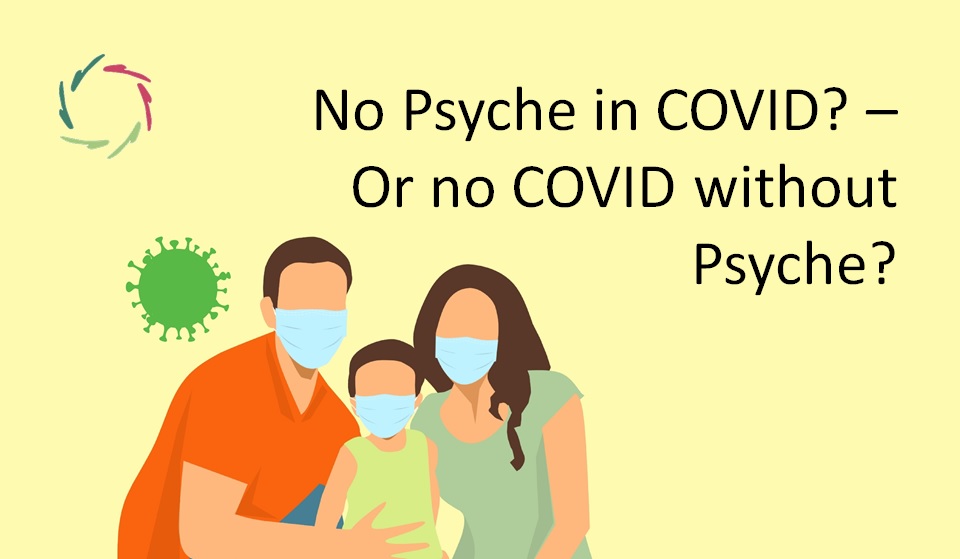
41. No Psyche in COVID? – Or no COVID without Psyche?
Sad song November 5, 2021 Daily Total Cases worldwide 484.847 248.798.420 Deaths worldwide 7.830 5.036.760 Problem To me, each relatively easily preventable death is shameful. Since March of 2020, I have been trying to convince medical colleagues and scientists worldwide that the psyche plays a substantial role in COVID progression ― in vain. What Read the full article…

Letting Yourself Go
To many people, this is a tricky part of meditating or any meditative exercise. Nevertheless, it is crucial. Without letting go, there is only a staying put. Involved in properly ‘letting go’ are depth and rationality. Meditative stance Without the big endeavor to meditate oneself into nirvana, a meditative stance is an everyday life way-of-being Read the full article…
Collision versus Overlap
This is about two ways of being a human being, as an individual and a social being. It goes all the way from deep inside the brain to the ordering of society. Collision: from the outside, entities clash with other entities. Overlap: Entities learn to know other entities from the inside without losing themselves ― Read the full article…

Fate
Accepting one’s fate may be very beautiful if it comes from deep inside. Any other kind is worth little. An animal runs away from a predator. The predator grabs it. The animal struggles and dies. It all happens in a short time. Until the last moment, there is little question of fate as far as Read the full article…

The ‘Auto’ in Autosuggestion
Four letters ― a world of difference within them. Suggestion So friendly and so close and overlapping that there is a spontaneous reaction before you consciously know it. This is the aim of AURELIS autosuggestion. There is no coercion involved at all. [see: “Autosuggestion versus Hypnosis”] Please, will you do this for me ― which Read the full article…
Autosuggestion versus Hypnosis
People ask me about this. I see a fundamental difference related to a spontaneous flow – or not – of free will. Hypnotic suggestion Hypnosis is real and scientific in the sense that many scientific hypnotic organizations exist in many countries. I studied at one of them in my country, Belgium. One can get a Read the full article…

Your Compassion as Cure
Compassion – whether oriented towards yourself or others – is good for you in every way, including health. Moreover, it may be the only thing that really makes you happy. About Compassion To make sure we’re talking about the same thing, please read [see: “Compassion, basically”]. You might follow some links from there to get Read the full article…
Talking with Non-Conscious Patterns
This is not straightforward since non-conscious patterns are, by definition, not simply available for a conscious chat. It seems like crossing a border in communication. How can one get to do what one wants to do? Or: how can one become motivated when there is no motivation? Since motivation is needed for any human endeavor, Read the full article…
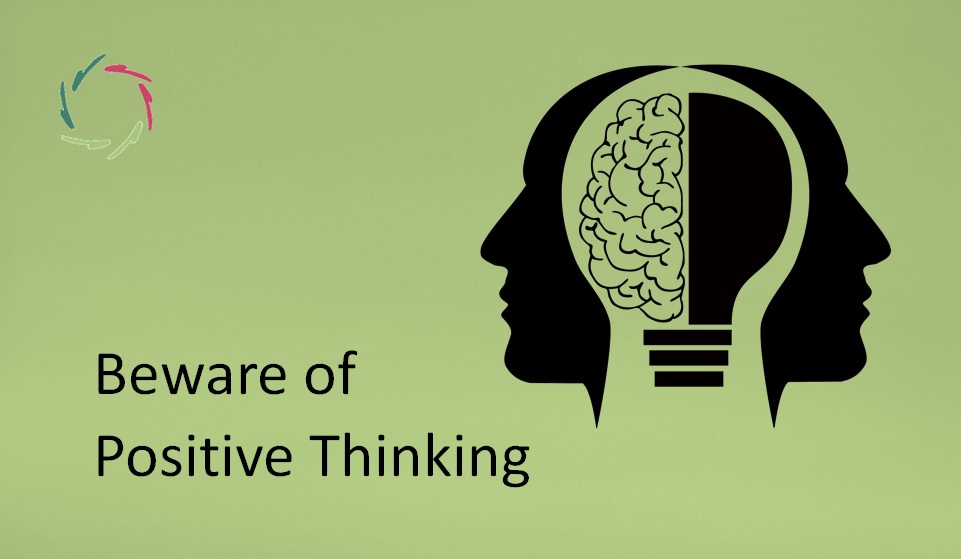
Beware of Positive Thinking
This is part of my book Your Mind as Cure – Autosuggestion for Everyone. The movement of positive thinking (if one may call it that) was popularized by Vincent Norman Peale (1898-1993). Peale was a Christian minister and a prolific writer. The Power of Positive Thinking is his most widely read book. It was first Read the full article…

God is in the Eye of the Believer
Is it not time to stop fighting for nothing and find the door that leads to everything? To believe is to belove (same origin of the word). God is in the eye of the one who is in love with what is right before him ― be it a person, a view, or the universe. Read the full article…
Why the AURELIS app “cannot work against COVID”
Rest assured, there is much more to show that it can. [see: “Free App to Relieve Stress and Symptoms“] Apart from the blunt “This is not possible,” or anything in that vein, I think of these arguments: COVID is a viral disease. Something purely mental cannot work. If this would work, we would already know. Read the full article…

Culture Shock
A plea for cultural meaningfulness. As different as cultures may be, one needs to respect the differences. This doesn’t mean that one needs to respect any infliction of human suffering. If some culture leads to human suffering as part of the culture itself, that needs a good reason. Meaningfulness Nature prefers meaningfulness above suffering. This Read the full article…

How AURELIS Innerly Works
This is mostly about AurelisOnLine sessions, also about coaching. At the core, they work through the level of patterns ― more cloud-like than clock-like. Please go to [see: “How Do AURELIS Sessions Work? (Animated Video)“] What’s in a pattern? A pattern is a meaningful conglomerate of elements, each of these not being easily graspable as Read the full article…

AURELIS Coaching Attitude
An attitude can be dispersed over the population. That may be better than reserving some specific expertise for some particular experts. Coaches will still be needed, but with a different source and aim. What is this attitude? An attitude may sound like it’s simple. It is not. You may read about it in many blogs, Read the full article…

Nobody Wins In Argumentation
So make sure you have a common goal with the necessary depth. In deep dialogue, everyone wins. In this case, the most important thing is to have a common goal. So make sure you have a common goal. A goal is like a mountain. When the other person is on another mountain, and you pull him off Read the full article…
What is ‘Depth’?
An AURELIS coach always reaches for depth in his coaching. There is an ongoing commitment to depth. Superficial – deep We talk about ‘superficial’ versus ‘deep’ attention, or ‘superficial’ versus ‘deep’ meaning, or ‘superficial’ versus ‘deep’ emotions. And of course: in the syllabus, you continually encounter the term ‘the deeper self.’ So what is depth? That Read the full article…
No Power without Compassion
As an AURELIS coach, you may be of profound significance in the lives of others. The others may be very grateful to you for this and that is, of course, the most fun part of the job. The pleasure is not to be despised, and it is also important to you and the coachees who Read the full article…