The Why of Corporate Compassion
Corporate Compassion is not about pity, nor softness. Its effects are as rock-solid as a corporate building if you know how to bring it about. [see: “Compassion, basically“] Empathy in the line of Compassion Basically, Compassion goes deeper, taking into account the importance of mental-neuronal processing in any human endeavor. Thus, it is also broader, Read the full article…
How to Keep the Empathy
The COVID-era has profoundly shaken many people. This has enhanced an upsurge of interest in empathy. However, may this be a passing phenomenon? What can one do to make it more durable? About empathy [see: “Landscape of Empathy”] The term ‘empathy’ – unlike Compassion – does not necessarily relate to depth. [see: “Compassion = Empathy-Beyond“] Read the full article…

Simply COVID
Daily Total Cases worldwide 600.724 223.382.870 Deaths worldwide 9.772 4.608.917 Many more deaths through COVID-related famine, worldwide. The ‘Minding Corona’ reasoning, simply put, in 7 bullet points: Mind = body. There is no influence of something ephemeral upon something material. Change of mind = change of body. Please, wake up to this or stop Read the full article…
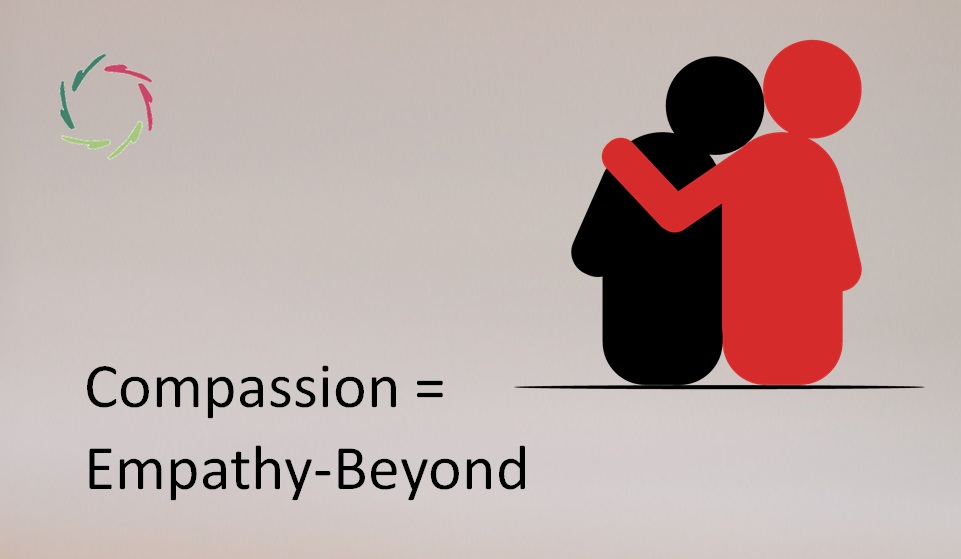
Compassion = Empathy-Beyond
The difference, conceptually, mainly denotes the importance of subconceptual mental processing. This is my use of terminology. Please look at it conceptually ― much more interesting. [see: “Conceptual Landscapes”] In any case, the two concepts have fuzzy and overlapping borders. Please also read about this other distinction: [see: “Altruism – Compassion”] Empathy beyond the conceptual, Read the full article…
Revenge = Dissociation
The feeling of revenge needs to be taken seriously in order to transcend it. What has been lost should be restored ― in a different way. Revenge results from the feeling of having lost something. Something has been taken at the meaning level. Revenge is not about the thing itself but the meaning. What one Read the full article…
40. Proving and Using the Mind in COVID
Many COVID deaths may have been preventable with relatively little effort ― many more to come. Meanwhile, we DO have the means for proper research and management. August 27, 2021 Daily Total Cases worldwide 712.601 216.168.904 Deaths worldwide 10.015 4.498.140 The sentiment in large parts of the West The sentiment is lately one of Read the full article…
Are Mental Problems Social Problems?
Psycho-social. There is always an interplay. Looking in-depth, even more so. No issue will be solved by putting one against the other. Meanwhile, individuals need guidance and support as total persons, not as wheels in some clockwork. ‘Mental problems’ For the sake of this text, I categorize as such all issues regarded as psychological or Read the full article…
Concretely
This may not be the most accessible text for some. It’s a short invitation to think abstractly about concreteness ― its importance and possible pitfall in matters of the mind. The general idea of this text in five bullet point We have a natural propensity towards concreteness. “Animals don’t philosophize.’ On the positive side, this Read the full article…
Conceptual Landscapes
A conceptual landscape is a diagram containing a set of concepts ― principally unrelated to terms. This diminishes terminological bickering and heightens clear thinking at the conceptual level. A few examples on blog: [see: “Landscape of Empathy“] [see: “Triangle of Therapy“] [see: “Triangle of Religion“] Terms Of course, terms are used to denote the concepts. Read the full article…
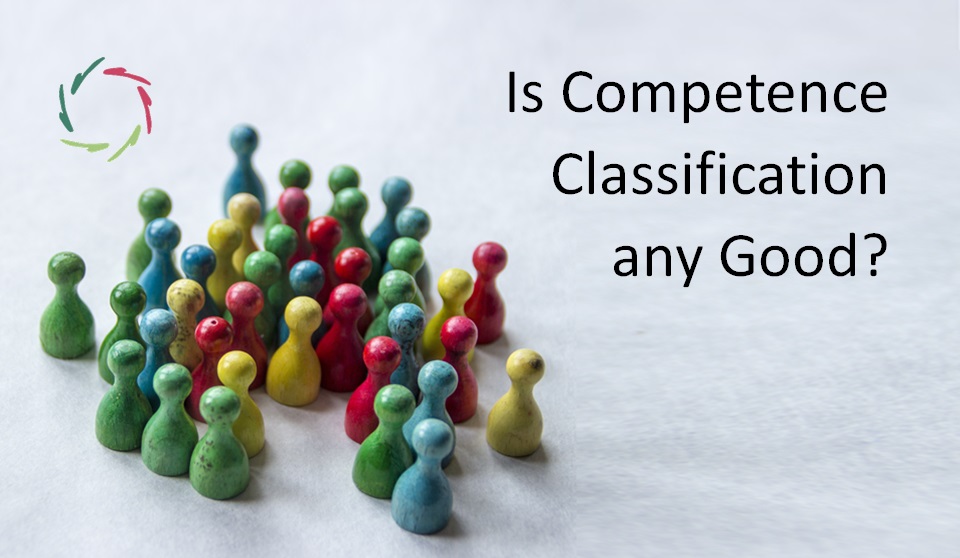
Is Competence Classification any Good?
This depends on the way one uses them. Several systems of classification There are several national and international competence classification systems: ESCO (of the EU). To give some idea, this contains 13485 ‘skills.’ ISCO (of the International Labour Organization) COMPETENT (VDAB – Belgium, UWV – NL, Pôle Emploi, FR) O*Net These are enumerations, lists of Read the full article…
How Long will Humanism Stay Asleep?
Many global problems will only become worse if this basic philosophical issue doesn’t get resolved in most people’s minds. It’s as – immensely! – crucial as that. Also, as simple as that. Another tradition may explain. ‘Buddha’ literally means ‘the awakened.’ [see: “Buddha-Nature“] In modern scientific terms, this means awakening from the dual Cartesian dream. Read the full article…
Wars ARE Failures
Failures of diplomacy, all right, but more than that, of cultures. Fresh from med school, I almost enlisted as a medical paratrooper. I’m still entirely behind that mindset of mine from back then. Surprise, surprise? Everything is connected. This is true in-depth. Within one culture, seemingly disparate domains are profoundly connected. We may strive towards Read the full article…
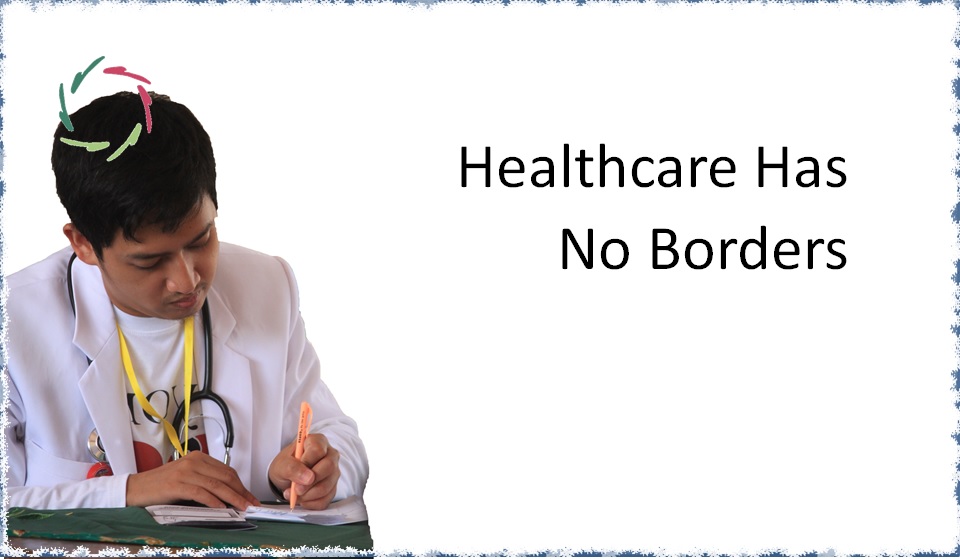
Healthcare Has No Borders
The natural reality doesn’t work with merely conventional borders. Thus, it doesn’t fit with medical culture ― causing intractable problems. Profoundly In the first half of the 21st century, we witness several profound and global problems that seem to be brought about by ourselves. We may look for their deeper cause in human nature or Read the full article…
The Paradox Principle
The more, the worse, related to the humanly not seeing oneself in-depth. Many consequences of this are the opposite of durability. I dislike contradictions. I like a good paradox. A contradiction is about two statements that cannot both be true, yet they are both brought as true. There is either confusion or a lie involved. Read the full article…
Wu Wei in Leadership
Traditionally a characteristic of the idealized Chinese leader, ‘effortless action’ doesn’t always appeal to Western-style leadership. With a twist in-depth, it may appeal to any leadership worldwide. Hopefully, this contributes to [see: “One Future, One World”]. In any case, recognizable leadership everywhere is a good start. Open Leadership [see this category on the blog-wiki] This Read the full article…
One Future, One World
At present, a dream, although an awakened one. Without striving for it, it will never happen. So, let’s dream and strive. I cannot imagine a distant future without far-reaching unity. Hopefully, there will be many diverse cultures and always a lot to discover. Hopefully, these cultures will recognize that we are all very much the Read the full article…
Empathy Before Money?
This is indeed challenging in a world (still) bent on money. The challenge is to make ’empathy’ more worthy in the stakeholders’ perception. Money at second place This may seem too idealistic to be viable. Does the money not always prevail? “Cash is king” and “Money makes the world go round”? So, will people who Read the full article…