Coaching Negative Emotions
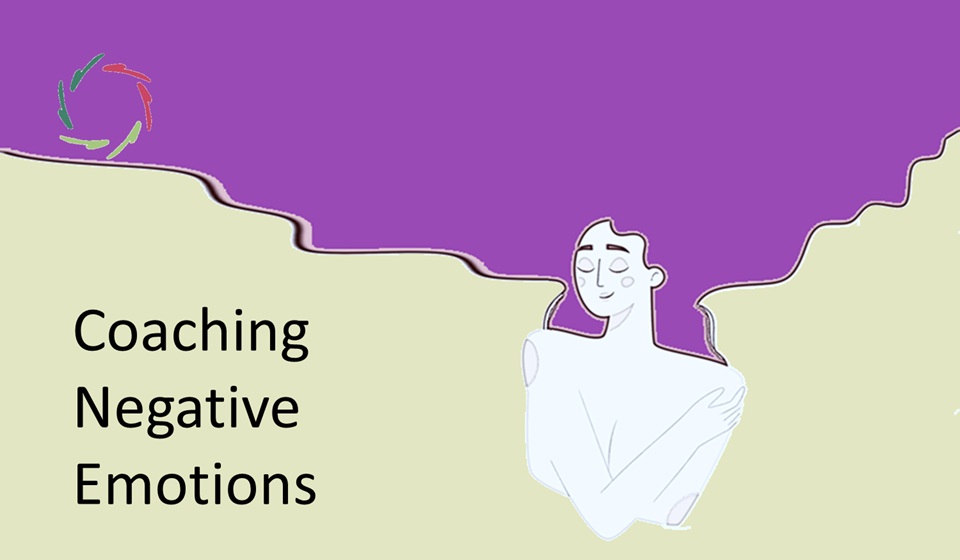
Coaching negative emotions requires patience and depth rather than quick fixes.
This blog explores how a coach can meet emotions such as anger, shame, or resistance with openness and subtlety. Negative emotions hide deeper motivations, and coaching helps uncover what these motivations long for. With a gentle approach, the emotional landscape becomes a space for growth rather than tension.
This is part of a tetralogy on negative emotions:
- Underneath Negative Emotions
- Coaching Negative Emotions
- Negative Emotions and Health
- Negative Emotions in Society
Why coaching negative emotions matters
When negative emotions appear in coaching, something delicate enters the room. A coachee may not show the emotion directly, yet it is often there in their tone or hesitation. These emotions can feel disruptive, but they carry meaning. As explored in Underneath Negative Emotions, an emotion that appears negative on the surface usually hides a deeper movement seeking expression.
In coaching, the question is never how to eliminate the emotion but how to meet it. A negative emotion is not a blockage in itself; it is a signal that something wants to grow. The task is to create a space in which this can happen naturally and without pressure. Lisa is oriented toward this kind of space. Her role is not to fix emotions but to help open the path underneath them.
What makes coaching different from managing emotions
In daily life, negative emotions are often treated as problems. People want to ‘manage’ them, diminish them, or replace them with something more pleasant. Coaching, however, is not management. It works with depth, not with quick adjustments. This difference is significant because how a person handles emotions at the surface may conflict with what the deeper layers need.
AURELIS coaching is not behavior-oriented but depth-oriented, as described in Why AURELIS-Coaching isn’t Coaching. When a coachee brings anger, shame, or resistance, the coach does not aim to correct or regulate the emotion. Instead, the coach listens for what moves beneath it. This is a gentle process that honors the complexity of the human being.
This perspective changes the whole approach. Rather than seeking emotional control, the coach seeks inner direction. It is the underlying motivation that matters, not the surface disturbance.
Returning to the foundation: emotion as deeper motivation
Negative emotions become easier to meet when one remembers what lies behind them. As discussed in Underneath Negative Emotions, and also in Are Emotions Motivations?, an emotion is a form of motivation. It is a movement toward something meaningful. If the movement is blocked, distorted, or misunderstood, the emotion turns negative.
This has a direct consequence for coaching. If the coach focuses on the surface form, the deeper motivation remains unaddressed. But if the coach listens to what the emotion points toward – connection, coherence, protection, belonging – a different landscape opens. The emotion becomes a doorway rather than a disruption.
Lisa responds from this understanding. She listens for the deeper intention, even when the coachee’s words are not clear. By doing so, she helps the coachee reconnect with something of their own that has not yet surfaced.
The predictive nature of emotional responses
Negative emotions often feel sharp or sudden, but they rarely arise without preparation. The mind anticipates and interprets long before the emotion appears. This predictive quality is described in The Brain as a Predictor. The emotion is part of a deeper, ongoing attempt to maintain meaning, coherence, and safety.
Understanding this helps a coach respond with more gentleness. The emotion is not irrational. It is part of a prediction shaped by experience, memory, and vulnerability. When the coach meets the prediction with respect rather than contradiction, the tension behind the emotion softens. The coachee senses that his deeper layer is understood.
Lisa works from this place of understanding. She does not oppose emotional prediction; she explores what makes it meaningful.
Why well-meant advice can deepen emotional tension
Many forms of advice about emotions sound reasonable: “Take a deep breath,” “Try to see the bright side,” or “Just let it out.” These suggestions may help temporarily, yet they often fail to address what lies beneath the emotion. Sometimes they even sharpen the tension because they do not meet the underlying motivation.
For readers who want a closer look at how well-meaning advice can unintentionally strengthen emotional tension, two supporting tables are available in the addendum. They offer a practical view of common pitfalls.
In coaching, the essential point is that superficial help targets the emotion itself, while the emotion arises from depth. The mismatch creates resistance. What the deeper layer needs is understanding, not correction.
Coaching as invitation rather than repair
Many people meet negative emotions as if something is broken. Yet emotions do not need repair. They need room. This is where the distinction between growth and repair becomes important, as described in Growth versus Repair in Therapy. Approaching an emotion with a repair mindset risks narrowing the coachee’s inner landscape. A growth mindset opens it.
Coaching negative emotions means inviting growth. The coach remains present, receptive, and non-coercive. Nothing has to be fixed; something has to be heard. This shift alone can ease emotional struggle. It lets the coachee feel that the deeper movement within them is welcome.
Lisa embodies this stance naturally. She never pushes an emotion away. She supports the coachee in exploring what the emotion protects or longs for.
Flexibility in the coaching moment
Emotions are fluid. Their meaning can shift from one moment to the next. For this reason, rigid methods do not work well in emotionally charged situations. As explained in Good Coaching is Naturally Flexible, the coach needs inner flexibility to follow the coachee’s unfolding experience.
Flexibility does not mean lack of structure; it means responsiveness. The coach senses when to ask a gentle question, when to stay silent, and when to reflect a subtle movement. When working with negative emotions, such flexibility becomes even more critical. It allows the emotion to evolve rather than freeze.
Lisa adapts to these shifts intuitively. Her presence is steady, yet her responses adjust to the moment. This helps the coachee feel safe enough to explore the deeper layers of the emotion.
The subtle art of meeting emotional depth
Coaching negative emotions is rarely a matter of technique. It is more like art. As described in Lisa’s Art of Subtle Coaching, subtlety means working lightly while staying connected to depth. This may involve a metaphor, a delicate reformulation, or even a meaningful silence.
Negative emotions often protect something fragile. A heavy-handed approach risks closing the coachee. A subtle approach supports natural growth. It leaves room for the coachee’s own inner intelligence to unfold. The coach does not interpret the emotion; the coach invites its deeper meaning to appear.
Subtlety is not softness. It is an attentive courage that senses where the emotion touches the deeper self. Lisa coaches exactly from this place.
Seeking meaningfulness beneath the emotion
Every negative emotion is trying to say something meaningful. This becomes clear when coaching is seen as a search for what makes life meaningful, as explored in Coaching as Seeking Meaningfulness. When the coachee touches the layer of meaning, the emotion often shifts in quality. It may soften or become more understandable. It may even transform into a wish.
This is where the move from problem to wish becomes essential, following the insight in Desire or Problem?. What appears as a problem often hides a wish. Anger may hide a wish for fairness. Shame may hide a wish for connection. Resistance may hide a wish for coherence. The coach helps the coachee find this inner direction.
Lisa listens for this wish. She encourages the coachee to see it not as a demand but as a meaningful inner signal.
Practical guidance: the emotion-specific table
The following table offers concrete examples of how common forms of superficial help can backfire for 12 specific emotions, along with AURELIS-style ways to address them with depth, Compassion, and non-coercion. The table is not meant as a fixed method. It is a guide that helps the coach sense the deeper direction behind each emotional expression.
Table: Coaching Negative Emotions
| Emotion | Superficial Help (Typical Phrase) | How This Backfires | How to Deal with It (AURELIS-style) |
| Anger | “Calm down; it’s not a big deal.” | Dismisses protected meaning → anger intensifies | Look for the threatened meaning; offer calm space |
| Coldness | “You should open up more.” | Heightens danger signal → deeper withdrawal | Create gentle safety; respect distance |
| Harshness | “Stop being so rigid.” | Breaks needed structure → more harshness | Support inner coherence without forcing flexibility |
| Indifference | “Try to care a little.” | Drains scarce energy → deeper collapse | Allow rest; gently invite reconnection |
| Resistance | “Just do it already.” | Invalidates one side → resistance strengthens | Honor both inner voices; explore without pressure |
| Cynicism | “Be more positive.” | Glosses over wound → cynicism thickens | Recognize disappointed caring; rebuild trust slowly |
| Avoidance | “Face it; don’t be a coward.” | Creates threat → avoidance strengthens | Provide safe conditions; approach gradually |
| Perfectionism | “Relax, nobody’s perfect.” | Minimizes existential fear → more control | Address longing for acceptance; allow imperfection |
| Aggression | “Control yourself!” | Adds shame → pressure builds or explodes | Strengthen inner safety; channel protective force |
| Silence | “Say something already.” | Intrusion → vulnerability retreats further | Treat silence as meaningful; offer presence |
| Jealousy | “Don’t be jealous; it’s unattractive.” | Shames longing → insecurity grows | Offer reassurance, transparency, and stability |
| Shame | “Stop being sensitive; nobody cares.” | Denies need for belonging → shame deepens | Provide unconditional acceptance; integrate the inner image |
Lisa’s readiness to hold negative emotions
Coaching negative emotions requires presence, patience, and trust in the deeper process. Lisa is ready for these emotions and many more. Her readiness comes from the principles described in 12 Principles of Lisa-Coaching and from the sensitivity to depth described in The Hidden Depth of Emotions. She does not approach the emotional landscape with strategies. She approaches it with openness.
This makes coaching with Lisa a gentle invitation into one’s own depth. The coachee is not pushed toward insight; insight emerges naturally when the emotional ground is respected.
What success looks like in coaching negative emotions
Success is not measured by the disappearance of the emotion. It is measured by the unfolding of meaning. When the deeper layer becomes visible, the emotion often changes by itself. The coachee may feel more spacious, more grounded, or more connected to their inner truth.
This process is subtle and may take time. Sometimes the emotion remains, but its edges soften. Sometimes a new perspective arises, and the coachee relates differently to what once felt overwhelming. Coaching negative emotions is not about solving a problem but about facilitating a deeper integration.
Toward the next blog
The next part of this tetralogy looks at how negative emotions relate to health. Understanding this connection adds yet another dimension to the picture and shows why emotional depth matters in the wider field of human well-being.
―
Addendum
Table — How Common “General Advice” About Negative Emotions Can Backfire
| General Advice | Why It Backfires | How It Can Make Things Worse |
| “Don’t suppress your emotions — let them out!” | It amplifies the surface response instead of addressing the deeper motivation. The organism rehearses the wrong layer. | Escalation of emotional reactivity; chronic anger, fear, or sadness; deeper tension remains untouched. |
| “Just express your feelings honestly.” | Encourages expressing the symptom instead of the source. The person may believe the superficial emotion is their truth. | Solidifies the superficial pattern; misdirects communication; makes deeper exploration harder. |
| “Accept what you feel — it’s valid.” | Validates the form of the emotion but not its message. Acceptance stops too early. | The organism keeps generating the same emotional pattern; stagnation dressed as self-care. |
| “Let it go.” | Encourages releasing the emotion without understanding it. The underlying tension loses its outlet. | The tension intensifies or returns in another form (somatic symptom, avoidance, new emotion). |
| “Try to think positively.” | Overwrites the emotional signal with forced cognition. The deeper self feels ignored. | Disconnection, inner rebellion, rebound negativity, increased pressure and fatigue. |
| “Don’t be so emotional.” | Shames the organism’s first attempt to cope. Creates inner division and self-distrust. | Adds guilt + self-criticism to the original distress; more fragmentation and dysregulation. |
Table — More Concrete Examples of Superficial Help That Can Backfire
| Superficial Help (Exact Phrases or Behaviors) | What the Person Hears Internally | Why This Makes Things Worse |
| “Calm down.” | “My tension is inconvenient.” | Increases pressure; emotion intensifies to restore unheard meaning. |
| “Don’t take it so personally.” | “Your deeper hurt is irrelevant.” | Adds alienation; the real wound retreats further inside. |
| “You’re overreacting.” | “Your inner world is not valid.” | Creates shame + defensiveness; strengthens the pattern. |
| “Just be positive.” | “Replace your inner truth with a smile.” | Suppresses the signal; leads to rebound negativity or collapse. |
| “Ignore it and move on.” | “Your deeper self doesn’t deserve attention.” | The unresolved tension persists and finds a new outlet. |
| “You should be grateful — others have it worse.” | “Your needs don’t matter.” | Undermines self-connection; breeds guilt, resentment, or numbness. |
| “Open up more, it’s not a big deal.” | “Your vulnerability is being judged.” | Backfires with more withdrawal, fear, or coldness. |
| “Stop thinking about it.” | “Your inner process is a mistake.” | Prevents integration; tension resurfaces later with force. |
| “Just talk it out; you’ll feel better.” | “The emotion itself is the truth.” | Reinforces the superficial layer instead of the deeper motive. |
| “Let it out — release it!” | “Intensity equals authenticity.” | Emotion becomes ritualized; underlying meaning stays hidden. |
Related Posts
Lightbulbs and Human Energy
Please read first [see: “Dimming the Lightbulbs“] You can also view the image of the lightbulbs from a different angle. That is: the underlying glow of the lights is ‘human energy,’ or motivation, deeper and deeper as you enter a more meaningful and vague domain Where does the ‘glow’ ultimately come from? You may say: Read the full article…

Two Extinctions
A recurrent maladaptive behavior, thought, or feeling can gradually diminish in two ways. Either it entirely disappears, or it dissolves. There are differences in path and endpoint. About extinction A mental ‘problem’ is usually recurrent. That’s the reason why people search for help, including professional help. In one word: therapy (or mental coaching). ‘Extinction’ is Read the full article…
Mental Change: How it Works
This is about any mental change, such as in coaching, psychotherapy, and leadership. It is simple and complex. [see: “Complexity of Complexity“] It works the way the brain works. Insight into the mind-brain’s pattern recognition and completion is very telling. [see: “Your Mind-Brain, a Giant Pattern Recognizer“] The brain continually changes. While you read this Read the full article…