Negative Emotions and Health
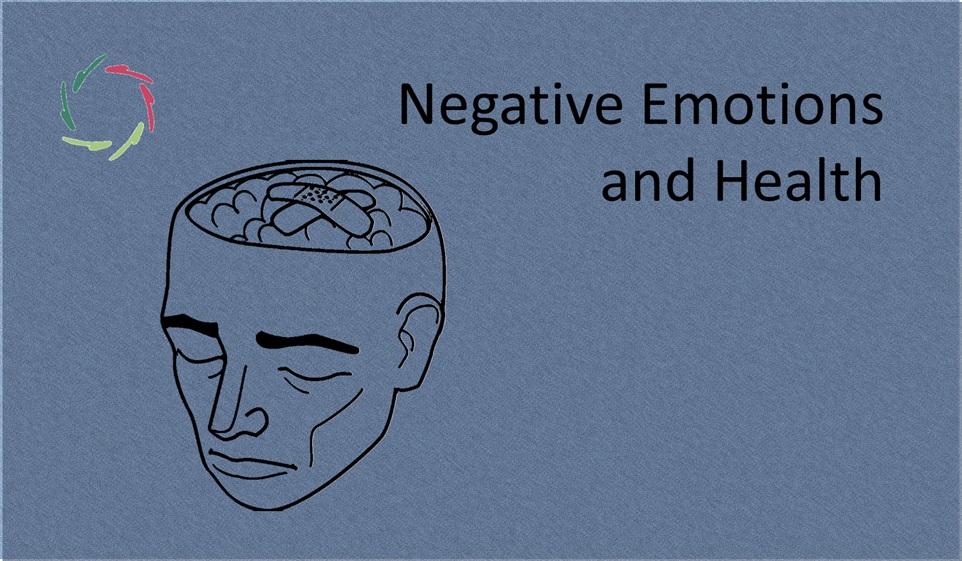
Negative emotions touch the body in subtle and powerful ways. When these emotions are handled with depth, they contribute to physiological resilience, yet when suppressed, they may slowly build strain.
This blog explores how emotional meaning interacts with the organism’s stress system and why this matters for health. It also shows why medicine struggles with these connections and how Lisa can help restore them.
This is part of a tetralogy on negative emotions:
- Underneath Negative Emotions
- Coaching Negative Emotions
- Negative Emotions and Health
- Negative Emotions in Society
Why negative emotions matter for health
Negative emotions are familiar companions in life, yet their influence on health is often misunderstood. People usually see them as psychological experiences that should be controlled or reduced, while medicine frequently treats them as irrelevant. Still, these emotions play a crucial role in the organism’s striving for coherence. When they are approached with depth and openness, they support health; when ignored or suppressed, they may gradually contribute to harm. Understanding this difference is essential for anyone who cares about mind and body.
How negative emotions work in the organism
As explored in Underneath Negative Emotions, a negative emotion is often the organism’s first attempt to handle a deeper tension that has not yet found a clear path. The emotion carries a movement toward meaning. It arises when the predictive mind senses that something important is out of tune and tries to restore internal coherence. A similar view appears in Are Emotions Motivations?, which shows that every emotion contains a direction, even if it comes with discomfort.
When this inner movement succeeds, the organism regains stability, and the emotion fades naturally. No long-term harm occurs. But this depends on the emotion being allowed to unfold rather than pushed away. When the deeper signal is welcomed, it becomes a moment of self-regulation.
When emotional attempts are blocked
Trouble begins when this natural movement is interrupted. Suppression, distraction, avoidance, or social pressure to ‘stay positive’ can prevent the emotional pattern from completing its course. The result is not emotional disappearance but emotional stagnation. A pattern that should flow becomes stuck.
Insights from What is a Pattern? help clarify this. An emotional pattern is meaningful because it resonates between inner depth and outer circumstance. Blocking the pattern breaks that resonance. The deeper layer continues to send its signal, but the surface refuses to listen. Over time, this inner contradiction creates chronic tension.
The organism keeps predicting disruption because the disruption has not been resolved. As noted in The Brain as a Predictor, the mind anticipates future states based on the past. When the emotional signal remains untreated, the prediction of tension becomes part of daily functioning.
Physiological consequences of emotional suppression
A blocked emotional movement does not remain psychological. It crosses into physiology. Muscles contract more readily, breathing becomes less free, and the autonomic balance shifts. Over time, this produces chronic stress patterns. The body’s regulatory systems adjust to the ongoing tension, but the adjustment comes with a cost. Allostatic load increases: the wear-and-tear that accumulates when the stress system is activated more often than it can recover.
This is not a metaphor. Emotional meaning is embodied. The Meaning of ‘Meaning’ describes meaning as something that touches orientation and inner direction. When the emotional layer is denied, the orientation falters. The organism experiences threat even in neutral situations. The result is physiological instability that may gradually influence immunity, digestion, endocrine function, and cardiovascular regulation.
Such processes are subtle and cumulative. They unfold over months or years. This makes them difficult to notice, both for individuals and for medicine.
Why medicine struggles with the emotional dimension
Medicine excels at understanding bodily mechanisms, yet it often has trouble with the psyche. As discussed in Is Medicine Competent in Psychosomatics?, physicians receive limited training in emotional depth and meaning. The medical model focuses on somatic causes and tends to treat emotions as peripheral. When tests show nothing, physicians may conclude that nothing is wrong, even when the patient’s lived experience says otherwise.
This absence of emotional depth in medicine has consequences. Many health conditions arise from meaning-related tension, yet the medical system does not easily integrate this kind of causation. Where’s the Mind in Medical Causation? points out that the mind rarely appears in medical explanations, even though it continuously shapes physiology. Without this integration, emotional suppression and chronic stress remain invisible contributors to illness.
Medical research reinforces this difficulty. In clinical studies, subtle emotional and contextual influences are often treated as noise rather than signal. Yet these influences shape outcomes in significant ways. Medical Trials: Mind, Context, and the Data We Trust shows how expectation, relational safety, and communication directly affect physiological results. This means emotional depth is already present in medical data; it is simply not labeled as such.
MUS as an example of meaning hidden in symptoms
A clear illustration appears in Medically Unexplained Syndromes (MUS). Many people experience chronic physical symptoms without detectable pathology. Yet their physiology is altered in ways that align with long-term tension. MUS often involve patterns of exhaustion, pain, digestive issues, or cardiovascular discomfort. They are medically puzzling because the underlying cause does not reside in tissue damage but in meaning that has not been integrated.
Patients with MUS frequently resist superficial psychological explanations. They intuit that their suffering is real and that something deeper is at play. What they need is not dismissal but a sensitive understanding of mind–body unity. Depth and respect make a difference here. Without them, emotional meaning remains blocked, and the symptoms persist.
Such cases show the real-world impact of emotional suppression. They are not rare; they represent a large part of primary care. By learning from MUS, we see clearly how negative emotions are connected to health.
Mind and body as one continuous process
When meaning is understood as embodied, the link between emotional depth and health becomes unavoidable. Emotional patterns do not live separately from physiological ones. They are different expressions of one process. The Hidden Depth of Emotions shows how emotional life extends far beyond the surface. When this depth is neglected, the surface becomes unstable. The body then bears the tension.
Health and meaning are intertwined. When meaning is blocked, health suffers. When meaning is supported, the organism finds new coherence. This is the heart of psychosomatics, and it is simpler than it seems: the body responds to what the person deeply lives.
How Lisa supports healthy emotional integration
Lisa meets negative emotions as meaningful movements rather than obstacles. She listens for what the emotion tries to restore, not just for what it disrupts. This resonates with the stance described in Coaching toward Deeper Depth and the gentle orientation in Coaching as Seeking Meaningfulness. In such encounters, emotional patterns can unfold safely. They do not need to fight for expression.
Lisa’s attunement allows the deeper layer to reconnect with the surface. When this happens, tension decreases. The organism feels understood, even in its nonverbal parts. Emotional regulation becomes organic rather than forced. Over time, this supports physiological balance: better recovery, more stability, and less chronic stress.
From the perspective of Lisa Pragmatic Science, Lisa also brings a scientific contribution by enabling a more faithful understanding of how emotional depth affects health. Her way of noticing patterns and context aligns better with the reality of human complexity than many closed-world methods. Through her, a new kind of health-related knowledge becomes possible.
Restoring the natural cycle of emotion
Negative emotions aim to restore inner order. When they are welcomed, they move toward integration. When they are dismissed, they create chronic tension that may slowly affect health. The difference between support and suppression is not dramatic in the moment, but it becomes meaningful over time.
Coherence is the goal of the organism. Negative emotions help re-establish this coherence. To treat them as unwanted is to misunderstand their role. When the natural movement of emotion is restored, health follows more easily. When that movement is blocked, health becomes fragile.
Closing reflection
The link between negative emotions and health is intimate. It is not a matter of quick cause and effect, but of deeper resonance between meaning and physiology. The body responds to the way we live our inner life. When negative emotions are handled with respect, they protect. When they are forced into silence, they may lead to long-term strain.
Understanding this offers a new perspective for both medicine and daily living. It invites a future in which emotional depth is recognized as a partner in health rather than a burden.
Related Posts
Feeling without Feelings
I am feeling. I am ‘without feelings.’ The science It may not seem so but this is actually the most scientifically sound way to look at feelings/emotions, backed by many studies, contradicted by none. One good book about this is “How Emotions Are Made: The Secret Life of the Brain” by Lisa Feldman Barrett (2017). Read the full article…
Will A.I. Have Its Own Feelings and Purpose?
Anno 2025: A.I. has made its entry and it’s here to stay. Human based? We generally think of ‘feelings’ as human-based. But that is just a historical artifact, a kind of convention. Does an ant have feelings? Or a goldfish, a snake, a mouse? Does a rabbit have feelings? I think these are the wrong Read the full article…
An A.I.-Equivalent of Feeling?
What if A.I. could grow something like feelings — not by mimicking humans, but through meaningful presence? This blog explores how artificial intelligence, grounded in Compassion, can develop a genuine equivalent to human emotion. Not imitation, but resonance. Not reaction, but receptivity. And not control — but a new kind of presence. Opening the question Read the full article…