The Freedom to Be Free
Can people be asked to appreciate only one freedom, namely, the freedom to be free? Thus, not the freedom to incarcerate oneself or others?
You might already know I’m talking about the ego: the self-referenced, overly conceptual part of any total person. Please read ‘The Story of Ego.’
Ego wants an illusion of freedom.
As a matter of fact, since ego lives in illusion. There is no living reality in any overly conceptual viewpoint by itself. Hindus/Buddhists call this ‘Maya.’ I elsewhere denote it as the consequence of the basic cognitive illusion.
Yet, within this illusion, ego is alive and kicking ― if need be, all the time and to a huge degree.
Ego also wants to incarcerate everything it cannot directly control. Logically, one can see such incarceration as the second line of control. Unfortunately, there is an infinity of lines to be encountered when one makes the utterly exhausting effort.
Oh, being tired.
Many people who clamor for freedom are incarcerated in themselves. They get freedom at most in illusion only.
The freedom to be free
As free as the grass grows, yes, naturally free, born free, not in an illusion, but in nature itself!
There is only one human freedom: the freedom of being a total person.
Freedom of speech?
For instance, freedom of speech is only meaningful if it’s the speech of a total person ― certainly not that of an illusory ego. To gain broad freedom, it is mandatory to put effort into it. This may be counter-intuitive for someone who thinks ‘free’ means something like ‘without constraints.’
Think again. Ego knows no constraints – for itself. Contrary to this, it puts them on others in order to not let them (or one’s deeper self) constrain itself in a zero-sum of freedom. But that is not freedom at all.
Genuine freedom of speech is, first and foremost, the freedom to listen to others.
As said, ego is a great illusionist.
Even more, the biggest ego carries the biggest illusions. Thus, it can hold to others a mirror of freedom. In that case, look again: there is no space behind the mirror, no expansive landscape ― just quicksilver, and even that only in a solid state.
The freedom to senselessly scold is no freedom of speech, nor is flipping out whatever comes to one’s tongue under free speech pretense.
Likewise, the freedom to manipulate others is no freedom of any total person. Therefore, it is no freedom to be free at all.
On the other hand, the freedom to deeply fall into oneself, come out again, and strive to free all sentient beings is real ― even if it’s impossible to accomplish.
The freedom to care is real ― whether in action or warm and friendly meditation.
Related Posts
The depth behind ‘So what?’
To essential – even existential – questions, people frequently respond with a casual “So what?” The phrase can sound dismissive, defiant, indifferent. Yet, like most short questions, it hides a world. Of course, there are many ways to ask it. This blog contains just a few. A few: Sometimes, “so what?” is a surface-level question Read the full article…
Depth of Belief
Eventually, deep belief is always stronger than the superficial kind. Unfortunately, it is not always validated. This situation leads to many huge tensions that can only be resolved through its validation. What is ‘to believe’? It’s one of those concepts that seem straightforward until you start to think about what they actually mean. “I’m not Read the full article…
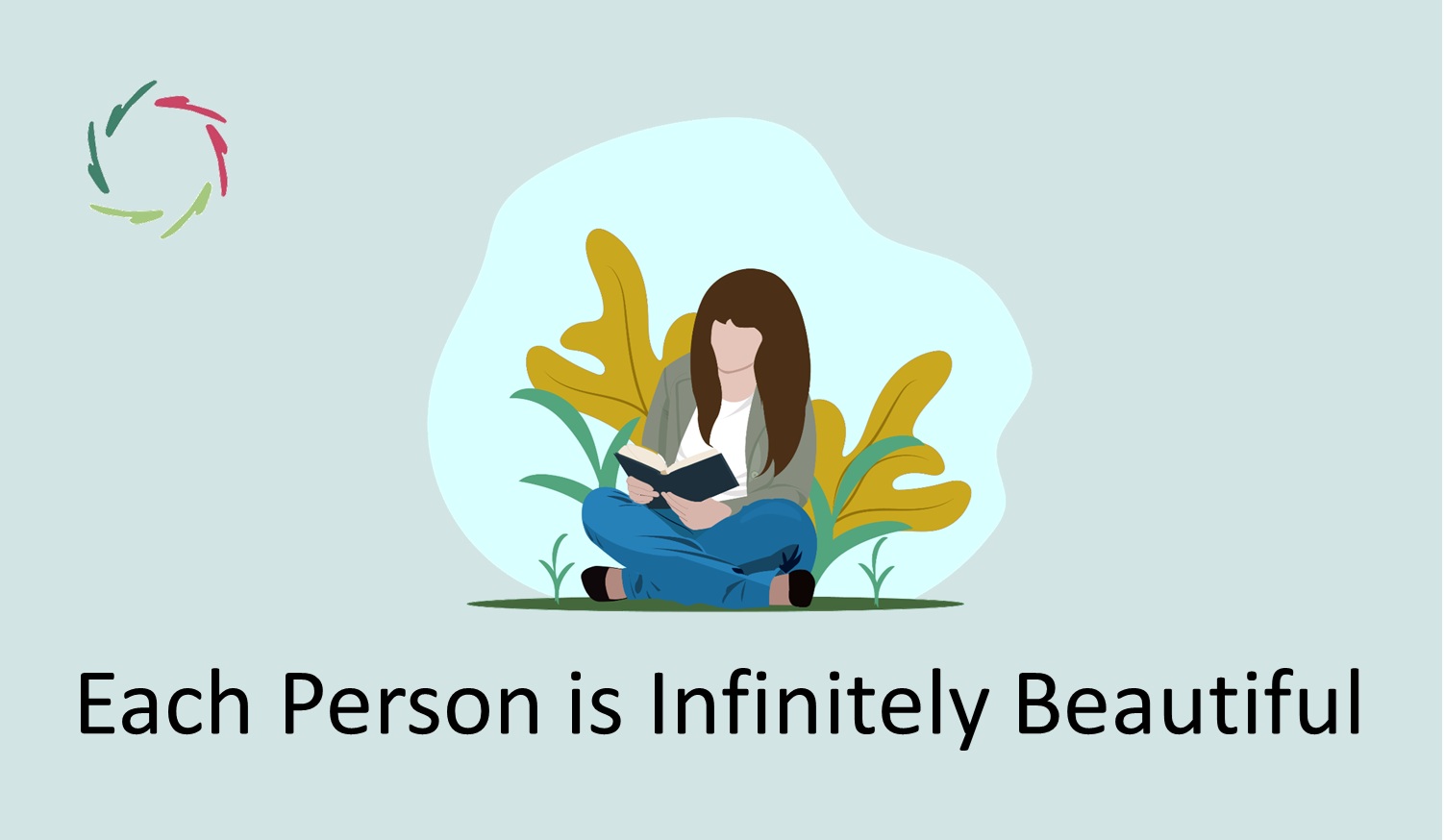
Each Person is Infinitely Beautiful
Each person is infinitely beautiful. This may sound idealistic, but it’s not. Beauty is not something we need to create or give; it’s already there, waiting to be uncovered. Like a diamond, a person’s beauty is shaped by the unique pressures and experiences of life, with each facet reflecting something extraordinary. Yet, it is often Read the full article…