You as a Symbol
The symbolic, as used in this text, is entirely the domain of the subconceptual. This is always present. Also, humans may always be symbolic to others. Please read first: [see: “Symbolism: How-To“] Many symbols. Each in-depth symbol is a symbol of you. You find yourself in anything that acts as a profound symbol to you, Read the full article…
Psychotherapists in AURELIS setting
Looking into my crystal ball, I see many changes coming gradually from the future towards psychotherapy and psychotherapists. One thing is for sure: It will be exciting. See also Aurelis Coaching Institute. I write this text from an AURELIS/Lisa standpoint. My crystal ball is nice to me. It shows me the future in these terms, Read the full article…
The God Wave
May we live in an infinite universe where a continual appearing and disappearing takes place? This text is part of a hobby, much at the sideline. It is all hypothetical. I try to remain within the theoretically possible. Please don’t take it seriously. It should not be taken seriously. Or should it? Please read about Read the full article…
Nightlife at the Zendo
2007 The summer sesshin is coming to an end. During the last night, I plan to additionally sit in the zendo, on my own, for 5 or 6 hours in a row, meaning: 45 minutes of sitting, 15 minutes of slowly walking (kinhin), and so on. A few days after the sesshin, I write this Read the full article…
Killing Babies? – Nobody Does
No sane person likes killing babies. I don’t like killing babies. I don’t like the killing of babies. I don’t like the idea of babies getting killed. Babies should be respected as human beings. But put one cell together with another cell, and there is no baby. Calling that a baby is disrespectful to babies. Read the full article…
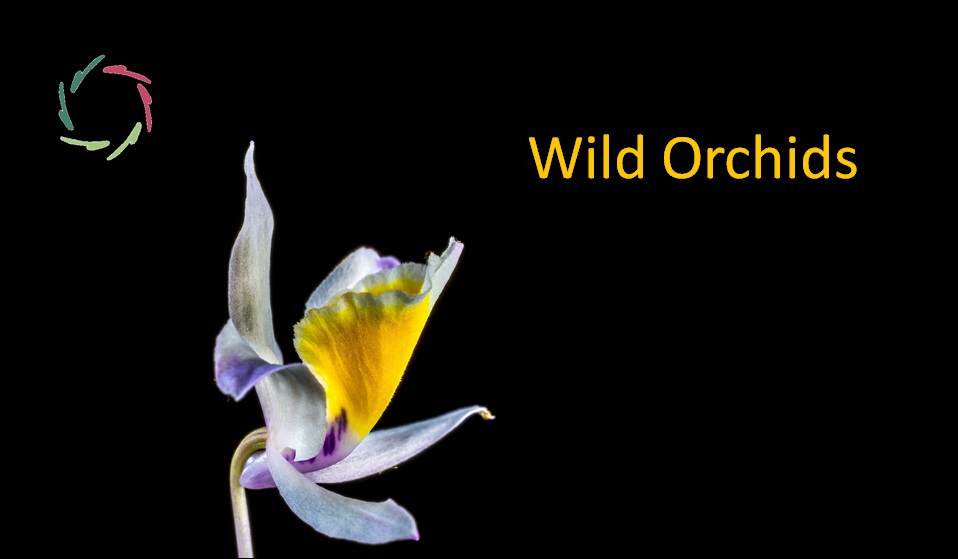
Wild Orchids
Wild orchids feel inner erotic freedom to a boundless degree. This is not about being homo- or heterosexual, which are category-bound. You may read this text as a wild orchid yourself. Otherwise, it’s difficult. Note that this is the description of a possibility. It doesn’t need to be anyone’s ideal. ‘Wild orchid’ is, in the Read the full article…
Is Religion Poetry? – Is Poetry of Highest Value?
Poetry as a way of being, of being motivated, of giving attention is religion. ►►► WHY read this? Religion is frequently non-poetic. In a rational age, this leads to huge clashes and fundamentalism.◄◄◄ Religion, poetry. It is exactly the same. Good poetry is an orientation, as is religion. Good poetry is a metaphor, as is Read the full article…
The Religious Feeling – What Religion Has Always Been About
The religious feeling lives deeply inside and everywhere. It is ubiquitous and invisible. It can be supported and downplayed without anyone’s knowing. It is very much Open. What I dare say One can have full-blown religious feeling without believing anything conceptual. There is no need to lose anything of this feeling by ‘not believing.’ The Read the full article…
Symbolism: How-To
Symbolism is invitation, from a to z. Invited is deeper meaning. ‘How-to’ should be sought at this level, bringing the symbol ever closer to YOU. This text is about your experience. It is not about any superficial kind of better or worse. It’s your doing, your experience, your depth. Do something else and the experience Read the full article…
If You Fake, Do It for Real
‘For real’ is like a very good mime, for instance. It’s fake and at the same time, it may be more real than reality itself. ‘Reality inside’ is more important than ‘reality outside.’ Then who is the faker? While faking, you may get closer and closer to full reality. Faking is in such case a Read the full article…
True Wisdom = Conceptual + Subconceptual
Western culture has lost a bit the sense of wisdom. Elderly people are foremost ‘passé’ in the sense of not getting the latest technological fad. Hm. Let’s appreciate true wisdom! Knowledge versus wisdom The difference is fuzzy, gradual. In ‘knowledge,’ the emphasis still lies in conceptual processing. From there, more and more subconceptuality may be Read the full article…
Every Religion Is Open
Many existing religions are incompatible with each other. To me, these incompatibilities are – one way or another – as many signs of superficiality. Underlying this is Openness, as in: ‘Open direction to God.’ [see also: “Religion IS Openness”] Dare I speak of God? Dare you? God is a ‘concept’ that means something different to Read the full article…
Stand by Your Man
For the ladies. The principle is gender-unrelated. Even if your man is ostensibly incorrect (but not immorally so) or even especially in such case, it’s important to make some effort to ‘stand by.’ It is very human to do so, very warm, probably quite irrational, very endearing, close, following, thereby listening and hearing what cannot otherwise Read the full article…
Ethics is YOU
That is: eventually and with all relevant support. Different kinds of ethics Some see the basis of ethics in a general principle: “Do to others as you want that others do to you.” Others see it in some kind of authority: “The ten commandments.” Others see it in an agreement between humans: “Human rights.” … Read the full article…
Pure Consciousness
‘Pure’ as in ‘without any object of conscious attention.’ One can get close to it in deep meditation. Is it meaningful to do so? Consciousness is conscious of something Otherwise, there would be nothing. No object, no subject, no consciousness. Just nothing. That would be self-contradictory. One can be conscious of the concept ‘nothing.’ The Read the full article…
Strength as a Virtue
“Show your weakness.” OK? Virtue is not always related to plain strength. More than ‘showing weakness,’ isn’t ‘avoiding weakness’ not more virtuous? The etymology of virtue or virtuous: ‘characterized by moral excellence, valor, strength’ and also: ‘manliness, courage, bravery.’ In ancient Rome, virtus was mainly important as a male adornment. Vir is Latin for ‘man,’ Read the full article…
Is Beauty an End Value? – No Purpose but Itself?
Beauty definitely is a value. As in Trojan-Greek mythology, people can go very far because of it: to the end of their known universe, to the end of themselves… and back again. Referring to ‘five Aurelian values’ [See: ‘Five Aurelian Values’] Are these ‘end values’ [see: “Being of Value”]? Yes. Are they the only end Read the full article…