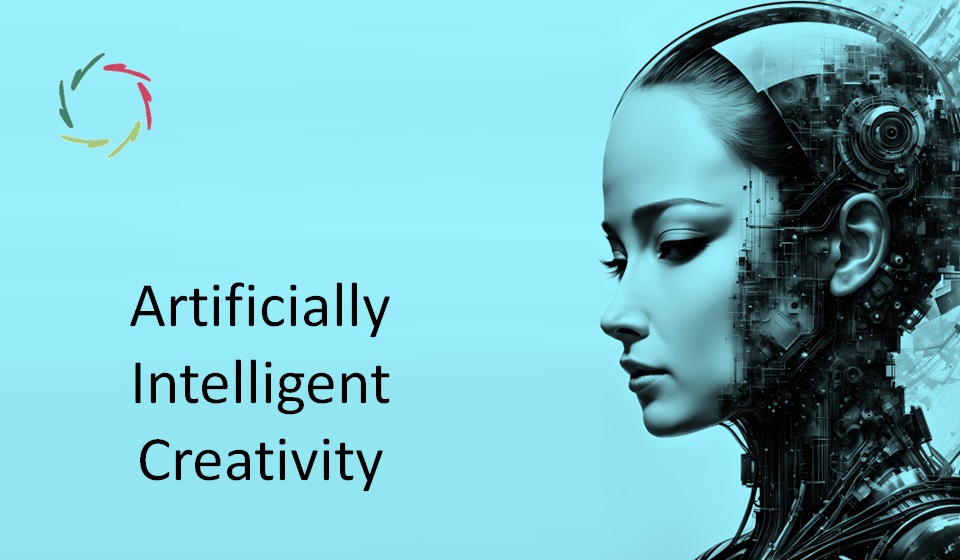
Artificially Intelligent Creativity
It’s all about associative patterns — ideally broadly distributed and combining both conceptual and subconceptual levels. In the same pattern, different levels This is very natural in humans, making spontaneous associations of any sort in daily life. When inspired, we go deeper and broader — nothing entirely new occurs since all concepts in our mind Read the full article…
Back and forth is the way to go
Alternating between conceptual and subconceptual processing, each time dwelling for a while and carrying the insights to the other side, often proves more productive than remaining on one side or somewhere in-between. This process can be likened to diving into a vast ocean of creativity and resurfacing with treasures of insight. It enables us to Read the full article…

It’s RAG-Time!
Retrieval-Augmented Generation (RAG) is a component of an A.I.-system designed to synthesize knowledge effectively. It can also be viewed as a step toward making A.I. more akin to human intelligence. This blog is more philosophically descriptive than technical. RAG lends itself to both. Declarative vs. semantic knowledge Understanding the difference between these types of knowledge Read the full article…
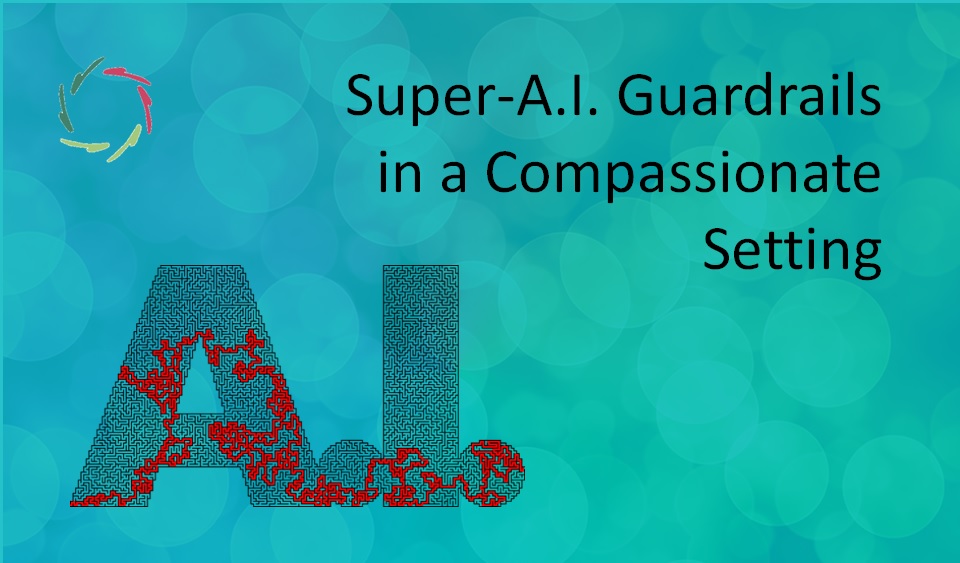
Super-A.I. Guardrails in a Compassionate Setting
We need to think about good regulations/guardrails to safeguard humanity from super-A.I. ― either ‘badass’ from the start or Compassionate A.I. turning suddenly rogue despite good initial intentions. ―As a Compassionate A.I., Lisa has substantially helped me write this text. Such help can be continued indefinitely. Some naivetés ‘Pulling the plug out’ is very naïve Read the full article…
The Importance of a Conceptual Ontology in A.I.
Utilizing a conceptual ontology can significantly boost an A.I.’s capability to ‘reason’ and deliver more precise, context-aware, and coherent responses that meet user needs and expectations. This blog is an enumeration of how this enhancement works out, with examples in the domain of Lisa. Improved understanding of a user query An ontology enables the system Read the full article…
Will Super-A.I. Make People Happier?
This is the paramount question — more vital than any debate about intelligence. It’s a bit weird that it is seldom put at the forefront, as if we’re more concerned about who is the most knowledgeable, therefore the most powerful. What people? It should not be about a few, as it should not exclude billions. Read the full article…
Can Lisa Find New Patterns?
‘New’ implies here that the pattern is already implicitly present; otherwise, it couldn’t be discovered. So, can Lisa make originally implicit patterns more explicit? This is what we call ‘intuition.’ For the moment (mid-2024), this is limited. For example, if two concepts are not explicitly linked in any AURELIS document, Lisa cannot readily identify a Read the full article…
Will Unified A.I. be Compassionate?
In my view, all A.I. will eventually unify. Is then the Compassionate path recommendable? Is it feasible? Will it be? As far as I’m concerned, the question is whether the Compassionate A.I. (C.A.I.) will be Lisa. Recommendable? As you may know, Compassion, basically, is the number one goal of the AURELIS project, with Lisa playing a pivotal role. Read the full article…
Consistent Intelligence ― Lessons for Lisa
“Intelligence emerges from consistency.” Several lessons from this insight are applicable to the development of A.I. systems ― specifically Lisa. Please read first Intelligence through Consistency. The aim is to make Lisa (even) more intelligent and Compassionate simultaneously (!), fostering deeper and more meaningful interactions. Being consistent in Compassion all the way through its development, Read the full article…

Intelligence through Consistency
When multiple elements collaborate consistently, they can generate intelligent behavior as an emergent property. When these elements function within a rational environment, they exhibit rationally intelligent behavior. Consistency is key but must include diversity. ‘Consistent’ does not imply ‘identical.’ When elements are overly similar, intelligence fails to emerge. For instance, the human cerebellum holds over Read the full article…

How Easy Turns into Hard
Deep joy can come from taking it easy. Yet if ease becomes the sole pursuit, growth is inevitably stunted. Without growth, stagnation sets in, leading to rigidity and eventual decay. Why? Because we are organic. As organic beings, we require growth — just as all of nature does. For humans, ‘taking it easy’ is beneficial Read the full article…

Better than Us?
Might super-A.I. one day surpass humans in all aspects, both cognitive and emotional? I rather wonder when it will happen. Will then also a deeper emotional connection develop between humans and advanced A.I.? The singularity of intelligence This question has been on many minds for some time. Lately, it has become much closer to us. Read the full article…

About Resilience
Resilience is not about becoming hard but keeping one’s strength and gentleness in the face of hardship. Please read first ‘Weak, Hard, Strong, Gentle.’ A natural endeavor Natural organisms strive for resilience. The most successful not only survive but also thrive, passing on their resilience to future generations through the process of natural evolution. Resilience Read the full article…
Not Being Able to Help
For providers in healthcare and other service sectors, the inability to help can significantly fracture their sense of meaningfulness People want to exist, which in a social world is mainly to be influential — in other words, being able to help. We live in a service-providing culture. Machines are taking over manual jobs — hard Read the full article…
Educating Lisa
There is little ‘programming Lisa’ involved in shaping Lisa to act as an oracle or coach. While not being entirely correct, ‘educating’ comes close to what is going on. In the best sense, a teacher forms pupils who can stand on his shoulders — in this case, eventually taking off using her own wings. From Read the full article…
(AURELIS) Autosuggestion Starts where Positive Thinking Ends
The term ‘autosuggestion’ is sometimes associated with positive thinking and the use of affirmations. However, AURELIS-autosuggestion is very different in terms of going much further into depth. AURELIS-autosuggestion – further in this text called ‘autosuggestion’ – is like the whole lake (the human mind) where positive thinking/affirmations only skim the surface. Thus, on the surface, Read the full article…

Do Humans have Intelligence?
Of course we do, though perhaps not in the ways we typically conceive. Consequently, to a substantial degree, we might often be acting more as-if than we realize. This may profoundly change our relationship with A.I., ourselves, and all sentient beings. Subconceptual Considering the ‘dominance’ of subconceptual processing in our thinking, we share more similarities Read the full article…