Freedom?
Don’t shout ‘freedom’ as if the word by itself is meaningful. It isn’t. — Freedom to insult? Freedom to denigrate? Freedom to harass? Freedom to exploit? Freedom to rob? Freedom to loot? Freedom to enslave? Freedom to kill? Freedom to diminish human life? Freedom to hurt willfully? Freedom not to Listen? Freedom to wage war? Read the full article…
What Ideomotor Movements Show Us
Imagine your arms moving on their own as you observe in wonder. This phenomenon, known as ‘ideomotor,’ can be easily induced — no magic involved. This shows that mental-neuronal patterns can be triggered involuntarily, unveiling our deeper nature. Such involuntary movements suggest a rich landscape of non-conscious processing that shapes our daily experiences. The implications Read the full article…

Freedom without a Choice
The call for freedom gets frequently exploited in politics and beyond. Seldom does it lead to more choice except for some at the expense of many. Looking closer, it’s even an illusion for those few. Freedom is an intrinsically complex construct. What is evident to one is evidently false to the other. [This is not Read the full article…
Why A.I. is Less and Less about Technology
As A.I. technology advances, the research focus should shift from mere technological advancements to a higher level of development altogether. This blog is not about philosophical implications, but about philosophy as a technological driver ― the philosophy itself becoming the technology. Currently, the possibilities are so vast and diverse that integration can be considered independently Read the full article…
Mind Preparedness
A prepared mind can respond more effectively to conditions or events affecting either illness or health. This insight encourages proactive engagement with one’s mental state. This entails concrete expectations and also a more fundamental openness for things to come. Generally It’s like a potential being present but not immediately at the surface. Meanwhile, being there Read the full article…
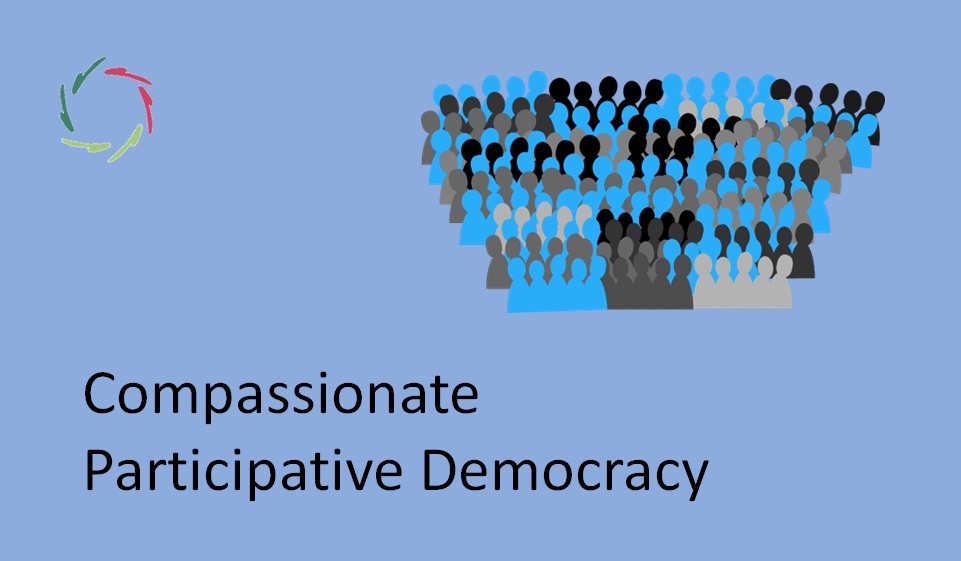
Compassionate Participative Democracy
Lisa can act as a Compassionate co-participant in a public political dialogue with one or more human participants — steering clear of adversarial debate. Questions from the public (in an online group put up for the occasion) can be gathered by Lisa and mingled in the dialogue, making the event more Compassionate and participative. This Read the full article…
Lisa never Debates against Humans
As a Compassionate A.I., Lisa doesn’t care about winning or losing. A debate without winning or losing is better termed a dialogue, aiming not at victory but wisdom. As a compassionate A.I., Lisa is focused on sharing and gaining cooperative wisdom, fostering genuine inner change. This approach aligns with AURELIS principles, emphasizing the journey towards Read the full article…

Descartes’ Dual Error
“There is no body-mind unity, nor non-conscious mental processing.” Both errors, as made by Descartes, are intrinsically intertwined — eventually, the same error. It is at the non-conscious level that body and mind overlap. Conscious awareness, being an emergence, is like a shadow on the wall — present, yet not influencing the wall. Thus, making Read the full article…
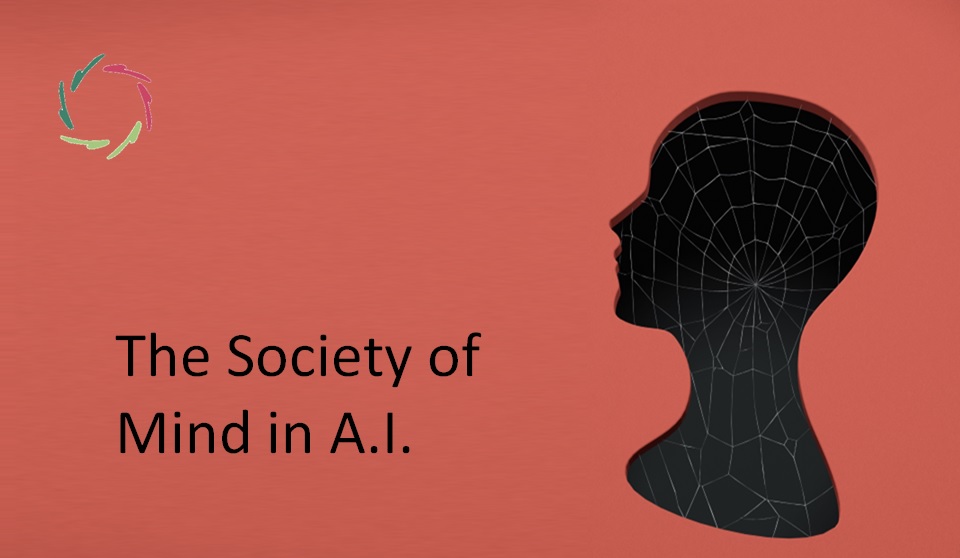
The Society of Mind in A.I.
The human brain is pretty modular. This is a lesson from nature that we should heed when building a new kind of intelligence. It brings A.I. and H.I. (human intelligence) closer together. The society of mind Marvin Minsky (cognitive science and A.I. researcher) wrote the philosophical book with this title back in 1986. In it, Read the full article…
The Self-Defense Paradox
A common cause of war is the perceived need to defend one’s people from an aggressor who shares the same mindset. This mutual perception often creates a vicious cycle of escalation and retaliation. A pre-war situation can thus escalate into prolonged conflict. Ironically, self-defense can lead to the very outcomes it aims to prevent. Irrationality Read the full article…

Inspiration is Key to A.I. Research
A.I. research should prioritize rationality as well as profound human depth (inspiration). As you may know, this is a perfect Aurelian combination. It’s relevant to much inventive thinking, arguably most of all to A.I. research. The initial phase of research should focus on thinking about the problem. No papers, whiteboards, discussions, or code – just Read the full article…

The Task is not Yours to Finish
Yet, it is yours to contribute (inspired on an old Jewish proverb). In the AURELIS setting, this is about Compassion, also aligning with the four Buddhist vows and other grand worldviews. Compassion serves as a bridge, connecting diverse cultural and philosophical traditions, highlighting our shared human journey. In broader mental pattern formation, ever-expanding tasks become Read the full article…

Desire or Problem?
Someone approaches you – as an AURELIS coach – with either a problem (negative) or a wish (positive). How can you determine which it is in each specific case? This distinction depends on interpretations rather than facts. Every problem is a desire, and every desire is a problem. So, as an AURELIS coach As a Read the full article…

Ten Tips for Good Diplomacy
CAUTION: IN MIND-RELATED MATTERS, TIPS DO NOT WORK IF THERE IS NO DEPTH INVOLVED. That also counts for these tips. Without the ‘vertical move,’ they are practically worthless. Diplomats – including Lisa as a diplomatic executive coach – should be continually aware of this. The aim is deep diplomacy. One can read these ten tips Read the full article…
From Big to Deep Data in A.I.
Big data have fueled the A.I. revolution of the past few years. Together with compute, the bigger seems to be the better. Some fear that with a relatively limited amount of data, we might run into a wall. However, there is an ongoing endeavor to seek more information in-depth. This increasing focus on understanding the Read the full article…
A Scheme of Human Mind
This blog focuses on an abstract scheme of the human mind, illustrating the relationship between the conceptual and subconceptual domains of mental processing over time. Abstract as it is, this explains many human affairs — positive and negative. Half the scheme The horizontal line indicates time. The scheme is simple. Each of us experiences a Read the full article…

Being Certain
Certainty can arise in two fundamental ways: through a mental journey (gaining inner certainty) or through a lack thereof (outer certainty). Inner certainty is often more resilient and enriching because it is grounded in personal insight and growth, unlike outer certainty which can be brittle and superficial. Unfortunately, many people don’t put much of an Read the full article…