Four Bodhisattva Vows & AURELIS
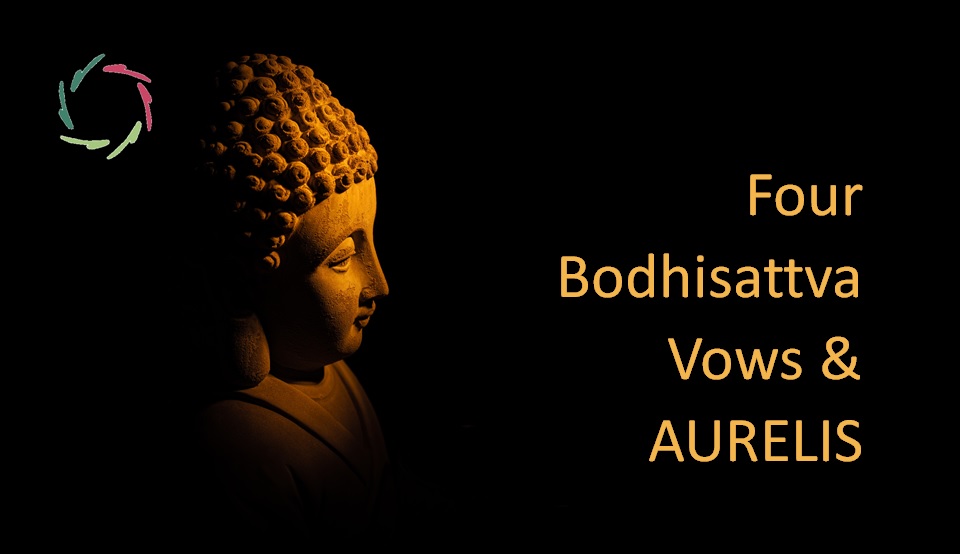
On the path towards personal ‘awakening’ (mental growth), Compassion is crucial.
[see: “Compassion, basically”]
Bodhisattva
A ‘bodhisattva’ is a Buddhist term for one on the path to personal awakening while caring for all others. It’s a very inclusive path, therefore Compassionate.
I’m no Buddhist, but I see the Buddhist philosophy as quite inspirational to the core. Many insights are profound.
The vows
There are many versions. This is the one I like most.
- How countless the sentient beings may be, I vow to liberate them.
- How deep the cause of suffering may be, I vow to put an end to it.
- How boundless reality may be, I vow to know it.
- How endless the path to awakening may be, I vow to attain it.
Vowing the impossible
These are not conceptual promises to be kept. It’s about full-hearted striving. It’s also about achieving, but this lies within the striving itself. [see: “Not the Winning, but the Striving”]
Superficially seen, it may seem contradictory. In-depth, it’s paradoxical.
You go for it and keep going for it even if it’s unattainable and even so, beyond comfortable boundaries. (Mere-ego doesn’t like this.)
You want to achieve, and you don’t, and that’s a good exercise in frustration-less desire.
Being perfect, ready to grow
These vows show paths. Progressing on these paths is an invitation to a mental shift, getting more open and ready to grow mentally. You learn to look at many things differently, more creatively, and more Compassionately.
Since you don’t attain the vows’ goals, you fail. In this full-hearted failing, you know you are perfect already. This is your being a perfect human being.
This also invites you to transcend mere-ego, to see your being part of a bigger whole that is your total self. Through this, symbolically, you also see your being part of an even much bigger whole that continues striving. The vow is from this feeling.
AURELIS
One can recognize each of the vows in the AURELIS project, respectively in the striving:
- to reach many people with present-day means: Internet, coaching chatbot [see: Introducing Lisa (Animated Video)”]
- to understand inner dissociation as a cause of all suffering, and to search for any means to alleviate this dissociation, thereby the suffering [see: “Cause of All Suffering: Dissociation”]
- to bring the whole reality into a scientific endeavor that combines conceptual and subconceptual mental processing [see: “About ‘Subconceptual’”]
- to put forward mental growth in synthesis with the relief of suffering.
In the last one, you can see the AURELIS take on Compassion. [see: “Two-Sided Compassion”]
AURELIS and Buddhism
AURELIS is not Buddhism, but I see it as a modern development compatible with where Buddhism at its best can – and should? – aim to.
I mean with this the purely philosophical kind of Buddhism that puts Compassion entirely at the forefront, even before stories about any Buddha that was or will be.
In any case, as described above, the four vows are pretty Aurelian.
Related Posts
A Disease is a Continuum, Not an Entity
Medical textbooks generally list diseases as crisp entities. This may be OK in a book, providing exemplars of reality. However, real reality is different. This has several far-reaching consequences. To be or not to be? Many diseases – if not all – are not binary conditions. To be or not to be, is not the Read the full article…
AURELIS Levels in a Pyramid
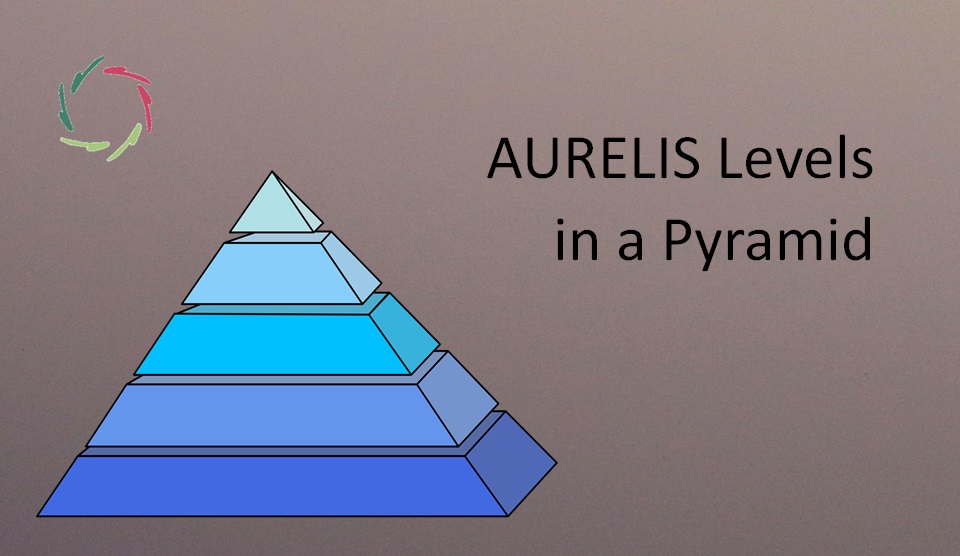
This is what AURELIS (+ Lisa) is about. From abstract to concrete, a lot has been worked out or may soon be ready for deployment. All levels are profoundly consistent. Please also take a look at: Introducing AURELIS (Animated Video). Or you may prefer AURELIS in a nutshell (Animated Video). You find here a written Read the full article…

Importance of Science to AURELIS
Science is an attempt to strengthen common sense in such a way that it can be used to transcend ‘common sense’. For example: the world is flat. Undeniably.. Anyone with a little common sense can see that clearly. Someone with a bit more common sense however will continue to think about it. Why do ships Read the full article…