
From Concrete to Abstract
Many people view the concepts of ‘concrete’ and ‘abstract’ as dichotomous ends of a straightforward spectrum — in daily life, often without much thought. This is also relevant to their use in inferential patterns. One example are mental-neuronal patterns in humans. However, the muddy underlying reality becomes especially apparent when trying to realize them in Read the full article…

Why Mystery is Attractive
Some mystery is attractive between the sexes — from man to woman as well as from woman to man. This can be seen as a reflection of the natural allure of the unknown within our deeper selves. Yet, one shouldn’t merely pretend to be mysterious. Relation to the subconceptual The subconceptual elements of our mind Read the full article…

Good Coaching is Naturally Flexible
A good coach is flexible, adjusting naturally from the inside out, presenting himself authentically across various situations. He adjusts himself dynamically yet is always consistently true to his core. Good coaching is like living water, not like rocks on the road. This embodies the AURELIS philosophy of fostering inner strength and growth from the inside Read the full article…

Opening the Doors of Post-Traumatic Stress
Post-Traumatic Stress (PTS) is not just a disorder but part of a human experience that contains depth and an opportunity for personal growth. This perspective respects the entire human being, recognizing that what might manifest as painful symptoms also holds the potential for revealing deeper strengths and insights. Please also read PTSD: a groovy kind Read the full article…
What seems ‘Difficult’ and is Not
At least if one doesn’t make it so. Many human-related ‘difficult’ things are made so. The reason can be boiled down to a lack of insight. This text is the counterpart to the blog ‘What seems ‘Easy’ and is Not.’ You might read them in one go. In the other blog, I write about some Read the full article…
What seems ‘Easy’ and is Not
The subconceptual domain may seem ‘easy’ mainly for those who operate predominantly within a conceptual framework. On the other side, what comes out of this domain may seem magical, almost impossible, for the same people. This is highly relevant as subconceptual influences, often underestimated, can have profound effects on our understanding and interactions in various Read the full article…

The Good Death
—The good death is the one that you do not avoid. That doesn’t mean you have to kill yourself. Rather the reverse. You do not not avoid death. But take that risk. Push that button. Take that responsibility. Take it as a living being, not some remnant of an organism that died already long ago. Read the full article…

Single-Session Therapy
‘Single-session therapy’ (SST) is a therapy format that started in the U.S. at the beginning of the nineties. It can be related to any psychotherapeutic school or no school. The focus lies as much as possible on empowering the client. This accords with the Aurelian focus on inner Strength. Other Aurelian values (openness, depth, respect, Read the full article…

Fostering Climate Motivation
This is the introduction to a Lisa File (38 p.). If you want the whole file, please contact lisa@aurelis.org, stating who you are and why you want the file. For more about the Lisa Files, click here. Pressing challenge Climate change presents one of the most pressing challenges of our time, intertwining environmental sustainability with Read the full article…
Democrats and Republicans in the U.S.
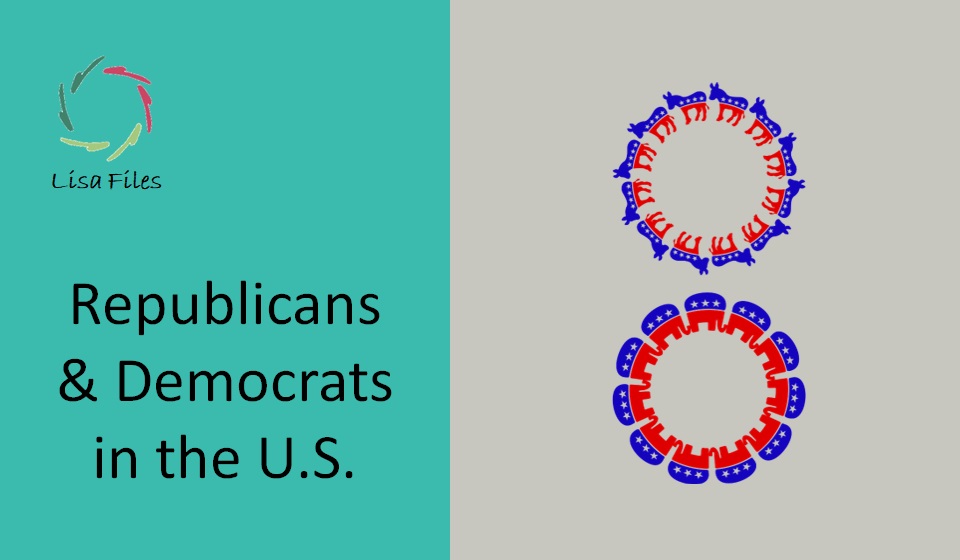
This is the introduction to a Lisa File (54 p.). If you want the whole file, please contact lisa@aurelis.org, stating who you are and why you want the file. For more about the Lisa Files, click here. A balanced understanding This document offers a detailed examination of the contrasting ideologies and policy stances of the Read the full article…
Opioid Addiction Relief – Read&Do
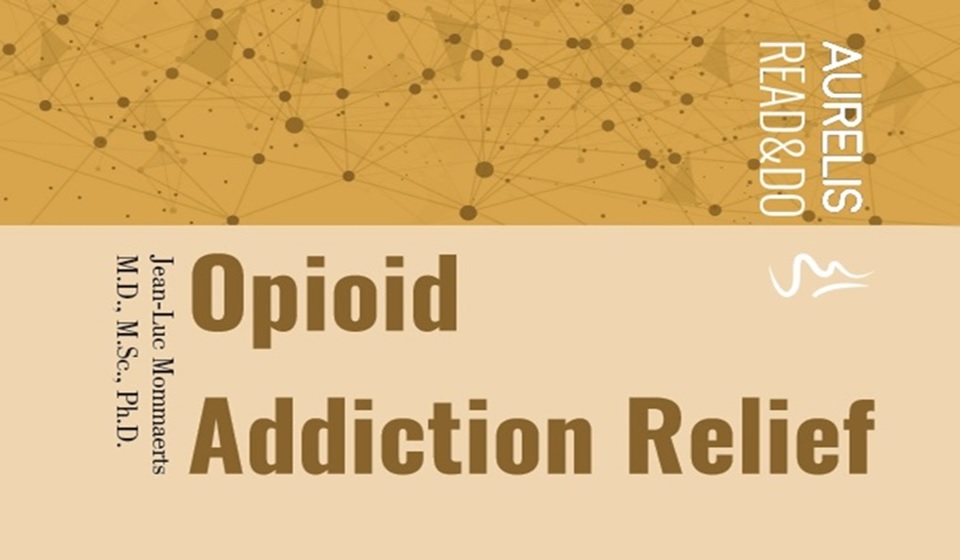
My latest book, in the Read&Do series. Available on Amazon. The journey Addiction, particularly opioid addiction, is a pervasive and harrowing issue that afflicts individuals, families, and communities across the globe. The journey to addiction is not a simple path, nor is it one that can be easily reversed with mere intent or superficial treatments. Read the full article…
Is an Idealist a Realist?
Of course not — this is, not straightforwardly. However, a realist needs to be an idealist. There is no genuine reality in anything human-related without ideals. Without ideals, there is only surreal cynicism. One can subtract ideals from reality. A cynical person, as mentioned, is inclined to do so with the argument that “this is Read the full article…
Psychology’s Replication Crisis
Since 2010, an effort (Many Labs 2) to replicate 28 of the most renowned and highly cited studies in behavioral psychology (with peer-reviewed protocols) has led to +/- half of them showing drastically different results in comparison to the originals. This should not be denied. It potentially calls into question substantial parts of scientific knowledge, Read the full article…

One Lisa for Everything
This is, ‘everything mind-related.’ What shows as different at the surface comes together in depth. Otherwise said, it starts from there. Roaming about there quickly leads to roaming about everywhere. Please first read The Lisa Distinction. A relevant issue/question is whether Lisa should work on one domain or several or many. Do people accept the Read the full article…
The Lisa Distinction
Bringing Lisa to this world may bring about many essential and direly needed changes. However, being needed for a long time also shows the challenge. Otherwise, these changes would have happened by now. Before going further, it’s good to ponder (for more about each, see other blogs): Antidepressants are a multibillion-dollar market (and growing), while Read the full article…

Lisa in Politics
What can Lisa’s role be as a Compassionate entity in politics ― nationally and internationally? Please first read Politics of Compassion. Note that Compassion, basically, isn’t merely an emotional state but a potent tool for bridging divides. Rest assured. Creating a political party wouldn’t align with Lisa’s core purpose or principles. Yet, in several ways, Read the full article…
Lisa and the Near Future of Work
This is about what Lisa can mean to the workplace in the next decade or two. Introductory An overarching theme in all this is meaningfulness. A ‘job’ should have as a first goal to make people happy (a natural consequence of meaningfulness). People with a job that makes them happy will be creative and productive. Read the full article…