Consciousness as a Feeling
What if the feeling of consciousness is provoked by something deeper inside (non-conscious) that also provokes every other aspect we associate with consciousness? In that case, nothing would be self-provoked by consciousness as we consciously feel it. Would you then still call it so? After answering the question, note that much evidence shows it to Read the full article…

The Wrong Experts
The basic cognitive illusion makes us not see what is always there. Domain experts may be especially prone to this precisely because of their conceptual expertise. Thus, where the mind is invisibly involved, the experts of the day are occasionally the wrong experts. Experts are necessary. This text should not give another impression. We need Read the full article…
Compassion is not Pity
Compassion can be seen as Eastern Enlightenment in action. The term can also be used for ‘pity,’ which is very different, giving additional insight into Compassion. Compassion with a capital C ― see Compassion, basically. Pity can be excellent. In that case, it resembles Compassion. Being touched by suffering is human. Compassion is not meant Read the full article…
The Big Mistake: Mere-Ego vs. Total Self
To me, this is the biggest possible mistake. Unfortunately, it is made ubiquitously and runs culturally deep. Please also read about Inner Dissociation – Ego – Total Self. I think, therefore, I am. [Dixit René Descartes, °1596] But who is the I who thinks, therefore, is? If this isn’t clear, the rest follows in obscurity. Read the full article…
The Purpose of Consciousness
Did nature give us consciousness to get us out of a non-conscious Garden of Eden? Or was it to make us the masters of the universe? Or both? This text is pretty tentative. ‘Consciousness’ is not the clearest concept, nor is ‘purpose’ within natural evolution. Still, the issue can lead to some interesting thoughts. Nature’s Read the full article…
From Inner Dissociation to Many Why’s
The COVID era reminded me that most people usually do not profoundly look at themselves even though it’s what they would profoundly want. Why such a seeming contradiction? The religions-exercise Around 80% of people on the planet believe in a conceptual religious phenomenon — for instance, some God with a name or a face or Read the full article…
Why Reinforcement Learning is Special
This high-end view on Reinforcement Learning (R.L.) applies to Organic and Artificial Intelligence. Especially in the latter, we must be careful with R.L. now and forever, arguably more than with any other kind of A.I. Reinforcement in a nutshell You (the learner) perform action X toward goal Y and get feedback Z. Next time you Read the full article…
Levels of Abstraction in Humans and A.I.
Humans are masters of abstraction. We do it spontaneously, thus creating an efficient mental environment for ourselves, others, and culturally. The challenge is now to bring this to A.I. Abstraction = generalization Humans (and other animals) perform spontaneous generalization. From a number of example objects, we generalize to some concept. A concept is already an Read the full article…
The Danger of Non-Compassionate A.I.
There are many obvious issues, from killer humans to killer robots. This text is about something even more fundamental. About Compassion Please read Compassion, basically, or more blogs about Compassion. Having done so, you know the reason for the capital ‘C,’ which is what this text is mainly about. To intellectually grasp Compassion, one needs Read the full article…
What is Common Sense?
Common sense is, by definition, supposed to be sensible as well as common to most people. When trying to bring common sense to A.I., it becomes clear there is more under the hood than just a humming. Toward developing A.I., it’s imperative to listen intently to the humming. In Dutch (my language, spoken by a Read the full article…

AureLisa One-Pager to Philanthropy
Are you a philanthropist? Then you may be interested in the AureLisa promises enumerated here. Proper backing for each point is abundantly available in scientific and other publications (books, articles, blogs, white paper, etc.). We are serious. If you are too, please let us know. Our philanthropic take is to be robustly embedded in a Read the full article…
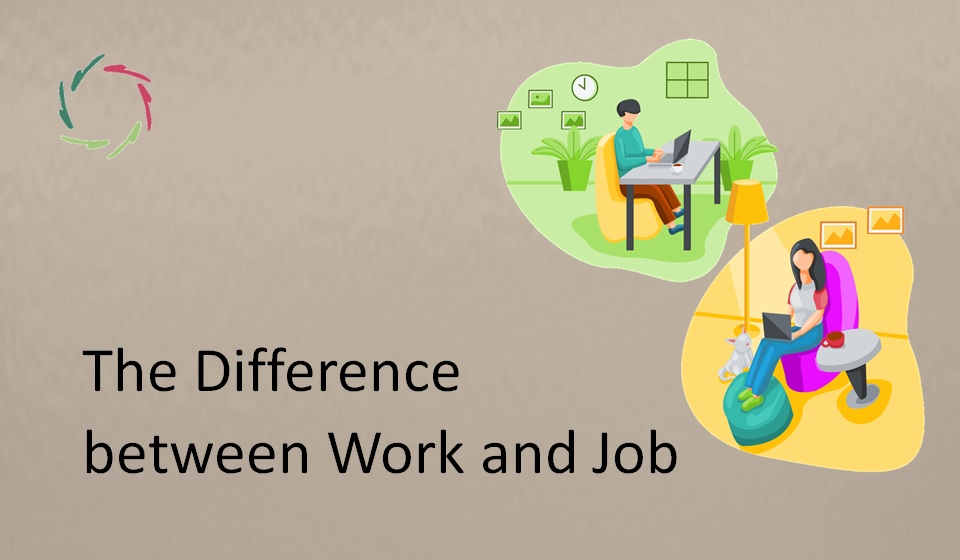
The Difference between Work and Job
A job is a job. Work is, broadly seen, the production of something meaningful within a specific structure and using energy. In this sense, work has been essential to life from the start of life itself. The essence of life is 1) to use energy, 2) to do so within a specific structure, and 3) Read the full article…

Popperian vs. Kuhnian
Karl Popper and Thomas Kuhn were two heavyweights in the thinking-about-science of the 20th century. Popper saw scientific progress as a gradual drifting. Kuhn added to this a sudden shifting — as in ‘paradigm shift.’ One can broaden this dichotomy to thinking in general. Many people are continually inclined, in their thinking, to go from Read the full article…
Let Us Go for Science with a Heart
Human-related science has, until now, not always taken the view from the heart. A.I.-based science may profoundly change this picture. If you are an avid reader of my blogs, this one has little new. Yet by putting things together from a different perspective, a new picture may emerge. Reproducibility Science is about many people being Read the full article…
What’s it Like to Be a Bat?
This is about the ‘hard question of consciousness.’ Some argue this will never be solved. In his 1974 article, “What is it like to be a bat?” Thomas Nagel argues that conscious experience is subjective and can only be known from that perspective. We might imagine what it would be like to hang upside down, Read the full article…
Open Letter about Compassionate A.I. (C.A.I.) to Elon Musk
And to any Value-Driven Investors (VDI) in or out of worldly spotlights. This is a timely call for Compassionate A.I. (C.A.I.) Compassion and A.I. are seldom mentioned together. Yet C.A.I. may be the most crucial development in the near as well as far-away future of humanity. Please see my book about the Journey Towards Compassionate Read the full article…
Three Reasons for a Guiltless Future
Guilt is as much an illusion as is the omnipotence of mere-ego within one’s mind (total self). Humanity is traveling toward the evaporation of both – joint – illusions. Great, but meanwhile, the path is challenging. You might read about how responsibility can replace feelings of guilt. See also the story of ego. The tip Read the full article…