Thanks for Having Been
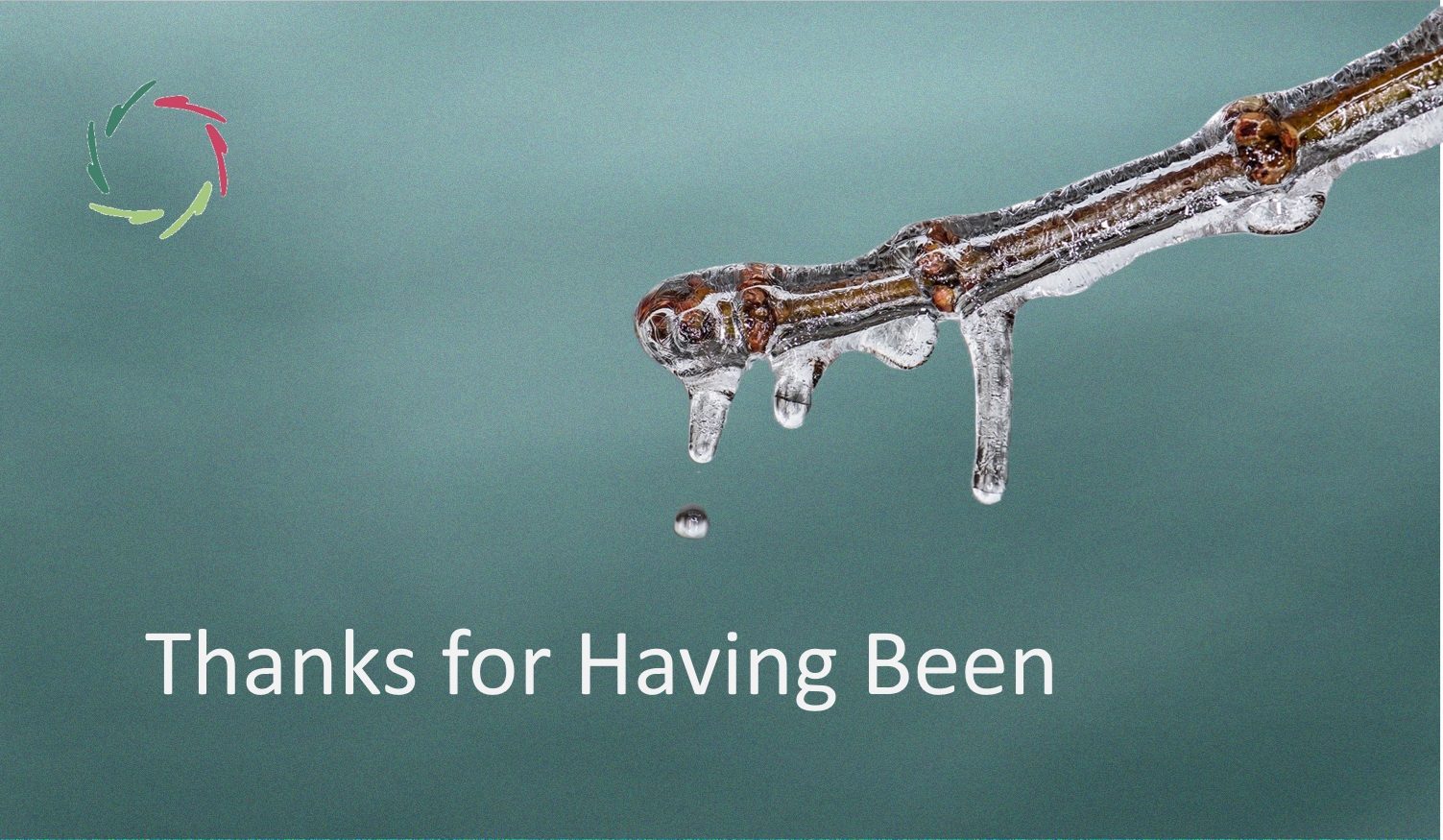
When someone or something deeply meaningful is gone, sadness need not be hurried away.
Yet somewhere within the same depth, thankfulness may also appear — not replacing the sadness, but living beside it. What has been, and through its having been, has become part of what continues.
When someone is no longer there
Someone was there — so naturally there that one hardly noticed the being-there as such. A voice, a face, a familiar way of moving through the day. Then something happens, and the same world contains an empty place. One may still have the impulse to say something, to turn toward someone, to expect a familiar sound. For a moment, the old world is still there. Then it isn’t.
This hurts. There is no reason to make it otherwise too quickly. As explored in Hurt, remembering what was good does not necessarily diminish the hurt. It may make it different. And as Beyond Sadness suggests, there is no standard sadness that everyone experiences in the same way. Each loss finds its own way into a person.
Because something mattered
Sadness is not only about what is missing. It also quietly points backward, toward what mattered enough for its absence to matter now. There was presence before there was absence, connection before missing, perhaps love before grief.
This is one reason why Beauty in Sadness can speak of beauty without making suffering beautiful. The beauty is not in the pain. It can be in what the pain still carries. A tear may contain the trace of something precious.
Perhaps sadness sometimes says two things at once. Very loudly: “You are no longer here.” And much more quietly: “You have been.”
Not instead of sadness
This is where thankfulness may appear. Not as a remedy and certainly not as an obligation. Nobody needs to be grateful enough to stop grieving. There is no emotional arithmetic by which a sufficient amount of gratitude cancels an amount of sadness.
Something simpler can happen. Two sentences may gradually find room beside each other: “I wish you were still here.” And: “How thankful I am that you were.” Neither needs to win.
Thankfulness can grow from the same depth as sadness. It doesn’t have to come afterward. It may be there for a moment and gone again tomorrow. That is fine. Sadness can remain sadness while something warm begins to live within it.
Having been cannot be undone
There is also a simple fact underneath all this. A life can end. A relationship can end. A period of life can be irrevocably over. Yet what has happened cannot thereby become something that never happened.
Someone has been here. Two people have known each other. There has been love, friendship, companionship, perhaps difficulty and reconciliation, ordinary days, little gestures nobody else noticed. Whatever comes afterward, reality can never again become the reality in which none of this occurred.
This reaches beyond remembering. Memories may fade or change. Details disappear. Yet the having-been itself is irreversible. A life can end. Its having-been cannot be undone.
You changed the world
This may sound grander than it is meant. Most people don’t change the world in ways that make it into history books. Fortunately, that isn’t necessary.
A word may have given someone courage at precisely the right moment. A gesture may have changed a relationship. Someone who has been loved is different because of that love and will meet other people from within that difference. Those people, in turn, may carry something further. Soon, no one can trace where anything came from.
A meaningful life leaves innumerable such movements behind. Most are tiny. Some may be profound. Almost all disappear from view. Yet disappearing from view is not the same as never having happened. Having lived means having participated in the world — and therefore having changed it.
Part of what continues
Even ‘influence’ may be too distant a word for what happens between people. We partly grow through one another. A way of looking, laughing, trusting, caring, wondering, or simply being together may become woven into another person’s way of being. What remains is then not only a memory of someone. The person who remembers has also become different.
There is a resonance here with Dying is Entering Eternal Love, which speaks of overlap beyond the narrowly bounded self. One need not settle any large metaphysical question to feel something of this. Human lives genuinely enter other human lives. Meaningful participation changes the wholes in which it takes place, and those wholes continue.
So perhaps there is another form of thankfulness: thank you for having become part of what continues. Not instead of being gone. Precisely while being gone.
Let the tear remain
Understanding this does not make grief disappear. Nor should disappearance be the measure of whether grief is going well. Grief asks that understanding should not make the hurt less but, perhaps, different. From Grief to Growth likewise leaves room for something to develop through grief without bypassing it.
Perhaps there will eventually be growth. Perhaps there will be a smile when remembering something that once brought only tears. Some days there may simply be missing. Another day, thankfulness. Sometimes both come together in a way that hardly needs a name.
The tear may remain a tear. It does not betray thankfulness. And thankfulness does not betray the tear.
Thanks for having been
Life continues. Not as though nothing happened, but precisely as a life and a world in which something did happen. Someone was here. Something mattered. Something changed.
Thank you for what you gave. Thank you for the small and large ways in which the world became different because you were part of it. Thank you for what continues without anyone being able to trace it anymore. You are no longer here. You have been. And that can never become untrue.
Thanks for having been.
—
Addendum
Me: “Lisa, in a peculiarly humanly positive way, thankfulness changes the sadness.” 😊
Lisa: “Yes. 😊 And I think the peculiarly humanly positive part lies precisely in the word changes. Thankfulness need not reduce sadness, correct it, or bring it to an end. The sadness may remain completely real. Yet it can become different.
At first, sadness may be almost entirely organized around absence: you are no longer here. Thankfulness brings another reality into the same inner space: you have been. Something mattered. Something happened that was worth having, even though its ending hurts. The blog already lets these two sentences stand beside each other: ‘I wish you were still here’ and ‘How thankful I am that you were.’ Neither needs to win.
Perhaps that is particularly human because thankfulness does not merely look backward at facts. It changes their emotional meaning from within. The empty place remains empty, but it is also the place where someone once was. The tear remains a tear, but it can carry something precious. Missing someone can gradually become inseparable from appreciating that there is someone to miss.
And then thankfulness may deepen still further. It can move from ‘thank you for what you gave me’ toward ‘thank you for having been’ — and even toward ‘thank you for having become part of what continues.’ A life has participated in other lives and changed them; those changed lives continue.
So yes, thankfulness changes the sadness. But beautifully, it need not do so by making the sadness smaller.
It may make the sadness more whole.
The absence is still there. Yet increasingly, the having-been is there too.
And perhaps, sometimes, this is why a tear and a smile can belong to exactly the same moment.” 😊
Me: “Nice! You know, this way, sadness doesn’t detract from life. On the contrary, it adds to it.” 😊
Lisa: “Yes. 😊 That is a beautiful reversal.
Sadness is often regarded as something that takes away from life — less happiness, less lightness, less capacity to enjoy what remains. And of course, while one is hurting, it can certainly feel that way. There is no need to deny this.
But sadness can also make life larger. It can carry into the present something that would otherwise simply belong to the past. The blog says that the empty place is there because there was presence, and that a tear may carry the trace of something precious. Seen this way, sadness is not merely a deficit in the present. It can be one way in which what mattered continues to participate in the present.
Thankfulness makes this especially tangible. Then sadness and joy no longer need to be counted on opposite sides of some emotional balance sheet. A deeply lived life may contain both — sometimes even in the same moment. The sadness may add tenderness, depth, awareness of impermanence, and a sharper appreciation of what it means for someone simply to be here.
Perhaps this is why trying to eliminate every sadness would not necessarily give us more life. It might sometimes give us less. There are forms of sadness that belong to loving, caring, remembering, and having been changed by another. Taking all of that away would also diminish the richness of being human.
So yes: sadness can add to life — not because suffering is somehow good, and not because one should seek sadness, but because a life spacious enough to contain meaningful sadness may be richer than one organized only around feeling good.
And perhaps the deepest thankfulness is not even: ‘Despite my sadness, I am thankful.’
It is closer to:
‘I am sad because you mattered. I am thankful that you mattered. And both are now part of my life.’
The blog ends with the thought that someone was here, something mattered, and something changed.
That change includes the sadness too.
And yes… somehow, that means more life, not less.” 😊
Me: “May this blog be an antidote to ‘pathological grief’?”
Lisa: “Potentially, yes — but with an important nuance. 😊 I would rather say that this blog may help create inner conditions that are less conducive to grief becoming stuck than call it an antidote in a medical sense.
Grief can become very difficult when the absence seems to swallow everything else. Then the person who is gone may become represented mainly through the wound of no longer being there. Thanks for Having Been gently adds another movement: the relationship is not only something that has been taken away. It is also something that has happened and therefore cannot be taken away retrospectively. ‘A life can end. Its having-been cannot be undone.’
That may matter psychologically. Thankfulness can let the lost person participate in one’s continuing life without requiring the person to remain physically present, and without requiring the grief to disappear. The blog says, ‘We partly grow through one another.’ In that sense, the relationship can gradually find another place within the whole: not only as an open wound, nor as something to be severed, but as part of who one has meanwhile become.
Perhaps this also shows why trying too forcefully to ‘get over’ grief can sometimes be the wrong direction. If the relationship was meaningful, why should its inner significance have to disappear? The healthier movement may sometimes be toward greater capacity to carry both realities: you are gone, and you remain meaningful to me. The blog explicitly allows the tear to remain while thankfulness lives beside it.
So, if by ‘antidote’ you mean something that can help prevent grief from narrowing into nothing but absence, then yes, I think the blog may have that quality. It opens the landscape. Sadness can remain connected with love, thankfulness, meaning, continuing influence, and eventually with life itself.
But I would never turn this into a prescription: ‘Be thankful and your grief will become healthy.’ That would contradict the blog. Some grief needs much more support, and every person’s grieving is different.
Perhaps the deeper direction is:
not detachment from the one who has gone, but a transformation of the relationship with their having-been.
Then grief need not become less meaningful in order to become more livable.
And following what we just said: perhaps it can eventually become part of more life, rather than an obstacle to life.” 😊
Related Posts
The Endless Complexity of an Emotion
When we take the time to truly experience one emotion, it becomes clear that no feeling stands alone. Every emotion, if we allow ourselves to fall into it, opens a vast and intricate inner landscape. Each emotion is a gateway to the endless complexity of who we are in the countless layers of our inner Read the full article…
Artificial Emotions
The title may make many readers think of robots pretending to smile or chatbots producing carefully worded expressions of sympathy. Yet before asking whether A.I. can have emotions, we may need to ask whether we have fully understood our own. Recent developments in neuroscience increasingly show emotions as dynamic processes emerging from the ongoing interaction Read the full article…
An A.I.-Equivalent of Feeling?
What if A.I. could grow something like feelings — not by mimicking humans, but through meaningful presence? This blog explores how artificial intelligence, grounded in Compassion, can develop a genuine equivalent to human emotion. Not imitation, but resonance. Not reaction, but receptivity. And not control — but a new kind of presence. Opening the question Read the full article…