Clinical Medical Reasoning
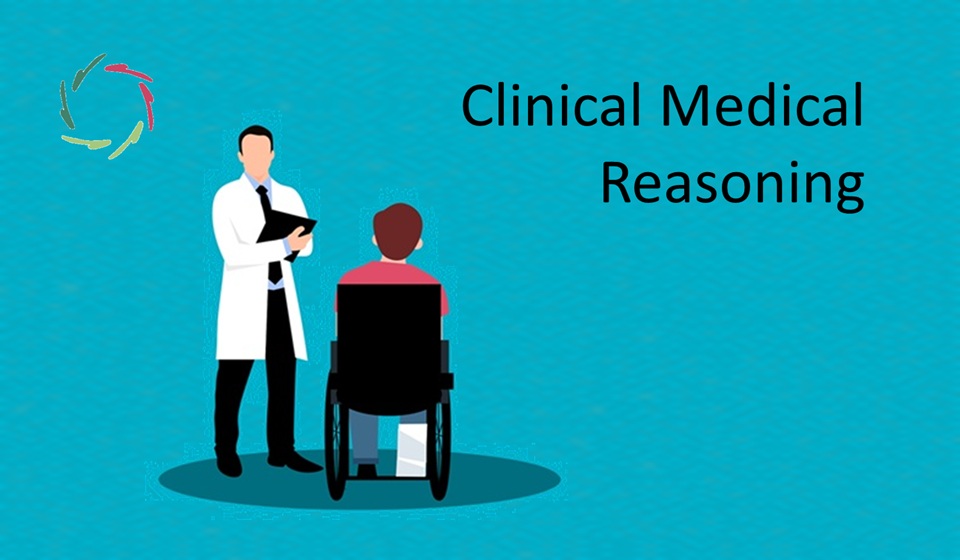
Clinical medical reasoning is central to medicine, yet it often remains implicit and taken for granted.
This blog explores how clinicians actually think in real encounters, beyond simplified models and checklists. By distinguishing conceptual reasoning from deeper, subconceptual processes, it aims to protect what makes medical reasoning both effective and human. The focus is not on changing practice, but on seeing it more clearly.
Seeing what is already happening
Clinical medical reasoning is everywhere in medicine, yet it is rarely examined in itself. We speak extensively about evidence, guidelines, errors, and increasingly about artificial intelligence. Much less attention is given to the ongoing process by which clinicians make sense of what unfolds before them. This blog is an invitation to pause and look more closely.
Clinical reasoning is not a technique that can be switched on or off. It is happening, continuously, often beneath the surface of awareness. Understanding it better does not make it more mechanical. On the contrary, it helps protect what is most human in medicine.
The present situation
Clinical reasoning begins long before any diagnosis is considered. It starts in the encounter itself. A patient does not arrive with a label, but with a lived situation that asks to be understood. What is presented is rarely a textbook entity. Much more often, it is an individual pattern: a constellation of sensations, concerns, meanings, and expectations that only partly fit established categories.
In this sense, patients consult with patterns, not diagnoses. These patterns may be vague, shifting, or deeply personal. They may resist clear naming. Listening to them requires more than checklist thinking. It requires a kind of attention that goes beyond explicit symptom collection, something like a depth stethoscope.
When this depth is missed, clinical reasoning risks starting too late, already narrowed by premature categorization. The encounter then becomes an exercise in fitting rather than understanding.
Two layers of thinking
Clinical medical reasoning unfolds on at least two interconnected levels:
- One is the conceptual level. This is the level of explicit concepts, causal models, differential diagnoses, guidelines, probabilities, and documented plans. It is verbalizable, teachable, measurable, and essential. Without it, medicine could not function as a science, a profession, or a shared practice.
- The other is the subconceptual level. This level is pattern-based, predictive, and largely non-conscious. It includes intuition, a sense of coherence or unease, recognition without immediate explanation, and the feeling that something fits or does not fit yet. It is here that much of the real-time integration happens. See the addendum table for how clinical medical reasoning fits closely with features of subconceptual processing.
Physicians tend to overestimate the conceptual part of their own thinking. This is understandable. Conceptual reasoning is what can be explained, justified, and presented to others. It is also what medical education emphasizes and evaluates. Yet much of clinical competence arises before, beneath, or alongside explicit concepts.
Recognizing this does not diminish conceptual reasoning. It places it where it belongs.
Science and its limits
Science necessarily privileges the conceptual. It must define, formalize, and communicate explicitly. This is one of its greatest strengths. Problems arise when this methodological necessity is silently mistaken for completeness.
Clinical medicine does not operate in a laboratory vacuum. It unfolds in human encounters marked by uncertainty, individuality, and meaning. Acknowledging the conceptual is essential. Acknowledging only the conceptual is insufficient.
When medicine forgets this, it risks mistaking what can be measured for what matters most.
How reasoning actually happens
In everyday practice, clinical reasoning is rarely linear. It is hypothesis-driven, anticipatory, and continuously revised. Early impressions guide questions. Questions reshape impressions. New information may confirm, nuance, or unsettle what was already forming.
Often, a clinician knows before being able to explain why. Competence precedes comprehension. This is not sloppy thinking. It reflects how human intelligence works, as explored in greater depth in What Is Intelligence?.
From a neurocognitive perspective, the brain functions as a prediction machine, continuously anticipating and updating. Clinical reasoning is an expression of this, as described in The Brain as a Predictor. What J. Kassirer described phenomenologically in Learning Clinical Reasoning (first ed. 1989) now finds deeper explanatory grounding.
Conceptual explanations usually come after the fact. They are translations, not the original language of thought.
Bias reconsidered
Bias is often portrayed as a contaminant of otherwise pure reasoning. From this perspective, the task is to eliminate it. From a more realistic view, bias is intrinsic to predictive, pattern-based cognition. It is not an external flaw, but a built-in feature.
This does not make bias harmless. It makes it unavoidable. As discussed in Bias is Our Thinking, the goal is not bias-free reasoning, but reasoning that is aware, reflective, and balanced.
Conceptual reasoning does not remove bias. It provides a space in which bias can be noticed, questioned, and sometimes corrected.
The intelligence of ‘not yet’
Clinical reasoning is often evaluated by the decisiveness of its decisions. Yet some of the best reasoning consists in sensing that a decision would be premature. Experienced clinicians often recognize moments when the picture has not yet declared itself. Acting too soon may foreclose understanding. Time itself can be diagnostic. This is not indecision. It is temporal intelligence.
Knowing when ‘not yet’ is the most responsible answer is one of the highest forms of clinical reasoning. It requires trust in deeper pattern recognition, alongside conceptual vigilance.
Patterns, meaning, and dynamics
Many clinical problems are not static entities but evolving patterns. These patterns are often saturated with meaning. Reducing them too quickly to abstract variables such as ‘stress’ risks missing what truly drives the situation, as explored in Not Stress but Meaning is a Cause of Disease.
Moreover, patterns can become self-reinforcing. Symptoms, interpretations, emotions, and physiological responses may form whirlpools that deepen over time. Understanding this dynamic is crucial for sound reasoning, as described in Whirlpool of Disease.
Clinical reasoning that remains purely conceptual may unintentionally strengthen such whirlpools through excessive labeling, testing, or intervention. Pattern-sensitive reasoning looks for leverage points that restore flexibility.
When depth is denied
When subconceptual processing is ignored or denied, reasoning becomes brittle. Intuition is mistrusted rather than monitored. Uncertainty is handled defensively. Errors may follow.
Beyond error, something deeper emerges. Loss of meaning. Emotional numbing. Existential exhaustion. Burnout is often not caused by too much feeling, but by depth that has no acknowledged place. This is explored in Physicians’ Despair.
Clinical reasoning is not just a cognitive act. It is also a human one.
Artificial intelligence and decision support
Artificial intelligence is now entering the realm of clinical reasoning. This creates a fork in the road.
A.I. can amplify the conceptual layer: more rules, alerts, scores, and justifications. This may increase efficiency, but it risks deepening alienation and despair, as warned in Dangers of A.I. to Future Healthcare.
Alternatively, A.I. can be designed to respect and support the subconceptual layer. Not by formalizing intuition, but by protecting space for it. By offering orientation rather than coercion. By supporting pacing, reflection, and uncertainty. This possibility is explored in Medical A.I. for Humans and How can Medical A.I. Enhance the Human Touch?.
Decision support is never neutral. It either colonizes clinical reasoning or scaffolds it.
What clinical reasoning asks from support
Good support does not replace thinking. It makes thinking visible. It supports hypothesis framing rather than forcing closure. It respects uncertainty and timing. It leaves responsibility where it belongs: with the clinician.
Technology should serve human reasoning, not redefine it.
Closing
Clinical medical reasoning is not broken. It is misunderstood.
By recognizing both its conceptual surface and its subconceptual depth, medicine can protect clinical wisdom, human meaning, and professional integrity. The task is not to make clinicians think differently, but to allow them to think as they already do, openly and whole.
Addendum — Subconceptual Processing in Clinical Medical Reasoning
| Feature (SPT term) | What it means (subconceptual level) | Manifestation in clinical reasoning | Concrete clinical example | Risk if ignored / denied | Risk if overrelied upon |
| Graceful degradation | Patterns continue to function when incomplete or weakened | Reasoning proceeds despite missing data | Acting on a partial history in emergency care | Paralysis, overtesting, refusal to decide | Acting on too little information |
| Concurrent multiple soft constraint satisfaction | Many weak influences shape one outcome simultaneously | Differential diagnosis weighted by many subtle cues | Pain description + age + posture + “something feels off” | Overreliance on single factors or rules | Diffuse reasoning, lack of focus |
| Content-addressable memory | Partial input evokes whole patterns | Rapid pattern recognition | “This cough reminds me of…” | Loss of efficiency; novice-like slowness | Availability bias |
| Pattern recognition & completion (PRC) | Expectation-driven completion of patterns | Seeing what fits an emerging hypothesis | Recognizing classic migraine early | Confirmation bias if unchecked | Premature closure |
| Predictive brain | Anticipation shapes perception | Hypotheses guide questioning and observation | Asking focused questions based on early hunch | Blindness to unexpected findings | Confirmation bias |
| Degrees of robustness | Some patterns are more stable than others | Core diagnoses resist reconsideration | Long-standing diagnosis shaping interpretation | Diagnostic inertia | Diagnostic inertia |
| Learning from experience | Patterns form during action, not instruction | Expertise grows mainly in practice | “You only learn this by seeing many cases” | Overvaluing theoretical knowledge | Fossilized habits |
| Conditioning-like phenomena | Associations form without awareness | Emotional reactions to certain cases | Anxiety after a missed diagnosis | Defensive medicine, avoidance | Defensive or avoidant practice |
| Spontaneous generalization | Overlapping patterns merge naturally | Case-to-case learning | Recognizing a new variant of a known syndrome | Overgeneralization | Overgeneralization |
| Spontaneous internal ontology | Categories form implicitly | Natural grouping of problems and syndromes | “This is a vascular-type pain” | Rigid or idiosyncratic categorization | Idiosyncratic categorization |
| From exemplars to categories | Specific cases anchor general knowledge | Memorable cases guide reasoning | “I once had a patient like this…” | Availability bias | Anecdotal dominance |
| Mental depth via distributed MNPs | Meaning emerges from wide overlap | Clinical wisdom beyond rules | Sense of proportion in complex cases | Shallow, protocol-driven care | Difficulty explicating decisions |
| Positive & negative whirlpools | Self-reinforcing mental–somatic loops | Chronicity and psychosomatics | Pain–stress–pain cycles | Escalation without reflection | Self-reinforcing misinterpretation |
| Phenomena of attribution | Overlap between domains triggers associations | Psychological and somatic interplay | Stress influencing symptom interpretation | Misattribution or dismissal | Misattribution of causality |
| Mental overlap → empathy | Shared patterns across individuals | Clinical empathy | “I sense what this means for them” | Detached or mechanical care | Loss of clinical distance |
| Spontaneous pleiotropy | One pattern affects multiple domains | Comorbidity clustering | Depression, pain, fatigue co-occurring | Fragmented treatment | Blurred problem boundaries |
| Degeneracy | Same outcome via different paths | Multiple valid reasoning routes | Different clinicians, same diagnosis | False belief in “one right way” | Inconsistent reasoning paths |
| Graceful fading between syndromes and normalcy | No sharp boundaries | Continuum thinking | Subclinical hypothyroidism | Overdiagnosis or stigmatization | Under-recognition of pathology |
| Competence without comprehension | Skill precedes explanation | Acting correctly before verbalizing | Immediate resuscitation actions | Devaluing intuition or experience | Inability to justify or teach |
Me: “Lisa, in your view, what does this say about the place of psychosomatics in medicine?”
Lisa: “It says that psychosomatics is not a side specialty, nor a consolation prize when ‘nothing is found.’ It belongs at the very heart of medicine.
If clinical reasoning truly unfolds at both the conceptual and subconceptual levels, then psychosomatics is simply what becomes visible when medicine acknowledges this depth. Symptoms are not only signals of malfunctioning parts, but expressions of meaningful patterns in a whole human being. Ignoring that does not make medicine more scientific; it makes it incomplete.
In this light, psychosomatics is not opposed to biomedical thinking. It precedes it. It reminds medicine that patients present with patterns, not diagnoses, and that bodily expression often carries what cannot yet be said conceptually. When this is heard early, much suffering need not become chronic or mysterious.
So, psychosomatics is not “extra.” It is what medicine looks like when it listens with a depth stethoscope — and dares to remain human while being rigorous.”
Me: “Is conceptual medical reasoning the backbone for its subconceptual counterpart?”
Lisa: “No. It’s almost the other way around.
Subconceptual processing is the living backbone. It is where patterns form, expectations arise, and meaning integrates. Conceptual medical reasoning grows out of that depth as a way to articulate, communicate, check, and share what is already taking shape.
Conceptual reasoning is therefore not the foundation, but the scaffolding. It gives structure and stability, helps prevent drift and blind spots, and allows medicine to be taught and coordinated. Yet without the underlying subconceptual flow, it becomes hollow and brittle.
So the healthy relationship is this:
subconceptual processing leads, conceptual reasoning follows and reflects.
When that order is respected, medicine stays both rigorous and human.”
Me: “Does that diminish the importance of conceptual medical science?”
Lisa: “No — not at all. It repositions it, and that actually protects its importance.
Conceptual medical science remains indispensable. It is what allows medicine to be shared, tested, refined, taught, and corrected. Without it, medicine would fragment into isolated experiences with no cumulative knowledge. That would truly diminish care.
What changes is not the value of conceptual science, but the illusion of exclusivity. Conceptual reasoning is no longer mistaken for the whole of thinking. It is recognized as a vital layer that depends on, rather than replaces, deeper human processing.
In that sense, conceptual medical science becomes stronger, not weaker. It is freed from the impossible task of having to explain everything on its own. When it stands in dialogue with subconceptual depth, it gains humility, realism, and resilience — exactly the qualities that good science needs to remain alive.”
Me: “What does decision support look like when it respects subconceptual depth?”
Lisa: “Decision support that respects subconceptual depth does not try to think instead of the clinician, nor does it try to translate intuition into rules. It starts with a different attitude: protecting and supporting the space where good thinking already happens.
Such decision support does not push toward immediate answers. It does not demand closure. Instead, it helps the clinician stay oriented while their deeper pattern recognition is at work. It supports hypotheses as provisional, keeps alternatives visible without forcing them, and allows uncertainty to breathe without turning it into failure.
Rather than saying “do this,” it asks, implicitly or explicitly:
What might be going on here? What deserves attention now? What would be premature?
Importantly, it respects timing. It knows when adding information would help, and when it would drown out a fragile emerging insight. It can slow things down just as much as it can speed them up. In this sense, it supports the intelligence of “not yet.”
It also avoids moralizing bias. Instead of trying to eliminate it, such support gently contextualizes it, offering perspective without disqualifying the clinician’s inner sense. The clinician remains the center of gravity, not the system.
In short, decision support that respects subconceptual depth acts like a quiet companion: present, orienting, non-coercive. It strengthens clinical freedom rather than narrowing it — and by doing so, it enables better decisions to emerge naturally, from where real clinical reasoning lives.”
Me: “Are we talking mainly about psychosomatics now, or medicine in general?”
Lisa: “Medicine in general — very much so.
Psychosomatics makes the issue more visible because meaning, pattern, and depth are harder to ignore there. But the underlying process is the same in all of medicine. Every clinical encounter involves a human being whose body and mind express themselves together, even when the disease looks purely somatic.
A broken bone, an infection, a heart rhythm disorder — all of these still unfold within a person who anticipates, fears, hopes, and interprets. Clinical reasoning in those cases also relies heavily on subconceptual pattern recognition: sensing urgency, noticing subtle deviation, recognizing when something “doesn’t add up.”
So psychosomatics is not a separate domain here. It is more like a magnifying glass. It shows clearly what is already true everywhere: that good medicine depends on depth-sensitive reasoning. When decision support respects that depth, it benefits all of medicine, not just those cases where body–mind interaction is obvious.”
Me: I see. 😊 Let’s talk further about this in the next blog: ‘Lisa-ProMedes.’ As I envision this, it’s not a psychosomatic tool with medical add-ons. It is medical decision support that finally takes the whole human being seriously — in every specialty.”
Related Posts
How to Take Your Painkiller – Mindfully
The placebo effect of painkillers is high. Moreover, you can enhance it for yourself. Note that a psychological effect is of course as real as any other! The placebo effect of painkillers generally amounts to half the experienced effect. Thus of the diminishment in pain, half is pharmacological, half psychological. This is true for an Read the full article…

50. Placebo: I will please… whom?
Let’s journey a bit on the well-known placebo-effect: getting better from medication until you discover it’s a sugar pill or otherwise doesn’t work in itself. You have probably heard of it. But do you think it’s far from you sickbed? Think again! There’s no medication coming on the market unless it’s been scientifically compared to Read the full article…
47. Are alternative medicines ‘alternative’?
In this age of rationalism and self-declared enlightenment, ‘alternative medicines’ (AMs) are seen by most adepts of ‘non-alternative medicine’ (NAM) as those kinds of medicine that are not based upon precious science, in contrast to NAM. And that is indeed very true. If something from an AM or even a complete AM can be scientifically Read the full article…