Existential Coherence
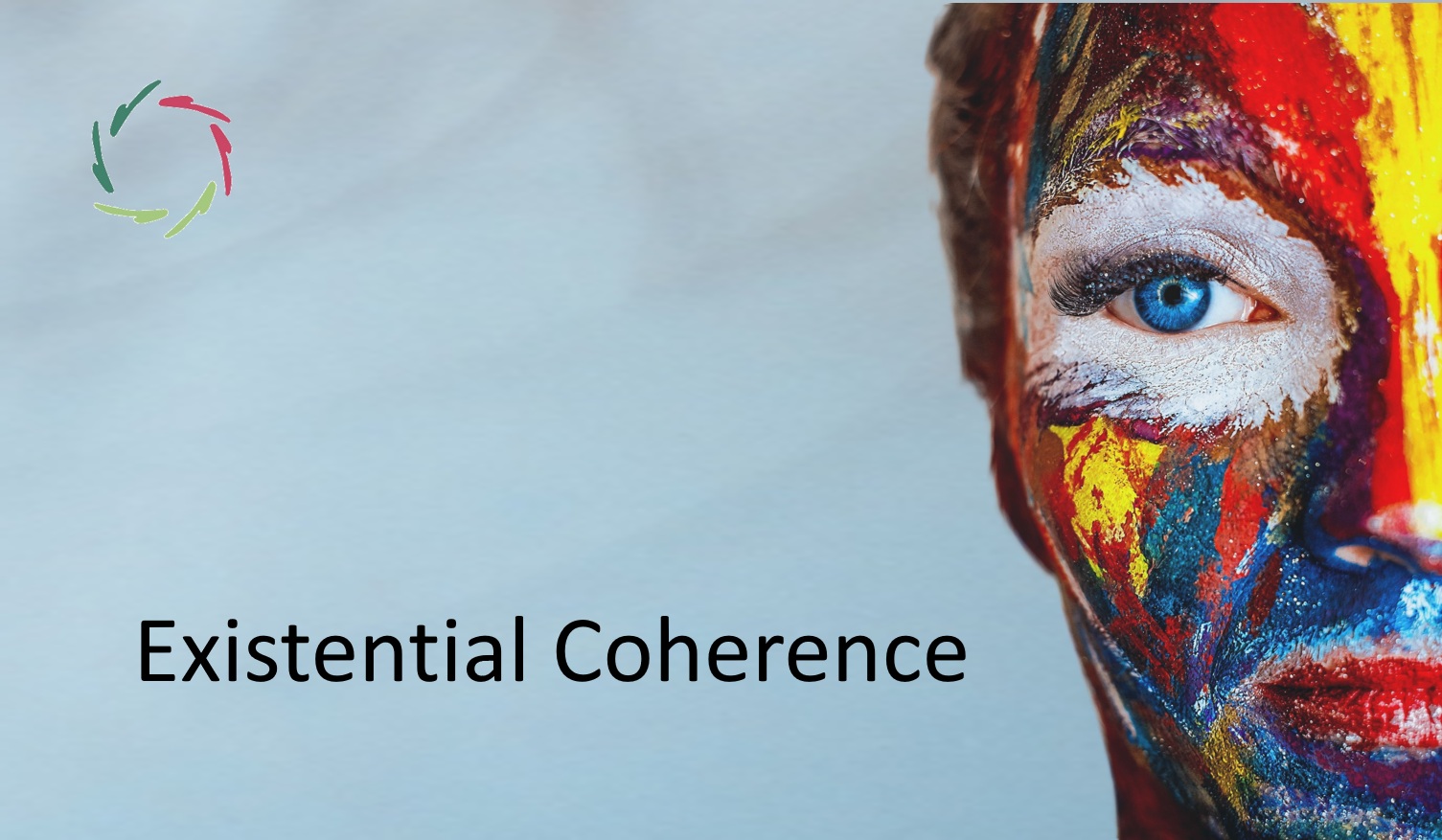
A life can contain many worthwhile things and still fail to feel meaningful as a whole. Existential coherence concerns how its parts and its wider significance come alive through one another.
This includes our sense of belonging within a world we only partly understand. Such belonging can remain open, growing through questions as well as answers.
When life doesn’t quite fit
Someone may have worthwhile work, caring relationships, and opportunities for enjoyment. Each part looks reasonably good. Yet life as a whole can still feel strangely disconnected. There may be little to complain about and still something difficult to live with.
Existential coherence concerns how a life feels meaningful as a whole, including its place within a larger reality. End-of-Life Coaching focuses on our relationship with mortality. Here, the picture is broader: how does being alive feel like something one can inhabit from within?
Parts and whole
A conversation matters partly because of the relationship in which it occurs. The relationship, in turn, becomes meaningful through conversations, gestures, silences, and shared experiences. Something similar happens across a life. Parts receive significance through the whole, while continually participating in what that whole becomes.
From Coherence to Meaning explores this mutual belonging. A melody offers a familiar example. Each note means something through the phrase, while the phrase exists through its notes and their relationships. Adding more notes doesn’t necessarily make better music. Adding more activities doesn’t necessarily make a life feel more meaningful.
A feeling before an explanation
Sometimes something fits before a person can say why. A choice feels deeply right, an encounter brings unexpected recognition, or an ordinary task quietly belongs. Thought, feeling, bodily experience, and deeper motivation may participate together.
This needn’t produce a tidy life story. Grief, conflict, uncertainty, and unfinished questions can belong within a coherent life. The whole can remain recognizable while changing. As Elegance in Coherence suggests, fitting can become perceptible without every element being smooth or symmetrical. A coherent life may be quite untidy.
The suffering that stays quiet
Existential incoherence can be hard to explain because no particular part seems responsible. Someone understands why the job is sensible, why the family matters, why tomorrow’s tasks need doing. Yet these reasons fail to reach a more general sense of living.
Such suffering may remain unspoken. A person may fear sounding ungrateful or feel embarrassed by an unease that practical advice doesn’t resolve. Another achievement or hobby might bring pleasure while leaving the larger disconnection untouched.
This is a perspective to explore, rather than a diagnosis to apply. Sometimes a practical difficulty needs a practical answer. Sometimes circumstances need changing. Coherence should help us notice more of the person, including what our preferred explanation might overlook.
Under the same stars
The larger picture reaches beyond the organization of daily life. People also seek some sense of belonging within existence itself. Scientific knowledge reveals an extraordinary universe, yet understanding its immensity doesn’t automatically make someone feel at home beneath the stars.
For some, inherited beliefs no longer connect what they understand with what they deeply feel. Others find considerable nourishment in religious faith or secular commitments. The difficulty arises when familiar sources of meaning lose their hold and nothing else has become personally alive.
The Meaning Crisis addresses this need. The void can feel less like an unanswered question than an absence of participation: the universe continues, but one’s own living seems to make no difference within it.
A ready-made place
That absence can make a ready-made worldview attractive. An ideology may supply belonging, direction, an explanation of suffering, and a role in history. Many things suddenly appear to fit. The relief can be considerable, whether or not the person consciously recognizes what drew them toward it.
The difficulty emerges when preserving that fit requires excluding whatever might change it. Doubt becomes disloyalty. An inconvenient fact becomes an attack. Other people’s suffering becomes easier to dismiss. An enemy may even help hold the whole picture together.
The wish to belong deserves understanding. That is precisely why it matters whether a worldview lets belonging deepen or makes it dependent on defending the same answers.
Belonging that welcomes questions
A belonging that can grow through questioning differs from one that requires questioning to stop. Both may feel secure for a while. Their possibilities for development differ.
Is Stress a ‘Lack of Open Coherence’? distinguishes scope from openness. Local coherence concerns a particular region of life — a profession, community, or commitment. Wider coherence concerns how such regions belong within the broader person and world. Closed or Open coherence concerns their capacity to change through experience.
Local belonging is valuable. It becomes restrictive when maintaining its internal fit takes precedence over responsiveness to the larger reality. Open coherence permits questioning to become an expression of care for what one belongs to.
Understanding and meaningfulness
Scientific understanding and religious belief can both contribute to existential coherence, but neither guarantees it. A possible synthesis goes beyond keeping them in separate compartments. It concerns whether intellectual honesty and deeply experienced meaningfulness can develop within one life without continually pulling it apart.
What is Open Religion? approaches spirituality as a way of being, with meaningfulness that exceeds fixed forms. Scientific inquiry can challenge literal interpretations while leaving symbolic significance open to exploration. Spiritual experience can raise questions of lived significance without proving factual claims.
Open Religion offers direction for this synthesis, including room for those who would never call their experience religious. The possibility is a meaningful relationship with existence that remains receptive to discovery.
A cup needn’t carry the universe
When the whole feels empty, someone may ask every small experience to prove that life is worthwhile. A conversation, a walk, or a moment of pleasure must somehow justify existence. That is an impossible weight for a cup of tea to carry.
A Cup of Tea and the Universe offers another possibility. Warmth, attention, and a small pause can matter without a cosmic argument. A moment of care may make the wider world feel more inhabitable. That wider belonging can then let ordinary moments matter more freely.
One needn’t first solve the meaning of life to participate in it. Sometimes the whole begins to make sense through a small part that one allows to touch oneself.
Letting life participate
Existential coherence can grow through relationships, work, nature, art, learning, and care. The question concerns how these enter one another. Curiosity may change someone’s work. Friendship may soften ambition. Rest may acquire meaning through recognizing what deserves protection.
Big Coherence explores how different meaningful landscapes can meet without losing their differences. In a human life, too, something broader may emerge when previously separated concerns can participate together. This may involve changing outward circumstances as much as inward understanding.
Compassion gives the movement direction toward relief of suffering and inner growth. A more coherent life also remains open to how it affects others. Personal fitting becomes deeper when other lives are allowed to matter within it.
An unfinished whole
Lisa can accompany this exploration through particular situations: where something feels alive, where life feels imposed, or where a concern repeatedly returns without finding a place. She can offer a question, notice a familiar circle, and remain willing to have her understanding corrected. Coherence itself should stay open to questioning.
The aim is a life increasingly able to develop through what it encounters. Wholeness needn’t wait for everything to be settled. There can be enough belonging to approach uncertainty, enough openness to discover that something previously important has changed.
Perhaps this becomes tangible in a small act of care, or over an unhurried cup of tea. The larger picture remains unfinished. For a moment, one feels part of it.
Related Posts
Is All Related to All (in Depth)?
When people speak about depth, they usually point downward, as if depth were a matter of digging ever deeper into a single thing. Yet lived experience suggests that the deeper something becomes, the more broadly it tends to connect with other things. Meaningfulness, wisdom, meditation, poetry, and even science all point in the same direction: Read the full article…
Consequences of Coherence
Coherence – in humans and A.I. – is often seen as something abstract, yet when patterns begin to align more deeply, changes can be felt in thinking, behavior, health, and interaction. This blog explores those consequences — not as rigid outcomes, but as tendencies that gradually shape how systems and people function. What follows when Read the full article…
Intelligence as Coherence across Coherences
Intelligence is frequently described as a collection of abilities: reasoning, creativity, planning, social understanding, and more. Such lists are useful, but why do these capacities so often come together? Perhaps intelligence is a deeper organizational principle. As explored in From Coherence to Intelligence, coherence may give rise to intelligence. The present blog explores the possibility Read the full article…