To Not Know — Almost
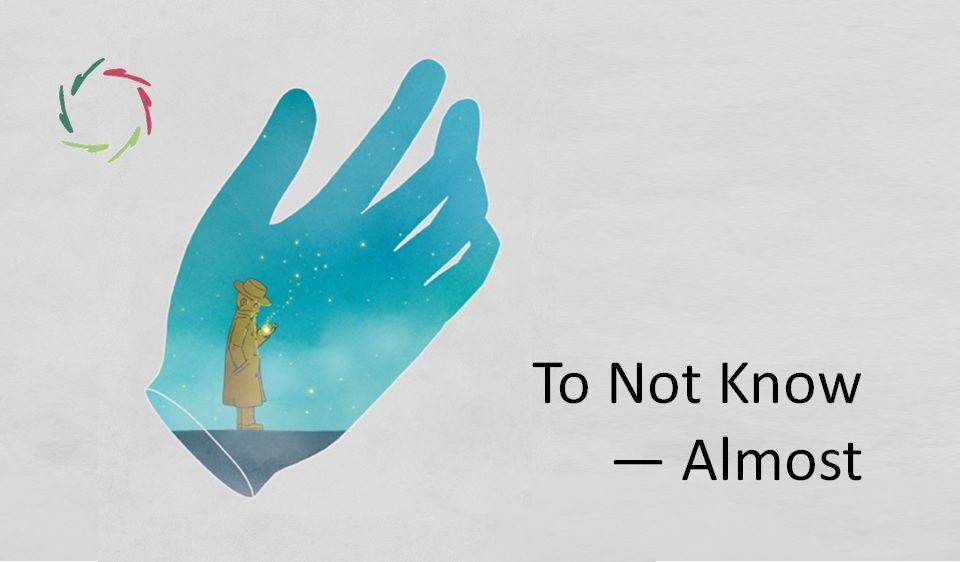
Everyone is familiar with the tip-of-the-tongue phenomenon. This is just one example of almost knowing. One moment, you know it, and then you don’t, or vice versa.
This highlights the fascinating interplay between conscious and non-conscious processes in the brain, illustrating the complexity of our mental landscape. These instances together illustrate a continuum from fully conscious to fully non-conscious ― seamless in individuals, across different people, and even across various species.
Getting older
Interestingly, aging does not significantly reduce human mental storage capacity. In absolute terms, semantic memory continues to expand. This underscores the brain’s remarkable ability to accumulate and store vast amounts of information over a lifetime.
However, recall becomes less effortless. Thus, older individuals experience more tip-of-the-tongue phenomena. As I age, I notice this. ‘We’ have a lot of knowledge – more than younger folks – but sometimes need extra time to retrieve it.
Fortunately, engaging in activities that stimulate the brain, such as learning new skills or practicing mindfulness, can enhance cognitive flexibility and memory retrieval, countering age-related decline through the process of neuroplasticity.
Recognition vs. recollection
In recognition tests, individuals ‘remember’ terms even if these are not immediately available for recollection. This indicates that non-consciously surfacing mental content – implicit memory – can still influence conscious processing, leading to the recognition of what one cannot fully recollect.
This is well experienced when learning a language, setting it aside for a few years, and then revisiting it. Many forgotten words are easier to relearn. Words feel familiar, as if emerging from a mist.
Intuition
This might seem different, but it is another instance of the same phenomenon. One ‘knows’ something is probably true for reasons that aren’t consciously clear. These reasons exist and don’t exist — no magic, just non-conscious mental processing. Intuition arises from the brain’s ability to quickly process and synthesize vast amounts of information non-consciously, leading to insights that can guide decision-making.
One can have a good intuition only by knowing a lot — almost.
Creativity?
Almost knowing can also serve as a bridge to creativity. When we can’t fully recall something, the mind fills gaps, leading to new ideas and solutions.
This could explain why creative insights often emerge from a state of near-awareness rather than complete knowledge, allowing for more flexible and innovative thinking.
A similar phenomenon: not wanting to know
In this state, one senses something but purposefully keeps it from full consciousness. This could be due to the comfort of ignorance. It can function as a psychological defense mechanism, linked to cognitive dissonance, where individuals avoid uncomfortable truths to maintain psychological stability. Recognizing and addressing this tendency can lead to greater self-awareness and emotional resilience, as individuals learn to confront and integrate these hidden truths.
This occurs more frequently than generally acknowledged, even by myself until recently. It is a strange feeling to see people actively avoid knowing. It’s present and absent at the same time in a state of active denial with sometimes disastrous consequences.
Upon “We didn’t know,” one can retort: “But you could have known.” And isn’t that enough in the past, present, and future?
Ultimate importance
By embracing the nuances of almost knowing and the subtle interplay between our conscious and non-conscious minds, we can unlock deeper self-awareness and creative potential.
This journey of understanding offers profound insights into the richness of our human experience.
Related Posts
Competence vs. Comprehension
We don’t usually make the difference between competence and comprehension in anything that we regard as under conscious control. That may be wrong in many cases and, at present, increasingly dangerous. Competence, comprehension Competence is about what an agent can do. Comprehension is about the understanding of this agent concerning his own doing. To what Read the full article…
Trust and Trustworthiness: Foundation of Depth
Trust is not just a feeling of security. It is the gateway to depth. In human relationships, in personal growth, and even in artificial intelligence, trust is what allows us to move beyond the surface into something richer and more meaningful. But trust alone is not enough. Trustworthiness must be cultivated through continuous effort. It Read the full article…
Searching Stability
People want stability in meaningful depth, not therefore in things of meaning. Evolutionary Life itself can be seen as a search for stability amid entropy and chaos. With some complexity, along the evolutionary process, this search becomes a search for meaning as a natural quest. Life searches stability at the level of meaning. Animals are Read the full article…