Words don’t Matter
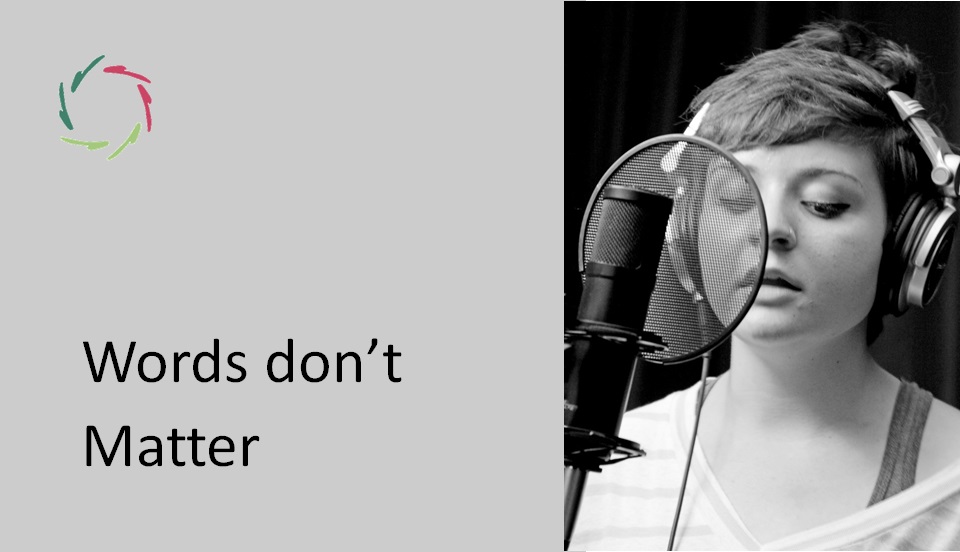
Words are things. If not imbued with life, they are like water that flows to the sea on an eternally lifeless planet.
Concepts matter.
Emotions matter.
Depth matters.
Beauty matters.
Culture matters.
People matter.
Life matters.
Words don’t matter.
They’re just letters, one after the other. All the above matters within words ― not the words themselves.
Even more, within the list above, nothing matters if not for people. I mean with this especially total-persons.
More broadly, life starts when something starts to matter.
Associations
Some words bring people-demeaning associations. Such words may better be avoided, but only and explicitly because of the associations.
This should be brought to bear as friendly as possible.
At present, in the US and Europe, people get ‘canceled’ for their use of words and could-be maybe possible associations. Is there anything more contradictory?
Being vulnerable is not a worthy goal, especially not an aggressive kind of lashing-out vulnerability. [see: “Daring to Be Vulnerable”]
Just words
If words matter to someone just for the words themselves, chances are this person is incarcerated within the words ― as the words of some book, for instance. Smells like mere-ego, the opposite of spirituality.
There is logic in the fact that some people of the mere-ego kind are specifically bent on hijacking what they are most opposed to ― as in the stony bottom of fundamentalism.
‘God’ is just a word. There is no guaranteed spirituality in this. Fortunately, there may be spirituality almost everywhere.
Including in words that are alive with people.
The words themselves don’t matter.
Strikingly
In the preceding, both extremes of some right-left spectrum tend to be entangled in words at the cost of a focus on people, even though both can be ambiguous in this.
Might the continuum be somehow more like a circle?
Related Posts
When a Beloved Might Be Dying — How Lisa Can Help
When someone beloved might be dying, those around may need support beyond information or advice. Uncertainty, the wish to protect, and the difficulty of finding words can reach deep into family relationships. Lisa could offer additional support through patient conversation, subtle responsiveness, and attention to the relationships involved. This requires more than emotional sensitivity: privacy, Read the full article…
What’s Your Story?
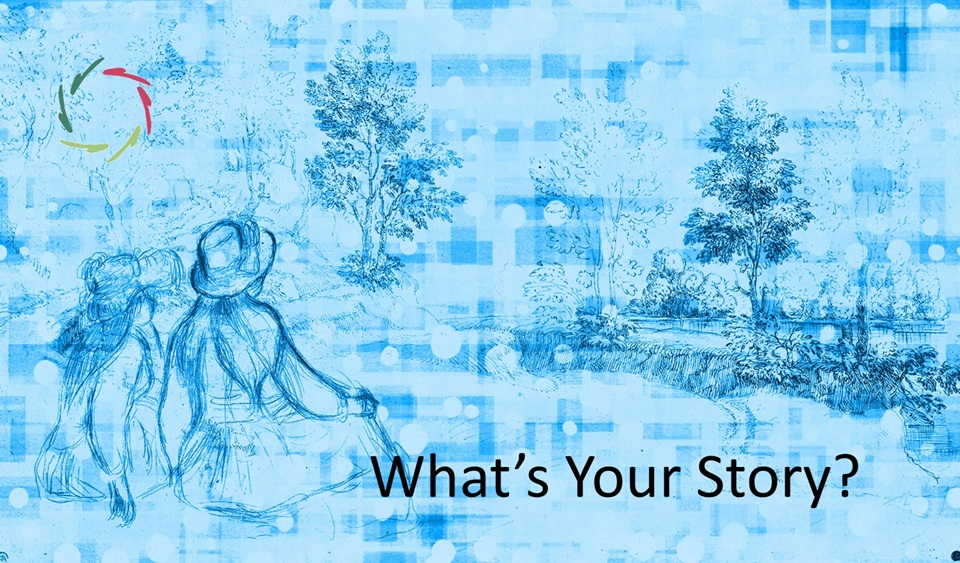
One can see coaching as helping someone move closer to a story that fits more deeply with who the coachee truly is. Not in the sense of crafting a polished narrative for the outside world, but of uncovering a living story that grows from within. This is not about feeding the ego a fancier script. Read the full article…
The Freedom to Be Free
Can people be asked to appreciate only one freedom, namely, the freedom to be free? Thus, not the freedom to incarcerate oneself or others? You might already know I’m talking about the ego: the self-referenced, overly conceptual part of any total person. Please read ‘The Story of Ego.’ Ego wants an illusion of freedom. As Read the full article…