Daring to Be Vulnerable
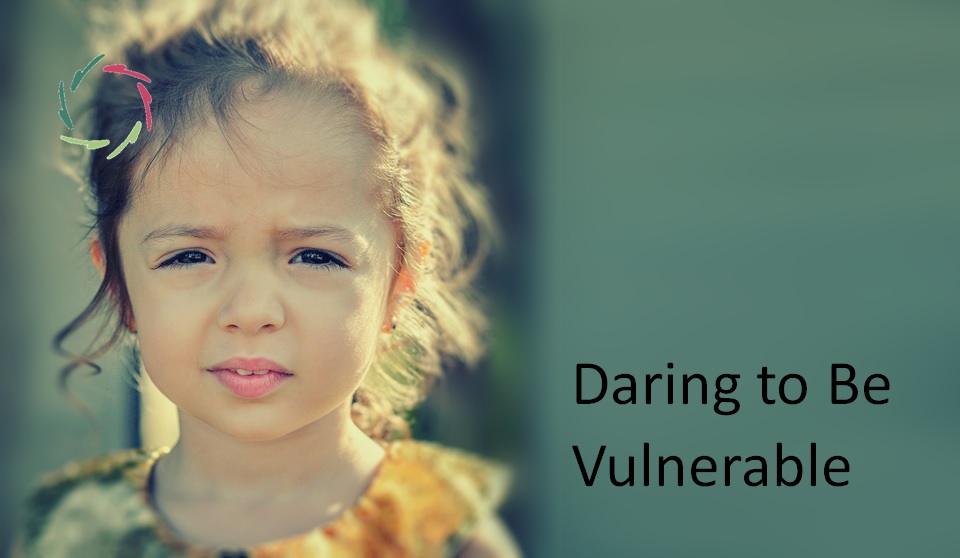
Daring to be vulnerable while striving to be as strong as possible is more worthwhile than just showing to be vulnerable.
Being vulnerable is not valiant.
In many cases, there is confusion involved. The vulnerability may be regarded as an asset, which it is not. Contrary to this, AURELIS strives toward the last two letters: Inner Strength. That is not vulnerability. [see: “Don’t Be Vulnerable”]
It is also not the absence of vulnerability. Inner Strength may reside in not hiding one’s vulnerability.
Without naiveté ― vulnerability may attract those who want to abuse it. Many equivocate gentleness with weakness. That is also to be avoided. [see: “Weak, Hard, Strong, Gentle”]
Not being afraid to be vulnerable is genuinely valiant.
I regard this as very special and worthy.
Whether this is about a little girl standing up for someone else at school, or a soldier who risks his life for a friend in combat, it makes their actions deeply meaningful. Such persons gather strength to defend others. They are real heroes. [see: “Strength as a Virtue”]
Some more examples
- An organization that strives to be sufficiently robust to do good for many, even at the possible price of becoming less robust.
- A scientist who works very hard in a domain that brings less remuneration but more meaningfulness in the world.
- A person who gives away so much that it hurts.
- A leader who dares to take personal risks.
- A physician who doesn’t count so much on his all-knowing aura as on his empathy for patients.
- Anyone who prefers looking deep inside above being comfortably numb.
If only for the sake of validating this,
just ‘being vulnerable’ should not be seen as the prime asset, nor just showing one’s vulnerability without striving for strength.
It’s not enough.
Frequently, I see stark examples of both.
Some people dare; others don’t. [see: “Turtle Vagaries”]
Sadly, many don’t even care to bother, even with many lives involved, as long as there’s a safe place to hide one’s privileges. May that be much more the case in particular times and places?
It’s the way to leadership.
If you see a child being such a hero, be sure to give that child a well-meant compliment.
Indeed, such is the way of a flower bud that is daring enough to open itself and be vulnerable as a flower.
For a growing leader, it is the way to be daring enough to open oneself and be a profoundly human person and a symbolic leader at the same time. That is not easy, but eventually, the symbol always lies within the person. [see: “A Symbol Is Always YOU”]
Open meditation may help in this, also towards leadership, especially the leader’s charisma. [see: “Leaders’ Meditation“]
Eventually, it is the strength of nature inside.
This kind of vulnerability makes a person grow. [see Cat.: “Personal Growth”]
Related Posts
Revenge = Dissociation
The feeling of revenge needs to be taken seriously in order to transcend it. What has been lost should be restored ― in a different way. Revenge results from the feeling of having lost something. Something has been taken at the meaning level. Revenge is not about the thing itself but the meaning. What one Read the full article…
Humanism with a Vengeance
Humanism: ‘man is the measure of all things.’ Vengeance: this is about the total human being – partly conscious, mostly nonconscious. Many faces of humanism, yesterday and today Among them, I see ‘humanism’ as what puts human being at the forefront, thus not – apart from human being – any organization: no religion, no politics, Read the full article…
In-Depth Philanthropy
Specific characteristics of human depth-related projects make them more challenging as well as more important for philanthropic cooperation. Doing good isn’t easy. It’s certainly not as easy as it frequently seems. Donating to good causes doesn’t necessarily lead to a better world, especially if the main drive is little more than a warm feeling. This Read the full article…