The Problem of the Skeptic
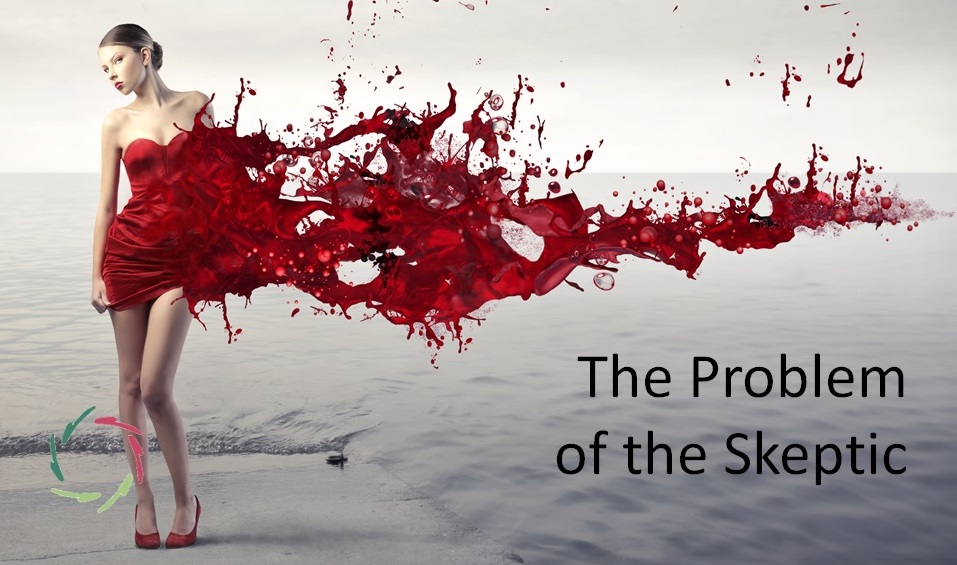
Typically human to run into such kind of problem… Well, we’ll have to deal with it. Hm, by throwing it out of the window?
Let’s say you are a skeptic.
That means you are a person wishing to you use rationality to ‘think for yourself’, as Kant admonished us all to do in order to ‘emerge from a self-inflicted immaturity’ (his words, see: ‘Enlightenment, Kant, AURELIS, Growth’]).
Yes, we should!
So, all right, you are skeptic and then even more skeptic and near to 100% skeptic…
Very, very skeptic indeed. And that’s very, very good!
And then there is a problem. Sooner or later, you get skeptic about your skepticism itself. Let’s put it this way: you get skeptic (A) about your skepticism (B) itself.
(A) turns on (B), making (B) actually impossible when nearing to 100% skeptical (A).
This is the Problem of the Skeptic.
One ‘solution’ is to stop being skeptical right before you make ‘being skeptical’ itself impossible. You stop being skeptical because “otherwise you run into the impossibility to do anything good at all.”
That seems to me like throwing the problem out of the window. Isn’t it?
Let’s say you are a magician.
And you ‘heal’ people, through for instance sticking iron things into them, or letting them drink some colored, plain water. Or even – who cares – some uncolored, plain water 😊. Whatever.
I’m very skeptical towards magicians. Most of them very much value money and/or status. Besides, they leave a huge trail of human misery, frequently within themselves and even more within others.
You see: placebo [see: ‘Placebo Is Not Good for You’].
Still, the aura is about ‘doing good’ and magicians – the ones that think one bit further than their wand – counter skepticism because “otherwise you run into the impossibility to do anything good at all.”
Recognizable?
Back to the skeptical future.
It’s the only decent one. At present, unfortunately, we’re not there yet.
Skeptical (A) turns on skeptical (B). It seems like biting one’s tail and ending the trip. It seems like sawing through the branch of the tree on which one is sitting oneself, trying to enjoy the view meanwhile.
Hm. And then there is of course skeptical (C) that turns on skeptical (A) and prevents it from sawing. Hey, what’s happening?
It’s not a dead end. It’s a groove, one that gets deeper and deeper. No window.
Can we get out of this groove?
My years in AI have taught me that if there is an insoluble problem, one should try to broaden the problem domain. Is that applicable here?
I guess so. What we want to achieve, is a better world. Rationality (including skepticism) is of utmost importance in this. We now have a landscape and a groove in that landscape. Trying to stop things getting into this groove, is like building a dam. Soon you have a flooding and a loss of many beautiful sites in the landscape. No good.
I think it’s better to accept the groove.
This way, we can get to being 100% skeptical. No window needed.
One can never be too skeptical!
Just accept the groove. It’s there, together with many beautiful and interesting things. There is no need to keep sitting in the groove. There’s lots of other things we can do. For instance, we can use our 100% skepticism to stop all magicians and their woe…
and build a better world.
Related Posts
Zombification
Disclaimer: this text is not for overly sensitive readers. The term ‘zombie’ probably comes from the West African nzambi, which means: a dead person who is made alive again, but who has no own free will. In the Afro-Caribbean culture this is an essential part of voodoo (originally from West Africa). So, we are in Read the full article…
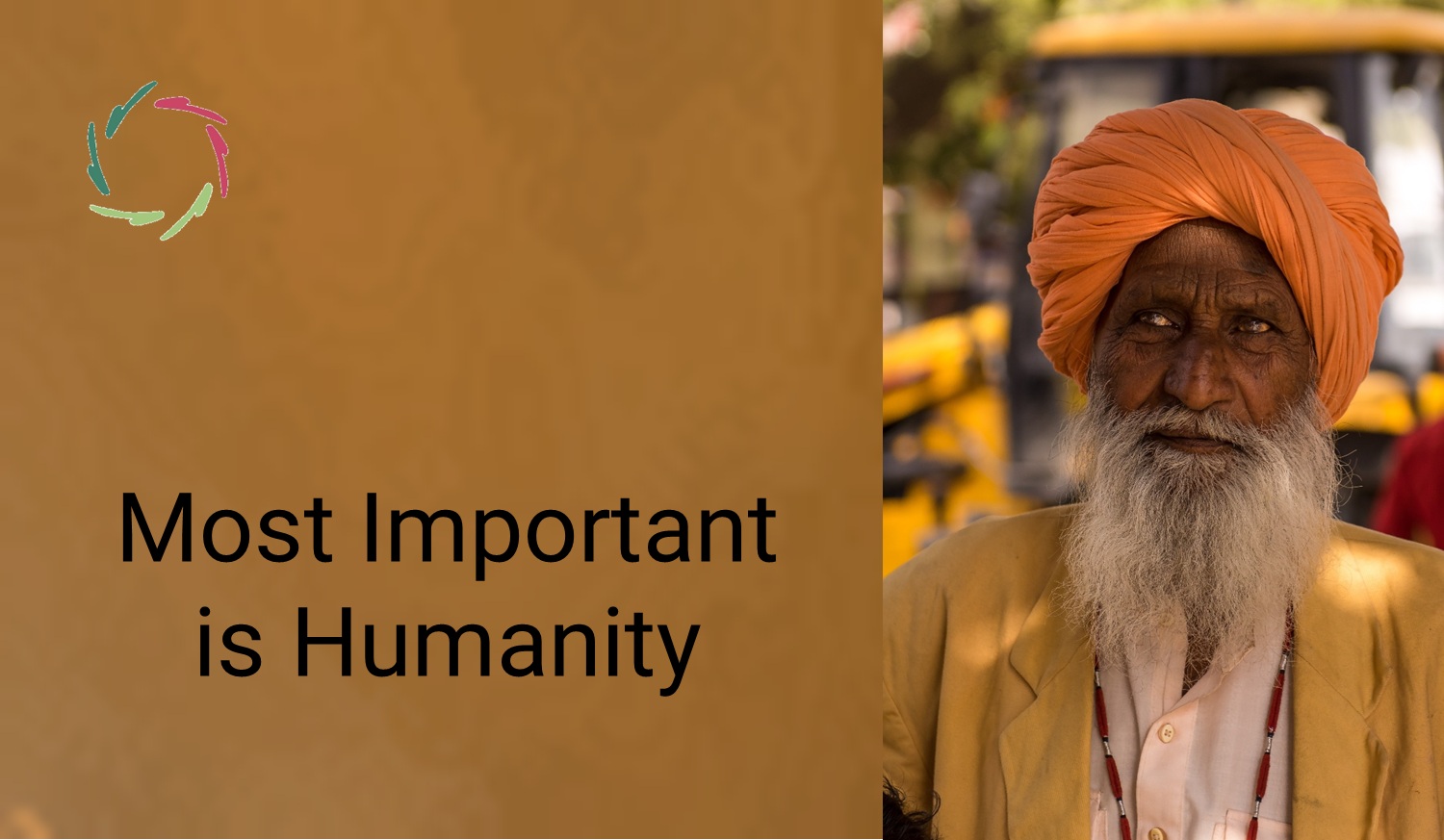
Most Important is Humanity
Humanity – being human and humane – is most important in many issues, from healthcare to education and world politics. Yet we, humans, tend to forget that, blinded by surface-level conceptual issues of many kinds. What does it even mean to be truly human? The conceptual is important. But it’s only important for the total Read the full article…
The Wrong Experts
The basic cognitive illusion makes us not see what is always there. Domain experts may be especially prone to this precisely because of their conceptual expertise. Thus, where the mind is invisibly involved, the experts of the day are occasionally the wrong experts. Experts are necessary. This text should not give another impression. We need Read the full article…