Humanism with a Vengeance
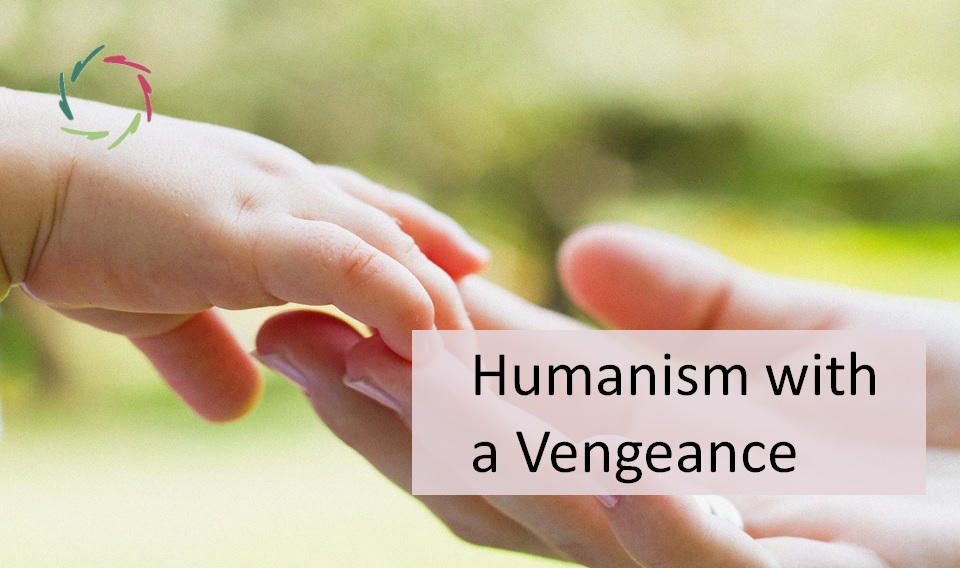
Humanism: ‘man is the measure of all things.’ Vengeance: this is about the total human being – partly conscious, mostly nonconscious.
Many faces of humanism, yesterday and today
Among them, I see ‘humanism’ as what puts human being at the forefront, thus not – apart from human being – any organization: no religion, no politics, no education, no judicial system…
This humanism emphasizes the value and agency of human beings, individually and collectively. As I see it, humanism advocates many issues such as the right of free speech, individual freedom to abortion and euthanasia, equal-worthiness of man and woman of any race, not believing in any conceptual ‘god’ nor godly books, free scientific investigation…
Any of these issues is necessarily based on a view upon human being, either explicitly or implicitly. Thus, the quality of humanism is related to the scientific quality on which such view is based. As it happens, in the last 30 years, relevant science has evolved quite a lot.
Total human being
Perhaps most relevant to humanism, scientific knowledge about the human nonconscious is evolving rapidly within the more general ‘cognitive neurosciences’. More and more, it is shown that much, indeed most of mental processing happens nonconsciously, in the perceptual domain as well as in ‘higher’ domains of decision taking etc.
Consequentially, we should use the ‘I’-word to denote not only the conceptually conscious part of human being:
‘I’ = ‘me, totally’.
This may look like a small I-related difference but it’s the biggest of all.
It may seem to be an easy I-related difference to make, but it’s the most difficult of all.
A good basis to manage this is through a synthesis of rationality and ‘poetry’ (the poetic, deeper side of mental processing). Note: this is not a mere combination of both but a functional going together of both, each very much in-depth, eventually like two wings without which no bird can fly.
No zero-sum balance
This way, rationality does not lie in a balance with poetry. For instance, where rationality is put against ‘religiosity’ – I mean the ‘open’ one, see the blogs about ‘Open Religion‘ – I frequently see little poetry on both sides. Thus also little profound rationality… on both sides.
According to me, only through ‘rationality+poetry’ can people really flourish and grow.
Growth
Like anything else in living nature that continuously, relentlessly grows, human being is a being of growth. If you don’t believe this, then go for a walk in a wood or pick some strawberries.
However, as we ourselves are all proof of, something extraordinary ‘recently’ happened. Namely: as part of evolutionary growing and in congruence with the already available dispositional faculties (such as instincts), we received from nature a very intricate mapping device (say: conceptual thinking). This gave us huge flexibility but also the downside that it can bootstrap itself into an illusion of non-growth.
Even so, in reality, we remain nature. Outside of the illusion, we just grow, 24/7, every second of being alive. The total human being remains the natural – growing – one that it has always been.
This is the – total – human being that may become the subject of future humanism.
Where lies the relevance of this to the ‘real world’?
I would say: in all domains, to the core.
Related Posts
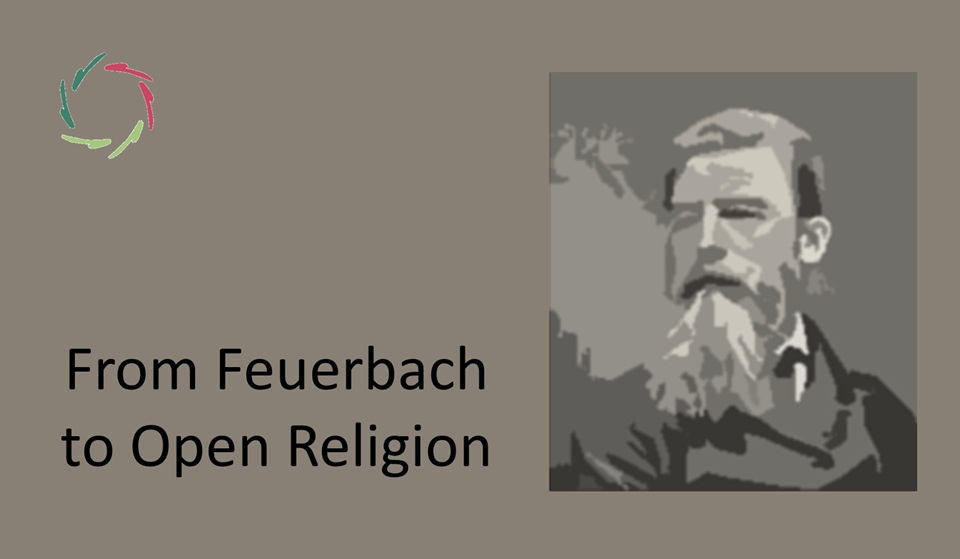
From Feuerbach to Open Religion
Ludwig Feuerbach changed the course of Western thought by exposing God as a human projection. Yet in doing so, he also uncovered a question that still shapes our culture today: what happens to depth once God is gone? This blog follows that question through philosophy, psychology, and humanism, toward a place where depth is neither Read the full article…
One Sacredness for All
People from any religion can feel that sacredness transpires through their religion. Can they also feel sacredness transpire through other religions? Can you? Sacredness versus reductionism For the reductionist, the only ontologically real entities are particles in motion, to which any other complexity in the universe can be reduced and explained. Sacredness is the faith Read the full article…
The Religious Feeling – What Religion Has Always Been About
The religious feeling lives deeply inside and everywhere. It is ubiquitous and invisible. It can be supported and downplayed without anyone’s knowing. It is very much Open. What I dare say One can have full-blown religious feeling without believing anything conceptual. There is no need to lose anything of this feeling by ‘not believing.’ The Read the full article…