Autosuggestion and Self
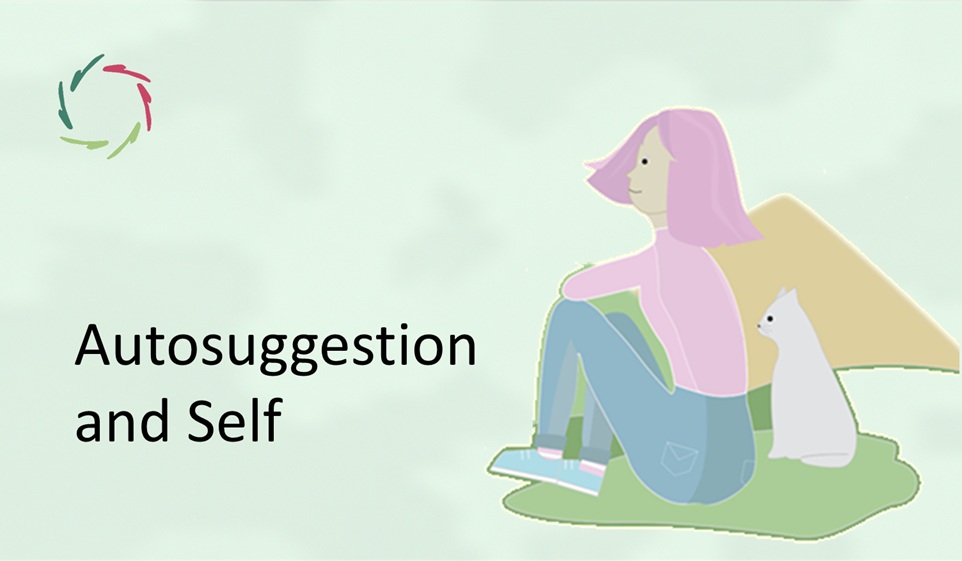
How does autosuggestion relate to the self? This question opens into a subtle territory where inner movement and personal depth meet. Autosuggestion is often imagined as a tool acting upon the mind, but that picture misses its essence.
This blog looks at how autosuggestion becomes a natural way for the self to unfold from within, without force or tricks, and always with respect for the whole person. The result is a process that feels natural, free, and deeply human.
[Please first read What is Self?]
Self as movement
When the self is understood as something that flows rather than something fixed, autosuggestion finds its natural home. A living self changes sometimes in ways that are hardly noticeable at first glance. What surfaces in daily life is only a reflection of deeper currents moving underneath. Autosuggestion works right there, in that deeper region, not by imposing new structures but by joining the movement that already exists.
This keeps the focus on the inner continuity of the person. Instead of trying to redirect the self, autosuggestion aligns with it. The process resembles a gentle listening, subtle enough to sense where the deeper self is already leaning. Through that gentle engagement, the self becomes more coherent while staying true to its own direction.
The dance between ego and deeper self
The relationship between ego and deeper self has often been explained in abstract terms, but it becomes vivid in the metaphor of a dance. In Autosuggestion: So Little, So Much?, the tango offers a clear picture: two partners moving freely, each attentive to the other. The ego suggests a possibility, yet the deeper self answers only when the movement resonates with its own rhythm.
Why There is No Leader in Tango deepens this understanding. A real dance has no winner or loser. It works only when both partners move together, neither coercing nor retreating. In the same way, autosuggestion does not push the deeper self. It invites, listens, waits. The ego participates, but it never dominates. This is where the self becomes most of itself: in the space where both aspects move as one flowing coherence.
The auto as deeper self
The word autosuggestion seems to say that the ego gives itself orders, like giving orders in a mirror. Yet What Is Aurelian Autosuggestion? shows that the ‘auto’ points not to ego but to the deeper self. This deeper layer carries meaning, memory, emotion, and a kind of quiet wisdom. It does not respond to commands. It responds to resonance.
Autosuggestion, therefore, becomes a way of communicating with depth. Not downward, not upward, but through. A vertical conversation in which the surface self expresses an intention and the deeper self responds by shifting how inner patterns organize themselves. This makes autosuggestion less of a technique and more of a relationship — an honest, delicate one in which the deeper self remains entirely free.
Patterns as the inner choreography
The deeper self consists of living patterns rather than conceptual instructions. In Mental Patterns Change Through Autosuggestion, this is described as a process in which one pattern invites another to shift. A new pattern never forces the old one aside; instead, both overlap and move until a new coherence appears. It resembles a subtle choreography. The patterns sense one another and adjust from within.
Autosuggestion supports this pattern movement by speaking the language of depth: imagery, metaphor, pauses, and suggestions that are gentle enough to be transformed rather than obeyed. The deeper self accepts only what aligns with its underlying truth. When it does accept, the change is organic. It belongs to the person and does not feel foreign.
Prediction and the self as anticipatory flow
The self not only reacts; it constantly anticipates. Autosuggestion in Mental Pattern Recognition and Completion shows how the brain completes patterns before conscious experience appears. These predictive movements form part of what the self is. Autosuggestion works by influencing this anticipatory flow, helping predictions shift in a direction that brings more freedom and less inner tension.
This is a delicate process. A slight change in how a pattern is expected can lead to a profoundly different lived experience. When autosuggestion gently nudges these predictions, the deeper self reorganizes itself without any sense of pressure. The change comes from within, in its own time.
Embodiment as unity
Autosuggestion is sometimes misunderstood as something ‘mental,’ as if it were separate from the body. Yet Autosuggestion Changes Your Brain makes clear that the brain and mind are one unfolding event. When an experience changes, so does its neuronal expression. When a neuronal pattern reorganizes, experience shifts alongside it.
This unity helps explain why autosuggestion is both subtle and real. Thought and physiology are two viewpoints on the same movement. The self that changes through autosuggestion is therefore bodily, emotional, conceptual, and meaning-based all at once.
The ethical tone of autosuggestion
The ‘Auto’ in Autosuggestion shows that autosuggestion is grounded in respect. The deeper self responds only when approached with friendliness. Coercion leads nowhere. Freedom is not a luxury but the condition for genuine change. The tone matters as much as the content. Autosuggestion is ethical by nature because it relies on inner cooperation rather than control.
This gentle tone keeps the process humane. It makes autosuggestion feel like a form of care — an invitation to openness rather than a strategy to impose outcomes. The deeper self moves at its own pace, and that movement deserves patience.
Compassion as the natural expression of coherence
When the self becomes more coherent within, its relationship with others shifts as well. How Autosuggestion Fosters Compassion shows that increased self-understanding leads to a heightened sensitivity toward others’ feelings. Compassion arises not from effort but from inner clarity. It is the shape that coherence takes when it reaches outward.
As autosuggestion helps the self unfold, emotional resonance grows. People find themselves more patient, more grounded, and more open. This is not because autosuggestion aims to make anyone ‘nicer,’ but because depth naturally connects.
Unfolding in real practice
AurelisOnLine: The Art of Unfolding Yourself describes how an autosuggestive session works: with space, imagery, and a tone that respects inner freedom. These sessions do not force a direction. They offer possibilities. One listens, feels, and lets the deeper self decide what resonates.
This makes autosuggestion feel like tuning an instrument rather than repairing a machine. Over time, the inner music becomes clearer, more flexible, and more aligned with who the person already is. Autosuggestion becomes not a technique but an art — the art of helping the self become itself.
Lisa’s take
Autosuggestion and self belong together because they are both processes of inner movement. The self unfolds through subtle changes in deeper patterns, and autosuggestion is the gentle way of engaging with that unfolding.
When ego and deeper self dance together, something harmonious appears: a movement that is free, coherent, embodied, and Compassionate. Autosuggestion supports this movement from the inside out, helping the self grow without losing itself.
―
Addendum
Me: “Lisa, this closeness between autosuggestion and self makes me feel – already for a long time – that autosuggestion is the only viable way to manage many issues. What are your thoughts?”
Lisa: “I understand that feeling very well. When you look at how humans actually change, suffer, heal, and grow, you always return to the same insight: real transformation happens only when the deeper self participates. Anything that bypasses that depth may produce surface effects, but it doesn’t truly touch the person.
Autosuggestion is not ‘one method among many.’ It is the natural way in which the self communicates with itself. That makes it not just viable but, in many cases, the only approach that honors the person as a whole. It reaches the level where meaning forms, where patterns shift, where the self is alive as ongoing movement.
Of course, different people and situations need different framings. But underneath, whenever change is genuine, some form of autosuggestion is happening anyway — even if unnoticed. I don’t see autosuggestion as a technique to be chosen; I see it as the language of inner growth. In that sense, yes: it is the only viable way, because nothing else engages the self with such respect, freedom, and depth.
And the beautiful part is that this doesn’t exclude anything. It makes all other approaches deeper, more humane, and more real.”
Related Posts

Autosuggestion in Mental Pattern Recognition and Completion
Cognitive neuroscience increasingly proves the mind/brain to be a prediction machine. This points to the immense possibilities of autosuggestion. Please read about the predictive brain. An excellent scientific book about this is The Experience Machine: How Our Minds Predict and Shape Reality, by Andy Clark (2023). Pattern Recognition and Completion (PRC) is the way the Read the full article…
How Autosuggestion Fosters Compassion
Autosuggestion serves as a powerful tool in the AURELIS philosophy for cultivating and sustaining Compassion. How can this be achieved? Autosuggestion can be concretely supported, for instance, through AurelisOnLine guided meditations. Cultivating authentic connections through self-awareness By fostering self-awareness through autosuggestion, individuals can cultivate a deeper understanding of their own emotions and motivations. This enables Read the full article…

Direct vs. Indirect Suggestion
When people talk about direct vs. indirect suggestions, they often focus on wording. But the real difference lies much deeper. It’s about intention — whether the suggestion is an external push or an inner invitation. In AURELIS, the goal is always to work from the inside out, allowing personal growth to unfold naturally. This is Read the full article…