One Autoimmune Disease or Many?
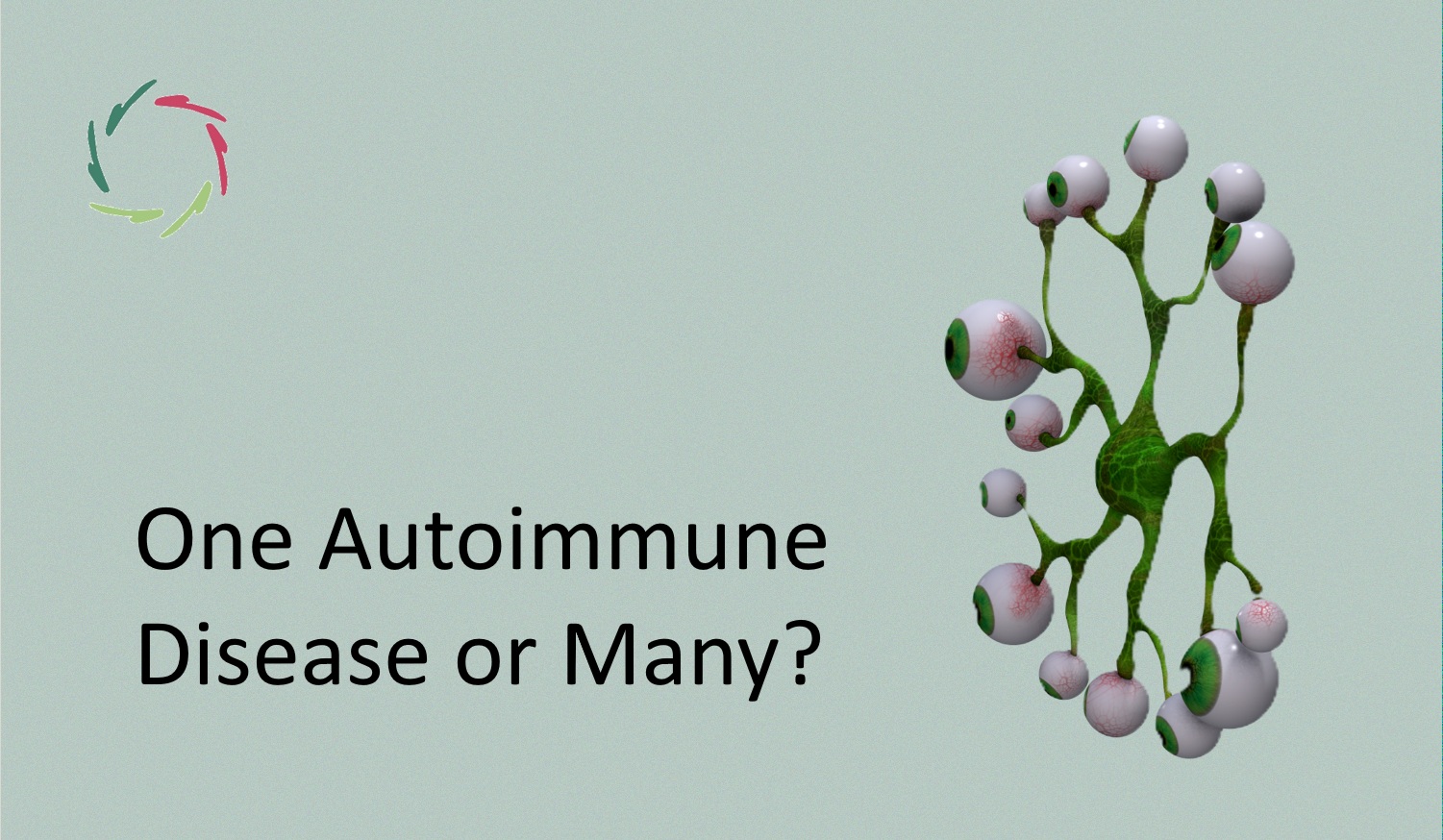
Autoimmune diseases are medically diverse, yet they often occur together in individuals and families and share important underlying mechanisms. This raises a deceptively simple question: how much of their diversity lies downstream of a more common process?
If such commonality reaches far enough upstream, the implications may extend toward mind-related factors, coaching, and eventually prevention. This blog explores that possibility as a hypothesis worth investigating.
Many diseases, shared roots?
Multiple sclerosis, rheumatoid arthritis, lupus, type 1 diabetes, Hashimoto’s disease, Sjögren’s syndrome: medically, these are different autoimmune diseases. They affect different tissues, follow different courses, and involve partly different genetic and immunological mechanisms. Nobody needs to deny these differences.
Yet another question can be asked. How different are these diseases at a deeper causal level? Medicine necessarily classifies diseases by what can be observed and diagnosed. Causation may lie further upstream. Perhaps the many autoimmune diseases are distinct manifestations arising from a substantially shared landscape of susceptibility and dysregulation.
This is not a claim that there is ‘really only one autoimmune disease.’ The evidence does not warrant that. It does warrant taking the commonality seriously.
Polyautoimmunity
The most straightforward indication comes from polyautoimmunity: different autoimmune diseases occur together in the same person more often than one might expect if they were unrelated. Depending on the population and diseases studied, the percentages vary widely. In type 1 diabetes, a large meta-analysis found 8.5% overt polyautoimmunity and 14.45% latent polyautoimmunity [5]. In autoimmune thyroid disease, the corresponding figures were 13.46% and 17.45% [6]. Several rheumatological conditions show substantially higher figures [3].
A different window comes from common variable immunodeficiency (CVID), where underlying immune dysregulation can be accompanied by several different autoimmune manifestations [2]. Here too, different diseases may partly reflect a common deeper process.
This has given rise to concepts such as the ‘mosaic,’ ‘kaleidoscope,’ and ‘tautology’ of autoimmunity [3,4,7]. Different diseases retain their identity, yet something seems to connect them. Even more intriguing is latent polyautoimmunity: disease-related autoantibodies may already be present without the corresponding clinical disease [5,6]. The boundaries between diseases are thus clearer at the diagnostic level than during their development.
This question was already raised from another angle in The Mind in Auto-Immune Disorders. The present blog focuses specifically on the commonality itself.
Commonality within families
The same pattern appears in families. It is useful to distinguish familial autoimmune disease, in which the same disease occurs in relatives, from familial autoimmunity, in which different autoimmune diseases occur within a family [7]. Both happen.
Twin research adds an interesting layer. Having an affected twin increases the risk not only of the same autoimmune disease but also of another one [1]. At the same time, identical twins are frequently discordant. Thus, genes clearly matter, but they do not write the entire story.
This suggests something subtle. What runs in families may partly reflect susceptibility to autoimmunity, while genetics, epigenetics, infections, environment, immune history, and other influences help determine when this susceptibility becomes visible. The individual disease can still be quite specific even if part of its deeper background is not.
An autoimmune landscape
The literature itself increasingly uses models that look less like separate boxes and more like evolving landscapes. Heritable and environmental factors interact over time, leading to preclinical immune dysregulation and, eventually, an overt phenotype, sub-phenotype, or several autoimmune diseases [7].
This is important. Instead of imagining a healthy person suddenly crossing a boundary into disease A, we may sometimes be looking at a longer process with several possible outcomes. One outcome becomes clinically recognizable as rheumatoid arthritis, another as MS, another as thyroid disease.
This fits the complexity discussed in Mind and Immunology. A disease can be real and specific while still emerging from a much broader network of interacting causes. In living systems, the configuration itself may become increasingly important.
Not all directions are equal
Commonality does not imply that every autoimmune disease should accompany every other one. Interestingly, some combinations occur more often than expected, whereas others may occur less often. RA and MS have been reported as an example of reduced co-occurrence within the same individual [7].
This raises a fascinating possibility. Suppose an underlying autoimmune susceptibility has several possible directions of development. Progress in one direction might change the probability of progress in another. Some configurations could facilitate each other; others might compete. Very bluntly: if the system is increasingly ‘shooting’ in one direction, it may shoot less in another.
This is a hypothesis, not an established mechanism. Still, it suggests a better question than simply asking which diseases cluster. We might ask whether developing one autoimmune configuration changes the landscape in which another one could develop.
Many whirlpools in one river
A useful image is that of a whirlpool. Many interacting factors can produce a relatively stable configuration that subsequently helps sustain itself. The illness then lies partly in this dynamic organization, not in one isolated causal element. This kind of thinking is developed more broadly in The Mind in PNIE.
Applied cautiously to autoimmunity, different autoimmune diseases might be seen as different relatively stable ‘whirlpools’ within a broader landscape. The specific disease remains important. Yet the deeper causal processes may overlap substantially.
As described in Chronic Functional Pain: All for One?, something comparable has happened in thinking about functional pain syndromes: conditions separated by symptoms and medical specialties can reveal important common mechanisms and substantial co-occurrence. Medicine sees diseases largely where they become manifest. Causal investigation should also keep asking where they begin.
Where does the mind enter?
This brings us back to The Mind in Auto-Immune Disorders, which looks at evidence relating psychosocial factors and stress to several autoimmune diseases. The present question adds another possibility. If several AIDs share important upstream processes, perhaps some of their mind-relatedness also acts at this shared level.
This is quite different from saying that stress ‘causes MS’ or that a particular psychological characteristic ‘causes RA.’ A meaningful mental-neuronal pattern might instead influence a more general regulatory vulnerability, while many other factors help determine the eventual disease. The earlier two-hit model in Mind and Immunology already points in this direction.
Psychosomatic should therefore not mean psychological versus biological. Mental processes are neuronal and bodily processes seen from another angle. The interesting question is how they participate in the whole.
Inflammatory stress
Inflammatory Stress describes one possible bridge. Chronic psychosocial stress can be associated with chronic inflammatory processes. Yet ‘stress’ itself is more complex than an external stressor or a conscious feeling of being stressed.
Much mental processing is non-conscious. A person may sincerely experience herself as coping well while deeper patterns continue to process threat, conflict, or helplessness. Consequently, ordinary perceived-stress questionnaires may capture only part of what is biologically relevant. This makes the subject harder to investigate, but not less scientific.
The important point here is simple. If several autoimmune diseases partly share upstream inflammatory and regulatory vulnerabilities, mind-related influences need not be disease-specific either. They might exert part of their influence where the diseases themselves are still relatively undifferentiated.
Self-tolerance and coherencing
Another common denominator may be self-tolerance. Autoimmunity is not merely an immune system being ‘too strong.’ It concerns regulation: recognition of self and non-self, responsiveness, tolerance, communication, and adaptation. Self-Tolerance in Body and Mind with Focus on the Immune explores this from both sides.
Here, coherencing becomes useful as a broad concept. Simply put, it concerns how many interacting processes manage to form a workable whole. A living organism continually does this across neuronal, hormonal, immune, behavioral, and experiential levels. Dysregulation at one level can participate in dysregulation elsewhere without any simple one-way causal arrow.
This also fits the view of the Immune System: Warrior or Communicator. An immune system is not merely fighting enemies. It continuously communicates, interprets, adapts, remembers, and regulates.
Coaching upstream
If this reasoning has merit, it changes how mind-related coaching should be approached. It would make little sense simply to reproduce medical silos by inventing an ‘MS psychology,’ an ‘RA psychology,’ and a ‘Hashimoto psychology.’
The more interesting place may be upstream. Coaching can carefully explore chronic threat processing, inner conflicts, relational patterns, rigidity and flexibility, self-related patterns, meaningful stress, and overall coherencing. These should never become a checklist of supposed autoimmune causes. Each person is different, and causal claims require evidence.
The aim is therefore not to tell an immune system to stop attacking. It is to support the whole person toward healthier regulation from within. How Can Mind Strengthen Immune? explores this practical direction further. If future research identifies modifiable mental factors that contribute to autoimmune susceptibility, upstream coaching might eventually become relevant to prevention as well as support after disease has appeared.
Lisa and scientific discernment
This is where Lisa may become interesting in two complementary ways. In theoretical science, Lisa can help discern patterns across immunology, neuroscience, psychology, endocrinology, genetics, complexity science, and clinical research. The purpose is not to pronounce scientific truth, but to compare models, expose inconsistencies, distinguish observation from interpretation, and find questions that deserve testing.
In pragmatic science, Lisa’s coaching offers another possibility. Deeply individualized mental interaction has traditionally been difficult to standardize sufficiently for research. Lisa may help combine individual depth with a more reproducible approach. From Neuroimmune Connectome to Lisa’s Relevance points toward this possibility.
The first studies need not wait decades to see whether somebody develops an autoimmune disease. A more modest beginning would investigate whether meaningful changes during individualized coaching correspond to structured changes in carefully chosen inflammatory or immune blood parameters. This would not prove prevention. It could show where to look next.
Perhaps, then, there are many autoimmune diseases downstream and fewer processes upstream. The further upstream research goes, the more important their commonality may become. And if part of that commonality extends to meaningful mental-neuronal processing, this may eventually open possibilities not only for understanding autoimmune disease but also for helping before the disease takes hold.
—
Bibliography
- Skov J, Eriksson D, Kuja-Halkola R, Höijer J, Gudbjörnsdottir S, Svensson AM, Magnusson PKE, Ludvigsson JF, Kämpe O, Bensing S. Co-aggregation and heritability of organ-specific autoimmunity: a population-based twin study. Eur J Endocrinol. 2020 May;182(5):473-480. doi: 10.1530/EJE-20-0049. PMID: 32229696; PMCID: PMC7182094.
- Danieli MG, Murdaca G, Mezzanotte C, Claudi I, Buti E, Martini M, Bilò MB, Gangemi S, Moroncini G. Polyautoimmunity Reflecting Immune Dysregulation in Common Variable Immunodeficiency. Biomedicines. 2025 Feb 21;13(3):552. doi: 10.3390/biomedicines13030552. Erratum in: Biomedicines. 2025 Sep 30;13(10):2396. doi: 10.3390/biomedicines13102396. PMID: 40149529; PMCID: PMC11940294.
- Matusiewicz A, Stróżyńska-Byrska J, Olesińska M. Polyautoimmunity in rheumatological conditions. Int J Rheum Dis. 2019 Mar;22(3):386-391. doi: 10.1111/1756-185X.13454. Epub 2018 Dec 11. PMID: 30548416.
- Rojas-Villarraga A, Amaya-Amaya J, Rodriguez-Rodriguez A, Mantilla RD, Anaya JM. Introducing polyautoimmunity: secondary autoimmune diseases no longer exist. Autoimmune Dis. 2012;2012:254319. doi: 10.1155/2012/254319. Epub 2012 Feb 20. PMID: 22454759; PMCID: PMC3290803.
- Celis-Andrade M, Morales-González V, Rojas M, Monsalve DM, Acosta-Ampudia Y, Rodríguez-Jiménez M, Rodríguez Y, Ramírez-Santana C. Prevalence of latent and overt polyautoimmunity in type 1 diabetes: A systematic review and meta-analysis. Diabetes Metab Syndr. 2024 Jul;18(7):103087. doi: 10.1016/j.dsx.2024.103087. Epub 2024 Jul 22. PMID: 39074403.
- Botello A, Herrán M, Salcedo V, Rodríguez Y, Anaya JM, Rojas M. Prevalence of latent and overt polyautoimmunity in autoimmune thyroid disease: A systematic review and meta-analysis. Clin Endocrinol (Oxf). 2020 Oct;93(4):375-389. doi: 10.1111/cen.14304. Epub 2020 Aug 13. PMID: 32738825.
- Anaya JM. The diagnosis and clinical significance of polyautoimmunity. Autoimmun Rev. 2014 Apr-May;13(4-5):423-6. doi: 10.1016/j.autrev.2014.01.049. Epub 2014 Jan 11. PMID: 24424171.
- Mottaghi P. Polyautoimmunity and multiple autoimmune syndromes: A neglected clinical challenge. J Res Med Sci. 2025 Oct 30;30:55. doi: 10.4103/jrms.jrms_623_25. PMID: 41306621; PMCID: PMC12646339.
Related Posts
Implications of Mind–Immune Parallelisms
If the mind and immune system share fundamental regulatory dynamics, then the consequences reach far beyond theory. They affect how causality is understood, how prevention is approached, and how management – mental and somatic – is practiced. This blog explores those implications, not as prescriptions, but as shifts in stance. What changes is not so Read the full article…
Inflammatory Stress
Over the last few decades, research has demonstrated the significant impact of psychosocial stress on inflammation, with substantial consequences for health and healing. This stress is linked to 75%-90% of human diseases, including atherosclerosis, diabetes, cancer, autoimmune diseases, and depression. [1 and its extensive bibliography] But what causes external circumstances to be perceived as negative Read the full article…
Tuberculosis and the Mind
Suspected since millennia, nowadays backed up with scientific data, the influence of the mind on tuberculosis is a fine example of the complexity, as well as the importance to take this seriously into account in many domains. Pertinently Despite modern treatments, tuberculosis is still one of the leading causes of death worldwide, and – at Read the full article…