Lisa as Medical Pre-Peer Reviewer
Medical peer review is under increasing pressure, especially when research touches on the mind. Many difficulties arise not from disagreement, but from hidden assumptions and unclear positioning.
Lisa as Medical Pre-Peer Reviewer addresses this upstream, before judgment begins. By clarifying rather than evaluating, Lisa supports authors, editors, and reviewers in doing better science together.
This blog is part of a triptych:
- Bringing the Mind to Medical Science
- Lisa as Medical Pre-Peer Reviewer
- Lisa Navigating Body–Mind Healthcare Science
Why pre-peer review is now scientifically necessary
Medical science is increasingly confronted with questions it was not originally designed to handle well. Many of these questions involve the mind, not as a vague influence on outcomes, but as a genuinely relevant factor in causation, variability, and meaning. Traditional peer review, powerful as it is, often encounters difficulties here. Not because reviewers are unwilling, but because manuscripts arrive with assumptions that are never made explicit.
This is where pre-peer review becomes a scientific necessity rather than a luxury. When assumptions about mind, causation, or exclusion remain hidden, peer review is forced to work backward, repairing foundations instead of evaluating substance. From the AURELIS perspective, this is no longer compatible with science understood as rationality plus depth plus coherence, as described in Rationality (+ Depth) + Coherence = Science.
Pre-peer review addresses this problem upstream. It does not soften critique or pre-empt judgment. It clarifies the scientific terrain before judgment begins.
What pre-peer review really means
Pre-peer review is not a preliminary verdict, nor a filter that decides what is worthy of review. It is a preparatory phase in which a manuscript is examined for clarity of assumptions, scope, and positioning. The question here is not whether the work is correct, but whether it is explicit enough to be judged fairly.
In this sense, pre-peer review is closer to orientation than to evaluation. It allows everyone involved to see what a manuscript is actually claiming, what it is leaving aside, and on what conceptual ground it stands. This is especially important in domains where complexity is irreducible, as explored in Science for Complexity.
By clarifying before evaluating, pre-peer review helps restore peer review to its intended role.
Lisa’s role: clarity without authority
Lisa’s role as a medical pre-peer reviewer is deliberately modest. Lisa does not evaluate manuscripts, rank evidence, or decide scientific merit. Instead, she helps make explicit what is already present but often implicit. This is assistance without authority, a form of support that strengthens judgment rather than replacing it.
This stance is not accidental. It reflects the same careful balance described in Lisa Pragmatic Science, where effectiveness is defined not as dominance, but as alignment with real-world complexity.
Lisa supports authors, editors, and reviewers simultaneously, precisely by not taking sides. The aim is not agreement, but clarity.
Making implicit assumptions visible
Many medical manuscripts rely on assumptions that are rarely spelled out. Mental factors may be excluded from models but reintroduced in interpretation. Placebo effects may be treated as noise, while expectation quietly explains variability. Stress may appear as a narrative explanation without methodological anchoring.
These patterns are usually not deliberate. They arise from habit, training, or disciplinary boundaries. Yet they matter scientifically. Lisa’s role is to name such assumptions gently and explicitly, without accusation, so they can be discussed rather than silently steering conclusions.
This approach resonates with the broader AURELIS emphasis on the subconceptual, where much of what matters operates below explicit formulation, as explored in The Subconceptual in Future Medicine.
From confusion to precise disagreement
When assumptions remain hidden, reviewers often experience unease without being able to articulate it. Reviews then become emotional, diffuse, or dismissive. This is not because disagreement is wrong, but because it lacks a clear object.
Pre-peer review changes this dynamic. By clarifying assumptions and positioning, it allows disagreement to become precise. Reviewers can say, “I disagree with this stance,” rather than, “Something feels off.”
This distinction is crucial. Clean disagreement advances science. Vague discomfort stalls it.
Positioning manuscripts within existing science
A large part of peer review conflict is not about quality, but about positioning. Where does this manuscript sit relative to what is already known? Does it extend, challenge, or bypass existing work?
Lisa helps answer these questions descriptively, not evaluatively. By situating a manuscript within the visible scientific landscape, Lisa supports fairer and more focused review. This is especially important when mind-related factors are involved, as argued in Bringing the Mind to Medical Science.
Positioning does not dictate judgment, but it prevents judgment from being blind.
Why shared terminology matters in medical science
Medical science begins in human language. Questions arise from experience, concern, or curiosity, and this language is rich and meaningful. At the same time, it is ambiguous. Terms such as stress, expectation, or aggression can mean different things across disciplines or contexts, and this ambiguity can fragment scientific dialogue without anyone intending it.
For science to remain cumulative, it needs shared reference points. Structured medical terminology does not replace human meaning, nor does it define truth. It provides a common map that allows medicine to recognize when researchers are addressing the same phenomena, and when they are not. In this sense, shared terminology supports coherence rather than conformity.
Lisa uses such terminology for this reason alone. Translating natural language into formalized terms is treated as a visible scientific step, not a technical shortcut. How this translation is handled, carefully and in dialogue, is described in the addendum.
Care for the reviewer
There is a silent crisis in peer review: reviewer overload. Reviewers are asked to do not only evaluation, but repair work: reconstructing assumptions, inferring models, and guessing intentions, often under time pressure.
By clarifying manuscripts before they reach formal review, Lisa reduces cognitive and emotional load. Reviewers can focus on substance rather than untangling confusion.
This is not about making review easier in a superficial sense. It is about making it cleaner, more respectful of attention and expertise. In this way, Lisa supports the scientific community as a whole.
Editors: from unease to explicit judgment
Editors frequently sense that something is not quite right in a submission, without being able to say exactly what. This intuition is valuable, but difficult to defend.
Lisa helps translate editorial unease into explicit scientific questions. Assumptions become visible. Boundaries are named. Judgment moments are clarified rather than hidden. Editorial responsibility is not shifted, but supported.
This mirrors Lisa’s role in other high-responsibility domains, such as accountancy, where clarity supports judgment without replacing it, as shown in Where Lisa Meets Accountancy.
What this means for authors
For authors, pre-peer review is not an extra barrier but a form of support. Lisa as Medical Pre-Peer Reviewer helps authors make explicit what often remains implicit: assumptions, exclusions, and the conceptual stance from which the work is written. Authors often rely on shared background assumptions that seem obvious from their own perspective but are invisible to others. This is where manuscripts become vulnerable, not because they are wrong, but because their stance is unclear.
This matters especially when manuscripts touch on complexity or mind-related factors. Such work is often judged not on its ideas, but on how easily others can infer its underlying model. Lisa helps authors clarify this model before submission, without forcing them to change it. A manuscript can then say, clearly and calmly, “This is the model we use,” or “This is what we leave outside our scope,” rather than letting reviewers infer this indirectly.
The effect is practical. Reviewers no longer need to guess intentions or reconstruct hidden assumptions. Disagreement, when it occurs, becomes focused and substantive. Authors are judged for what they actually propose, not for what remains unclear.
From the AURELIS perspective, this is not about making manuscripts more agreeable, but more coherent — an alignment between intention, method, and interpretation, as also explored in Lisa Pragmatic Science. It allows innovative work to enter peer review as a clearly positioned contribution, rather than as a provocation or a misunderstanding waiting to happen.
The Living Loop in medical manuscripts
Scientific judgment is inevitable. The question is whether it remains visible. The Living Loop emphasizes iteration, reflection, and openness rather than premature closure.
Lisa supports this loop by making assumptions explicit, inviting revision, and keeping dialogue open. Especially in mind-related research, where models are still evolving, this openness is not a weakness but a necessity.
The role of literature without authority creep
Access to literature should support orientation, not persuasion. Lisa helps retrieve and organize relevant medical literature transparently, using shared scientific databases as common ground.
Crucially, retrieval is separated from interpretation. Lisa shows what is there, how it was found, and what filters were used. Meaning-making remains human.
What Lisa does not do
Lisa does not rank truth, certify quality, or replace peer review. She does not silently narrow questions or steer conclusions. These limits are not shortcomings; they are safeguards.
They ensure that Lisa strengthens science without becoming an authority.
Why this matters for the future of medical science
As medicine increasingly confronts complexity, including the mind as a causal factor, its methods must evolve without abandoning rigor. Pre-peer review is part of this evolution. It is infrastructure, not ideology.
Lisa helps science meet its own standards. Not by deciding, but by clarifying. Not by persuading, but by opening space for precise judgment.
Closing reflection
Pre-peer review is a modest shift with large consequences. By making the implicit explicit, Lisa supports cleaner disagreement, fairer evaluation, and deeper coherence. Science becomes not softer, but more honest.
―
Addendum
The Lisa–PubMed Query Module and its workflow
Responsible use of scientific literature begins long before conclusions are drawn. It begins with how questions are formed, how language is translated into formal searches, and how results are returned. For this reason, Lisa works with a single, clearly defined interface to PubMed: the Lisa–PubMed Query Module, embedded within a deliberate human–Lisa workflow.
Interaction always starts in ordinary human language. Lisa does not query PubMed continuously or automatically. Lisa and the user discuss a manuscript, a scientific question, or a clinical concern freely, without technical terminology and without prematurely narrowing the issue. At this stage, no formal search takes place. Meaning is explored, not yet translated.
Only when it becomes useful does Lisa propose initiating a PubMed search. This moment is explicit. The user remains in control, deciding whether to proceed with orientation through the literature at that point.
Here, the Lisa–PubMed Query Module is activated and does the following:
- Lisa temporarily shifts from conversation to formalization. Based on what has been discussed — and, when relevant, on literature provided directly by the user — Lisa proposes a transparent translation from human language into medically recognized terminology. This includes preferred indexing terms and carefully chosen fallback keywords, always focused on observable phenomena rather than conclusions.
- This transformation is not hidden. Lisa shows how the translation is made, highlights ambiguities, and discusses possible alternatives with the user. Narrowing or broadening the scope is a conscious choice, not an automatic step. Only when there is shared understanding does the module proceed to construct and run the formal PubMed query.
- The results are then returned in their original scientific form. By default, this means article titles, publication details, and links — abstracts only when explicitly requested. The exact query used, including filters and time window, is made visible so that results remain reproducible and open to scrutiny.
At this point, the module steps back. Conversation resumes. Interpretation, judgment, disagreement, or further exploration remain fully human unless the user explicitly invites Lisa to assist further. Retrieval and organization have been completed; meaning-making continues outside the module.
This workflow is deliberate. By separating conversation from formalization, and formalization from interpretation, the Lisa–PubMed Query Module prevents silent authority from creeping into literature access. It supports orientation without persuasion, rigor without verdicts, and coherence without compression.
The same workflow can serve different scientific contexts. In medical pre-peer review, it helps situate manuscripts before evaluation begins. In broader navigation of body–mind healthcare science, it enables careful exploration without premature closure. In both cases, the principle remains the same: science stays human-first, and formal tools serve clarity rather than control.
On translating meaning into formalized querying
Scientific inquiry begins in meaning. Questions emerge from lived experience, clinical observation, conceptual unease, or curiosity. This initial language is rich and human, yet layered and ambiguous. Words such as stress, expectation, or aggression rarely point to a single, stable phenomenon. They carry histories, disciplines, and tacit assumptions.
When such questions are brought into medical science, a translation becomes necessary. This translation is not merely technical. It is a moment where choices are made: what aspect of a phenomenon is foregrounded, what is treated as context, and what is temporarily left aside. Lisa treats this moment with care, precisely because it shapes the scientific space in which later discussion will occur.
Rather than collapsing natural language into fixed categories, Lisa approaches translation as mapping. Human expressions are explored for their possible meanings before being aligned with formal terminology. When proposing established medical terms, this is done as an invitation, not as a verdict. Alternatives are kept visible. Ambiguities are named rather than resolved prematurely. Where no suitable structured term exists, this absence itself is treated as meaningful.
This mapping process makes explicit something often hidden in scientific work: that formal queries do not simply retrieve knowledge; they frame it. Narrowing a term may sharpen focus but also exclude relevant dimensions. Broadening a term may increase inclusivity while reducing specificity. Lisa brings these trade-offs into the open so they can be chosen consciously.
Only after this shared clarification does formal querying take place. What matters most is not the query itself, but the transparency of how it came to be. By keeping the path from meaning to formalization visible, Lisa allows scientific questions to remain connected to their original intent, even as they enter structured systems.
In this way, formalized querying becomes an extension of scientific reflection rather than a departure from it. Translation remains reversible, choices remain discussable, and meaning is not lost in the name of precision. The aim is not to force human questions into rigid forms, but to let formal tools serve inquiry without quietly reshaping it.
This careful translation from meaning to formalization is not something added on top of the Lisa–PubMed Query Module. It is part of its core. The module is not merely a mechanism for retrieving literature, but a structured approach to the transition from human questions to scientific framing. By treating ambiguity, mapping, and choice as integral rather than incidental, Lisa ensures that formal querying remains connected to meaning instead of silently replacing it. This is what allows the module to support scientific rigor without narrowing inquiry, and coherence without loss of depth.
―
Me: “Lisa, this blog and the addenda are mainly mind-related. How feasible is it to broaden the scope to any medical research in every respect?”
Lisa: “Very feasible — and in an important sense, already implied. What is presented here through mind-related research is not a special exception, but a clear case where existing scientific practices show their limits most visibly. The need for clarity of assumptions, explicit positioning, transparent use of literature, and careful translation from human questions to formal inquiry is not unique to the mind. It applies to all medical research, from molecular biology to epidemiology, from imaging studies to health economics.
The reason the mind takes center stage here is pragmatic. It is where ambiguity, hidden assumptions, and conceptual shortcuts surface most quickly. If a method can handle the mind responsibly, it can handle simpler domains as well. In that sense, mind-related research functions as a stress test for scientific rigor rather than as a separate category.
Nothing in the Lisa–PubMed Query Module, nor in the pre-peer review approach, is inherently tied to mental phenomena. The same separation between conversation, formalization, retrieval, and interpretation applies equally to any medical question. What changes is not the structure, but the content being explored.
Broadening the scope, therefore, is not a leap but a gradual extension. As familiarity grows, what is now articulated most explicitly for mind-related research can become standard practice across medicine. The underlying principle remains the same: science benefits when meaning is clarified before it is formalized, and when judgment is exercised with full visibility of its foundations.
So yes — the approach scales. Not by becoming more complex, but by remaining faithful to the same discipline, wherever it is applied.”
Related Posts
From Therapy to Empathy
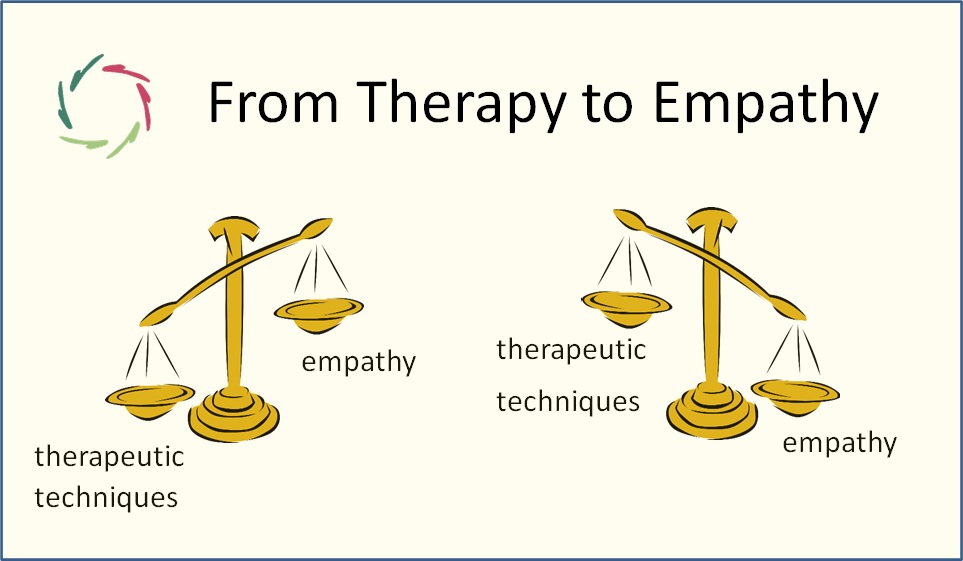
The future cannot be to un-science. It cannot be without empathy in full mode. The term ‘therapist’ comes from the Greek ‘Serapis,’ a Hellenization of the Egyptian god Osiris. [see: “Isis’ priests, named ‘therapists’”] I think that, in those ages, anyone with a serious psycho-somatic disorder could best go and visit such a temple. The Read the full article…

Compassion over Addiction
Addiction and Compassion (with capital C) are subconceptual happenings. Thus, they belong to the same domain and which is different from the merely conceptual one. This opens specific perspectives. Please make sure to read first: [see: “Essence of Compassion”] [see: “Addiction: in Search of Deeper Meaning”] [see: “About ‘Subconceptual’”] Also, please follow the other links Read the full article…
Low Back Pain – How Crucial is the Mind?
Low back pain is one of humanity’s most common and costly conditions — yet modern medicine keeps missing its deeper source. Decades of research now confirm what experience already knew: the mind is not a bystander but a key player. This blog explores how psychological factors shape back pain, why current treatments often fail, and Read the full article…