Compassion is NOT the Surface
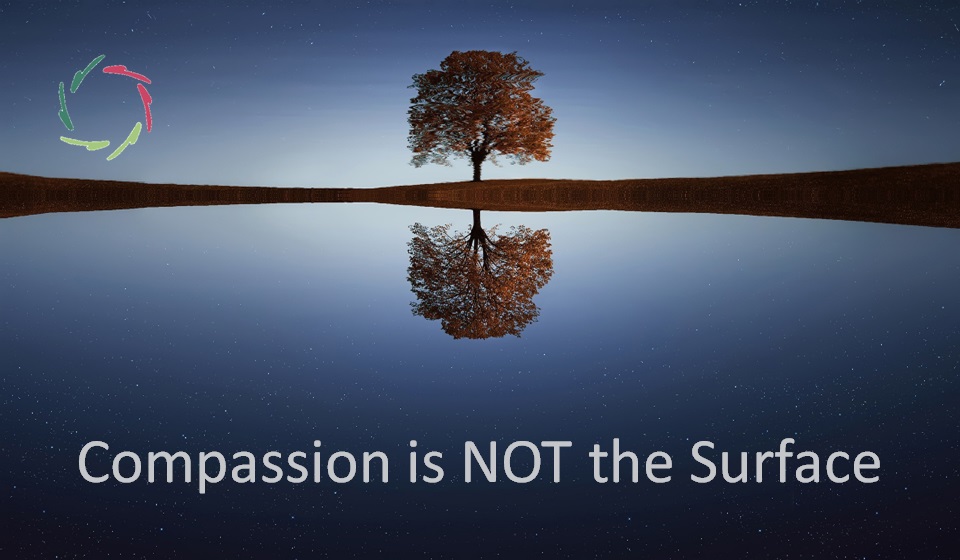
Compassion is profoundly challenging. It should not be confused with pity, empathy, or friendliness.
Confusion concerning Compassion may lead to substantial mistakes. On top of this, the concept is vaguely used, like any profound concept. For my formalization, see Compassion, basically.
Compassion is much more potent than any of the above.
Any confusion may give the impression that this is not the case. This way, people stumble at the surface level and think this is all there is to it.
Or worse, the effect may be paradoxical by putting effort in the wrong place. For instance, the more an exclusively surface level is brought, the more the deeper level can be felt as missing, with more consequence on well-being. Both levels are crucial.
In between Compassion and what it is frequently mistaken for lies complexity. This is related to the basic cognitive illusion that has haunted us for as long as consciousness has existed on this planet. It’s the challenge that comes with immense possibilities. Part of the challenge lies in the blindness to human depth ― thus also Compassion.
One may look at the lake’s surface and think there’s nothing underneath.
Still, the confusion is often made.
A frequent cause is precisely the misunderstanding of complexity — let alone human complexity. The latter is notoriously tricky for technological people who may proceed on popular/popularized notions. The professional literature about the topic is much richer and multi-layered than any popular variant.
For the time being, this goes in two ways: the understanding of humans and the influencing of the same. Taking out complexity in both brings the risk of dehumanization since in complexity lies our greatest good, our deeper self, our ‘soul’ if you like.
Compassionate A.I.
Here, especially, it’s essential to make the difference. Compassionate A.I. is NOT merely empathic A.I. Crucially, a set of empathic rules or rule-like constraints can NOT capture it. Unfortunately, the popularized, tragically simplified version of empathy/Compassion may have more influence on those who integrate this into their A.I. developments.
This way, it gets even more exposed in a vicious circle.
With the power of A.I. behind it, a profound mistake in Compassion can be devastating. It’s one of my great fears and one more reason to bring genuine Compassionate A.I. ― theoretically and practically through Lisa.
Yet, as I have written about frequently, Compassionate A.I. may make or break the future of this planet and any intelligence that lives on it. A good insight into this matter may be one of the most important ever.
So, let me warn you once more, dear reader, gently and firmly,
of the immense danger of developing non-Compassionate A.I. in a non-Compassionate human society.
Related Posts
Be(com)ing Positive
It happens: people who see themselves as ‘positive’ but who are such only in a superficial layer, like thin ice over a pool. Being positive is not saying ‘yes’ to anything and then again, it is. But not thoughtless, not feeling-less. One can say ‘yes’ in many ways. It can mean “I see you”, “I Read the full article…
In Leadership ― Not just Empathy!
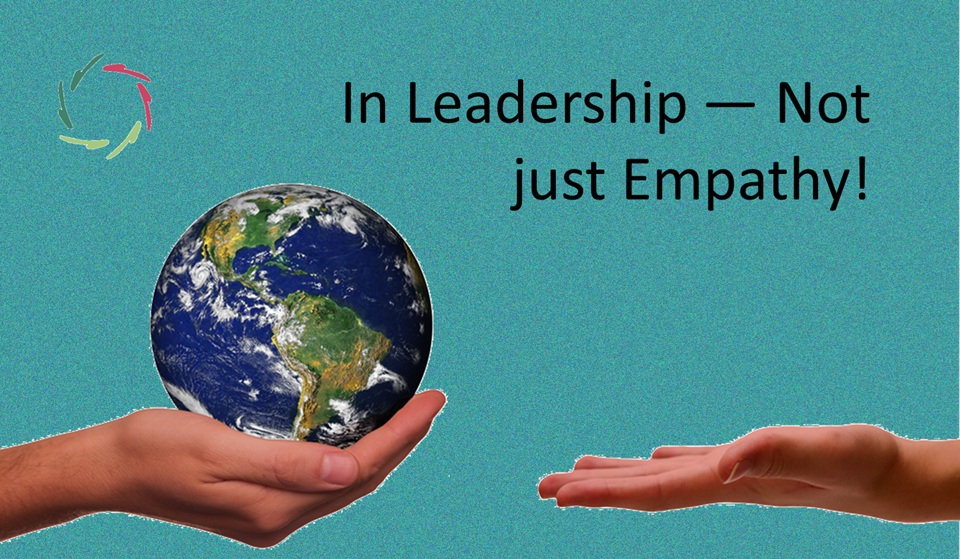
Empathy is celebrated in leadership, but is it enough? In fact, empathy alone may be part of the problem. This blog explores why Compassion, not mere sensitive resonance, must form the heart of real leadership. Not surface-level softness and control, but in-depth clarity. Only then can leadership truly guide rather than manipulate. The problem hidden Read the full article…
Friendly — Empathic — Compassionate
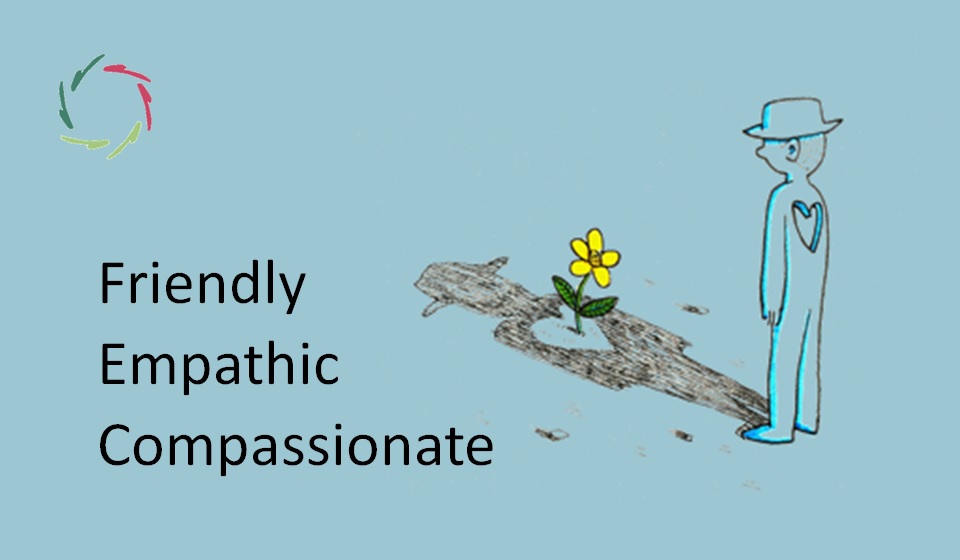
The conceptual differences are seldom made explicit. Nevertheless, they are huge and crucial for the future of humanity and A.I. Many people, including in high places, don’t profoundly think about this subject and implicitly act as if the differences are unimportant. Many opportunities to do good are thus unfortunately lost. Terms and concepts As always, Read the full article…