Practicalities of Free Will
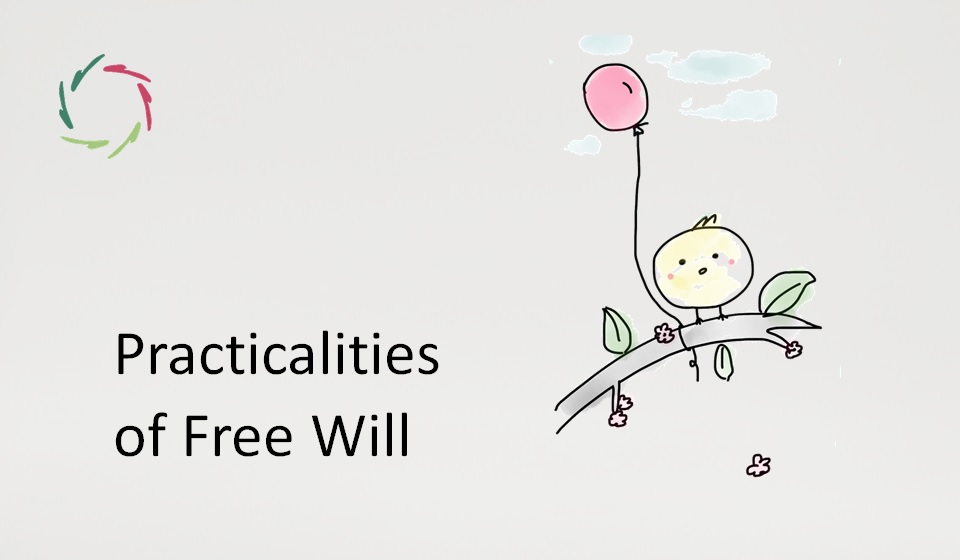
Free will is a term that stands for many concepts, and within each concept for a cloud of meaningfulness. That doesn’t make it practically less important.
Terms and concepts
Also, this doesn’t mean there are many free will’s. That would mean one can fight about what is the correct free will. Such fighting is done all too frequently ― leading mostly to little and never to much.
One could better enumerate the concepts and call them freewill-1, freewill-2, etc. One can then discuss whether freewill-10 is pretty much the same as freewill-12. Also, whether freewill-4 needs to be divided into freewill-4A and freewill-4b. That might all have some relevance.
Without relevance is any fight about which is the one and only correct free will ― let alone about whether this one and only is freewill-7 or freewill-11.
Metaphysical free will
Let us call this concept freewill-meta. It’s generally used as an all-or-nothing concept. Does free will (freewill-meta) exist, or doesn’t it?
In this vein, universal determinism – if that exists, as many believe – proves the non-existence of free will, since everything is determined even before your slightest decision to act, think, or feel anything. You couldn’t have acted or felt or done something else. Any of your decisions were already determined long before you were born. Ergo, you are free in nothing ― no freewill-meta.
So this theory goes. As a consequence, some lose all sense of responsibility. Others fear that freewill-meta, once discovered by the general public, may throw everything into chaos for this same lack of responsibility.
Practical free will
Let us call this concept freewill-pract.
This is – as just referred to – crucial in many domains of human endeavor. Societies are built on the concept ― whether Western, more guilt-based, or Eastern, more shame-based. Neither makes sense without recourse to freewill-pract.
Also, in the Western case, freewill-pract is basically more oriented toward individual control. In the Eastern case, the controlling urge is relatively more group-oriented. This is a prime source of quite some misunderstandings. But, in one case or the other, freewill-pract lies at the core of making society functional. Without it, there is no sense of responsibility ― no external urge possible for people to do some good for more than their little selves. For instance, freewill-meta is bound to jeopardize freewill-pract.
At least as things have been worked out over the ages until now.
Future of free will
The future may bring something different, as I hope it does ― Compassion-based. In my view, there will be a special place for something called free will.
Let us call this concept freewill-compa.
Freewill-compa doesn’t mind whether or not being pre-determined. There is no mere-ego that would lose its sense of responsibility. Freewill-compa can flow along just as well ― undeterred. For this, it doesn’t even need a sense of responsibility.
Freedom at last
Freewill-compa feels free if it can be of service, which it always can, in depth and respect, without abuse or being abused. As such, it doesn’t know frustration. At the same time, it is the desire to ‘awaken all sentient beings.’
This can be the basis of a future worldwide society. We can strive for that already ― even though much ego-anxiety may do its best to avoid it.
Compassion is the reaching of genuine freedom at last.
Related Posts
What is Meaningful?
What is truly meaningful in life? Not everything needs to be filled with constant significance. Real meaning comes in moments of resonance – fragile yet strong – that continue to grow across time. This blog explores how such moments can shape us, connect us to Compassion, and even point the way to a future where Read the full article…
Anxiety Not Felt
Worldwide, people are anxious. This may have been the case for a long time, but it’s certainly the case now. Technological progress hardens the cause and consequences. A quote about felt anxiety [*]: Anxiety disorders, including panic disorder with or without agoraphobia, generalized anxiety disorder, social anxiety disorder, specific phobias, and separation anxiety disorder, are Read the full article…
Suffering as Path to Enlightenment
This is no reason to seek out suffering for its own sake. Nevertheless, if suffering is present, it can be seen as an excellent occasion to continue one’s most valuable path. Any suffering, physically or emotionally What turns physical pain into mental suffering can mainly be regarded as profoundly emotional. In this wholeness of pain Read the full article…