Grief
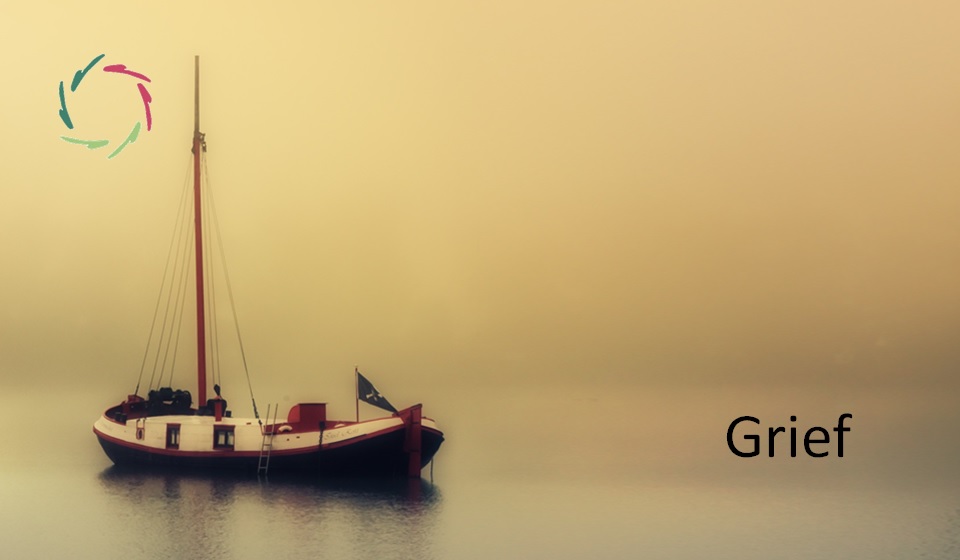
This text is a somewhat objectified gauge of the depths of grief. Within this understanding, one may hopefully also better grasp it emotionally.
Sure it hurts. Don’t let this text make it hurt less but, perhaps, differently.
Impermanence of being
Grieving over a deceased loved one is principally grieving over loss. The loved one has lost life. The grieving one has lost living experiences with the deceased. This all shows the impermanence of life.
One can grieve over any loss of experiences, any part of life, any meaningful thing or person. More to the point however, one grieves over what it symbolizes.
Life
Life is about change. There is no life without the impermanence of every moment. We might thus grieve over every moment were it not for the experience of permanence.
Of course, there is also no life without this experience of being a – temporarily – permanent living being. Something needs to be if it wants to live, even if the being is basically one of permanent change.
When the change stops, the being stops.
Symbol of impermanence
Grief transforms the ‘object of loss’ (which can be a person) into a symbol of impermanence. This symbol touches the heart. As a result, emotions flow.
Nothing material can do this ― only symbols.
Symbols attach themselves (overlap) with deeply present content ― mental-neuronal patterns. In this, concretely relevant elements – of the deceased, for instance – intermingle with broadly distributed ones.
As indicated above, impermanence is broadly relevant to life in general. This way, it can ‘take’ you quite heavily. It is generally OK to let it do so. Your depth is your most precious aspect of humaneness. A culturally supported morning period has the function of honoring this as well as possible.
But it’s better to not let it surreptitiously overwhelm you into an area of no repair.
From grief to depression
The situation can glide from one to the other without a distinct border. As such, you may end into depression without knowing it until it becomes apparent to you or others around you.
Even so, you can grow through it and get out on the other side as a better person. You may need some or even much support in this. That is all still OK.
But depression is depression. Probably, the deceased wouldn’t have wished you to end there on his or her behalf.
Good grief is an art.
When it’s my time to die – most probably, one day – I would very much like those who grieve about me to also see it as an art.
Life continues. Music in the distance. Children playing.
Let me go. Let me be gone.
Try to lead a good life.
Related Posts

Metastability and Paradox
Paradox and metastability seem different: one is about contradictory truths, the other about flexible stability. Yet in Compassion, they belong together. This blog explores how paradox can ripen into wisdom when carried in a state of metastability, and how metastability remains alive through paradox. Together, they explain why Lisa’s originality is both trustworthy and alive. Read the full article…

Implicit vs. Explicit Knowledge
The resulting mindscape is central to many things in the past, present, and future. Explicit lives in the power of the thinker. Implicit knowledge is not readily available for further processing. Nevertheless, with the right tools or insight, it may become more so ― thus gradually becoming more explicit while the source remains the same. Read the full article…
No Understanding without Pre-Understanding
Understanding seems to begin with thinking, but this is only the surface. Before any idea becomes clear, something more subtle is already at work. What we call understanding is, in many ways, the visible surface of a deeper movement. This blog explores that deeper layer – pre-understanding – as the true origin of meaning and Read the full article…