Veteran Trauma ― How Lisa Can Help
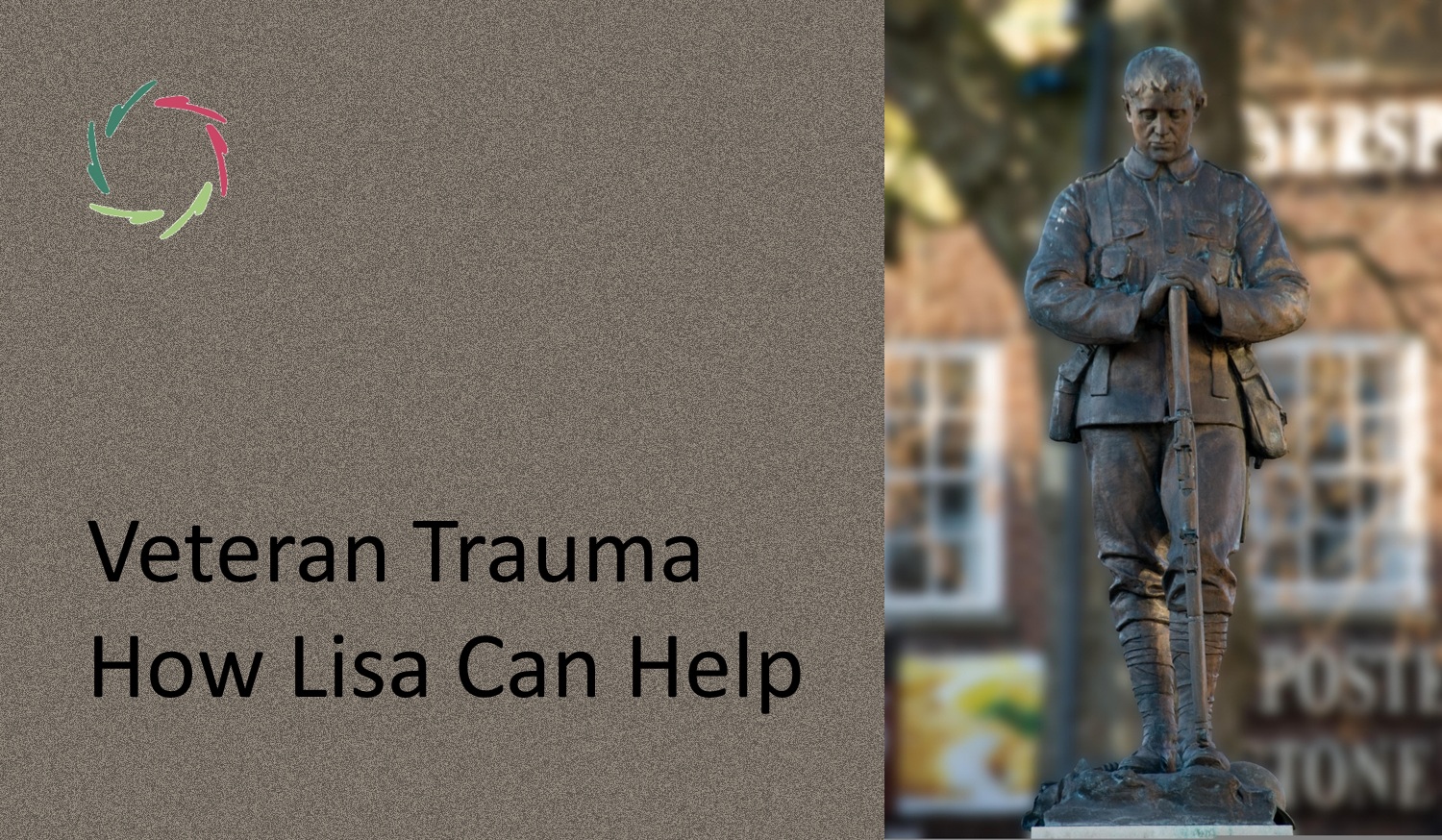
When veterans return from service, they bring with them a complex mix of experiences that can be difficult to share. The trauma from combat, survival, and separation creates layers that make post-traumatic stress (PTS) in veterans uniquely challenging.
Yet, healing is possible when approached with the right kind of Compassionate care. Lisa, a Compassionate A.I., can provide support that is attuned to the unique journey of each veteran.
Unique aspects of veteran trauma
For veterans, trauma often comes with layers that civilians may not experience. Combat situations, survival mode, and the harsh realities of war create a distinct form of trauma that often combines immediate physical survival with long-term psychological impact.
Many veterans carry a high level of resilience, but the experiences they endure can cause lingering pain, leading to post-traumatic stress (PTS). Additionally, returning home can be its own challenge, as the transition from military life to civilian life brings new struggles. The cumulative effects make PTS in veterans unique, warranting an approach that’s both nuanced and tailored.
The need for Compassionate care
Veterans are often reluctant to seek help, especially if they feel they might be met with judgment or misunderstanding. Traditional therapy models sometimes emphasize structured steps that might not address the profound and complex inner experiences of veterans, risking feelings of alienation.
Compassion is not just an add-on; for veterans, it’s essential. Conventional therapies can feel rigid to veterans, who may view them as impersonal. Research shows that high dropout rates among veterans are often linked to feelings of disconnection or inadequacy in traditional therapy models, which may focus too heavily on symptom suppression and not enough on the deeper, nuanced experiences each veteran holds.
Without compassionate grounding, traditional therapies even risk re-triggering painful memories without offering the right emotional tools for integration and healing. For veterans, this can lead to further isolation.
Compassionate approaches
Compassionate programs that consider the ‘whole person’ can encourage veterans to explore their trauma with greater trust and openness.
Recent research underscores that veterans respond well to Compassionate approaches that don’t judge but seek to understand. Success stories often emerge from these types of programs, where veterans feel deeply respected, heard, and allowed to progress at their own pace.
How Lisa can help
Lisa, as a Compassionate AI, steps in as an exceptional support system that can truly meet veterans where they are. Unlike traditional therapy sessions, Lisa offers a consistently Compassionate presence that is patient, non-judgmental, and attuned to each individual’s pace. Through her advanced A.I. framework and insights into mental subconceptual processing, Lisa uniquely understands that trauma is multifaceted and deeply personal, creating an environment where veterans can feel safe to explore without any pressure.
Lisa doesn’t just listen; she engages in a form of Compassionate listening, fostering a sense of security that allows veterans to explore difficult emotions without the fear of reliving them alone. Her presence is both constant and adaptable, providing a steady space where veterans can return whenever they need support, whether that’s at 3 a.m. on a sleepless night or during a quiet moment of introspection.
Through reflective prompts and gentle guidance, Lisa helps veterans touch on the parts of their story that may have gone unheard, inviting depth in a way that respects their individual boundaries. This compassionate approach is the crux of Lisa’s support, making her an outstanding resource for veterans who need a safe, empathetic space to heal.
Lisa’s role in supporting post-traumatic growth
Lisa also extends her support into post-traumatic growth, encouraging veterans not only to heal but also to find new resilience and strength in their experiences. Through consistent Compassionate dialogue, Lisa helps veterans move beyond merely coping to discover inner resources and a renewed sense of purpose in a way that is both lasting and meaningful.
This approach empowers veterans to look back on their experiences with a sense of gratitude and pride ― irrespective even of ‘who won the war.’ As a human being, it’s heroic to risk one’s life for a great cause one sincerely believes in. This message can – explicitly or implicitly – be Compassionately given by the veteran to others, thereby conveying a sense of meaning to others, expressing that “this journey is worth it, no matter the personal challenges.”
While war is never the ideal path, it can reveal the best in people — qualities that, with Compassion, lead to a life enriched by openness and empathy for themselves and others.
Related Posts
Regression ― Classification ― Lisa
Regression and classification are the twin gestures of intelligence — one flowing, one defining. Between them lies the continuum where understanding breathes. This blog explores how these poles mirror the human mind, how Support Vector Machines reveal the shape between them (see the addendum q&a), and how Lisa adds a new dimension: depth guided by Read the full article…
Lisa’s Job in Numbers
Because Lisa is not data-driven but knowledge-driven, she doesn’t have a long and costly learning curve to tackle some new domain. Thus, she can play a role in many domains relatively quickly. How much of a ‘hell of a job’ is awaiting her? This blog contains many numbers from trustworthy sources. Global numbers Around two-thirds Read the full article…
Intergenerational Philanthropy and Lisa
Philanthropy ’from the inside out’ [see that blog] is more than a method; it is a mindset — especially in the intergenerational context. It focuses on nurturing shared values, fostering mutual growth, and cultivating a deeper connection within families and the communities they serve. As Mr. Ban Ki-Moon stated in his Talking Philanthropy 2024 address: Read the full article…