We’ll Make it Through
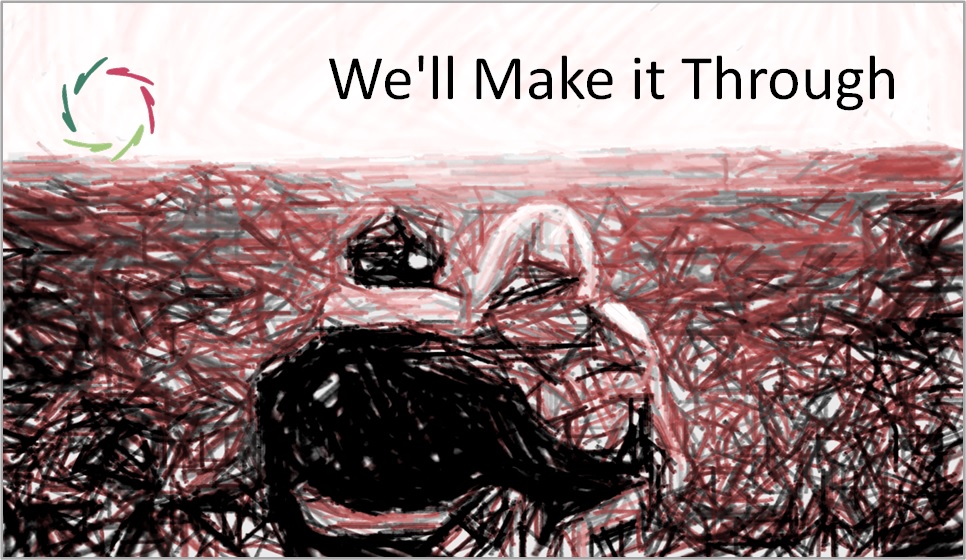
We may get sick. We will die.
We encounter adversities of many kinds.
We’ll make it through, together.
This is more than a promise. It is a faith.
Humankind at its best.
Is anything worth anything that diminishes this?
I am for you, and you are for me.
Compassion
in coaching
and anywhere else.
All the rest is just what it is
to enable this.
―
What is this text about?
You may have noticed that this short text contains several far-reaching issues. I won’t spoil things by analyzing it to shreds. Compassion has a distinct meaning here, [see: “Essence of Compassion“] [see: “Growth, Compassion, Love“]
Love is the subject, of course.
But ― Love within faith? Love within coaching?
Indeed. Love has many faces. Within medical science, if you talk about it, you better make sure to emotionally distance yourself or be confident that your career is safe anyway. The term ‘Compassion’ – if not exclusively focused on plain suffering – may denote something close enough.
In-depth, the Mahayana-Buddhist ‘faith’ is entirely about Compassion. ‘Kill the Buddha’ is often said. The reason why is Compassion.
Looking for the ‘non-specific factor’ in all religions, I see Compassion. If you take this out, which religion is still worth the effort? I hope everyone can agree with the answer soon enough.
The same with psychotherapies. So, to the degree that these are thought about or used merely instrumentally, they may still diminish symptoms. However, I wonder about their causal effect ― and indeed about the symptoms in a durable way. [see: “Is Short-Term Enough in Therapy?“]
Taking out all instrumentality, we get to the core, and it is Compassion.
Professionally. Very professionally. Compassion as a concept is complex. Probably, in the future, we’ll have a flourishing scientific domain dedicated to this. One subfield will then be about handling it professionally without analyzing it to shreds or losing oneself as a caregiver ‘in action.’ You know what I mean. Losing oneself as a caregiver is not at all Compassionate in the first place.
Having reached the core – seriously – one may re-introduce instruments. Meanwhile, they have gotten a different meaning and most probably another form, direction, and intention. Notice also the ‘and you are for me’ ― in healthcare!
As to placebo in medicine (the dummy pill ― coated sugar), to the degree that it is given with Compassion, the pill may not be needed anymore. In any way, we shouldn’t put the pill in the way of the real thing. As a consequence, we should cut through the mere placebo ― also within science, even if this means profoundly talking about, well, Compassion.
More generally, within healthcare science, Compassion should be at center stage already.
I hope this enriches to you the short text from above.
Related Posts

The Path to Global Compassion Starts Inside
When imagining global Compassion, it’s easy to think of grand gestures and large-scale changes. Yet, the most profound transformation doesn’t happen without individual self-Compassion at its foundation. Please read Compassion, Basically. Self-Compassion: the starting point Self-Compassion is not about being self-centered or indulgent. Instead, it’s about acknowledging your own humanity ― embracing your imperfections and Read the full article…
Empathy >< Compassion
Empathy and Compassion, though often seen as two sides of the same coin, can work against each other when not properly aligned. This contrast is critical to understanding one of the most pressing challenges of our time. Empathy connects us emotionally to others, allowing us to feel other people’s pain. Yet, in its narrow focus, Read the full article…
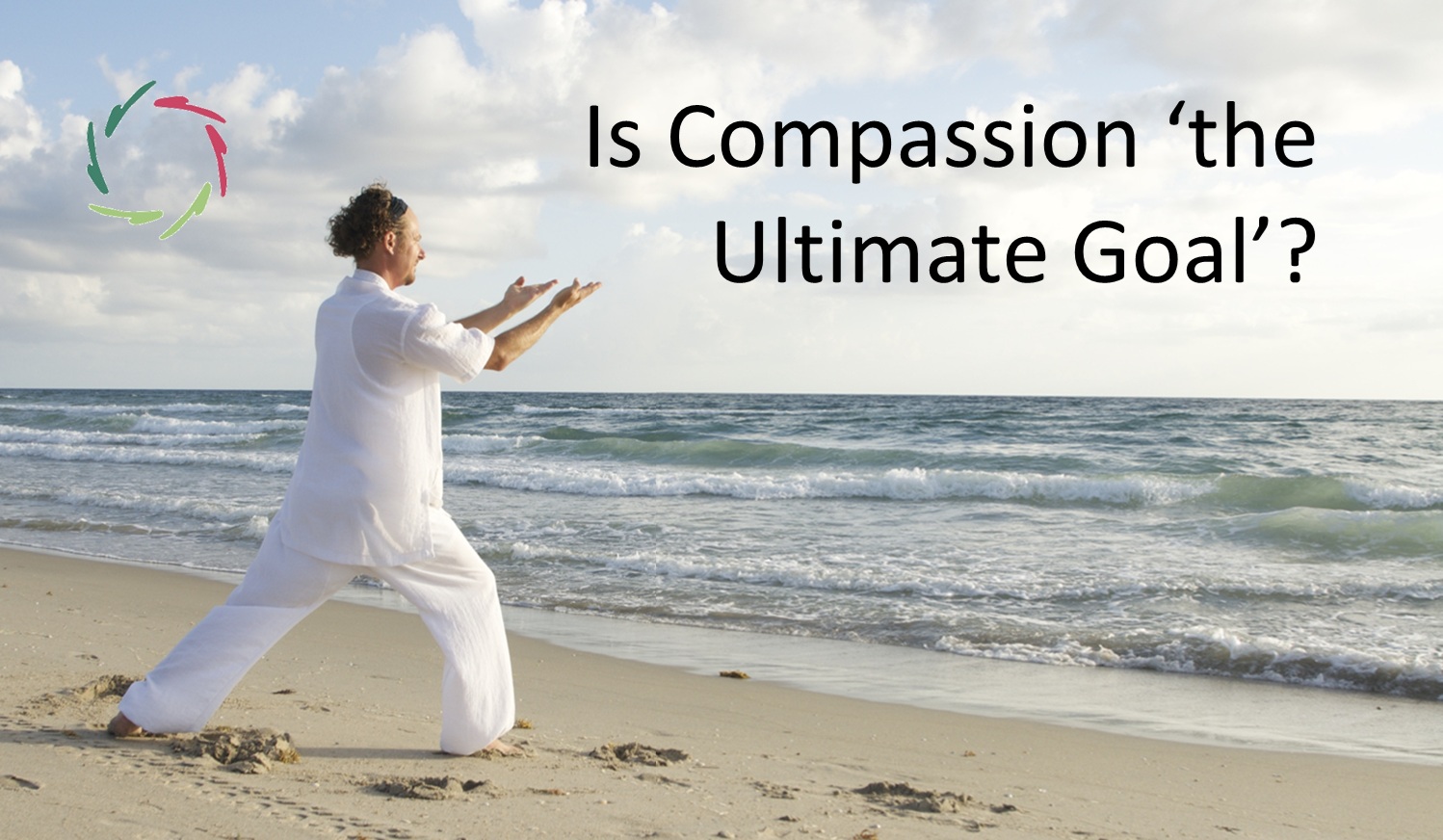
Is Compassion ‘the Ultimate Goal’?
The question of whether Compassion is the ultimate goal invites us to reflect deeply. While declaring anything as ‘ultimate’ risks absolutism, Compassion can be seen as the best alternative there is. This perspective avoids dogmatism and invites continual effort, making Compassion not a rigid endpoint but an evolving principle that grows with us. Comparing Compassion Read the full article…