Placebo Based Medicine
Alternative medicines – whether or not called ‘complementary’ – are not to be dismissed just for being alternative but to the degree that they are based on placebo-as-a-lie.
Placebo >< empathy
I see a huge difference between both at a conceptual level, transcending terminology. [see: “Empathy: What it Was, Is and… Will Be?”]
This text is not about empathy.
Calling something a lie
of course, already shows a negative appreciation. Since it is my appreciation, I cannot but fully agree. So I need to provide some explanation about ‘placebo-as-a-lie’, don’t I?
My definition: A lie is a statement of which the bringer knows that this statement is not true, yet he brings it as truthful. He deceives knowingly.
Fuzziness at the borders: does he really know it, or is he, for instance, only almost certain? Or just not certain of the opposite statement? Is he in the possibility to know? Should he be? Has science itself yet evolved so as to really ‘know’?
More fuzziness: do some circumstances make the – maybe only temporary – administration of a placebo the most humane option, so should one still use a negative term such as ‘a lie?’ Can a certain culture be more tolerant regarding placebo as a kind of ‘human contract’ for the good of those who benefit? Is there benefit, eventually?
In all circumstances, I stand by the definition given above. A lie may seem most humane. Even so, it’s definitely more humane to achieve – at least – the same effect without the lie. That’s one reason to keep thinking.
Placebo works…
or so it seems.
Can a sugar pill work, except through heightening the level of sugar in your body? I don’t think so. Giving this pill as a ‘powerful medicine that will cure your sugar-unrelated xxx’ is a lie.
You may replace sugar with anything that does not or even cannot have the effect of curing xxx.
Not the placebo works, but what it eventually means to you. The latter is precious. Do you want it to be concealed by a lie?
Battle of medicines
So we come to the point that I want to make in this text: alternative medicine is to be avoided inasmuch as it is based on placebo-as-a-lie. Taking into account the fuzziness that I described above, I dare anyone who is not with me, to openly discuss this with me ‘like gentlemen’ (including ladies). [see: “From Discussion to Conversation”]
And in one sweep, I augment my statement: regular medicine is to be avoided inasmuch as it is based on placebo-as-a-lie. This statement has the same kind of morality. Inasmuch as ‘regular’ means ‘scientific,’ this new statement looks like an internal contradiction. Is science not meant to be avoiding any kind of a lie? Is chemical science, for instance, meant to prove something but then not care about it at all? Or any other science?
Then what about medical science? Is this meant to be a lie or what?
I don’t think so.
Any battle between regular and alternative medicine should be replaced by a ‘battle’ (rather: high-level friendly discussion/communication) about placebo.
We know that placebo still makes up a huge part of regular medicine. As I see it, this should be given a lot more attention than is the case.
Not to attack medical science itself, but to augment it, to make it more worthwhile, to make it even more the best we have to relieve human suffering and to augment human worthiness and happiness and, well, openness and so on [see: “Five Aurelian Values”].
According to me, there is only one decent kind of future.
Related Posts
Lisa as Medical Pre-Peer Reviewer
Medical peer review is under increasing pressure, especially when research touches on the mind. Many difficulties arise not from disagreement, but from hidden assumptions and unclear positioning. Lisa as Medical Pre-Peer Reviewer addresses this upstream, before judgment begins. By clarifying rather than evaluating, Lisa supports authors, editors, and reviewers in doing better science together. This Read the full article…
26. ‘My pain is real! It’s not mental!’
The outcry in the title is the result of a way of thinking that, sadly enough, still pervades our culture very much. It is as if what is mental cannot be real at the same time. This seems to be very deeply ingrained, so deep that many people don’t even question it at any time Read the full article…
Low Back Pain – How Crucial is the Mind?
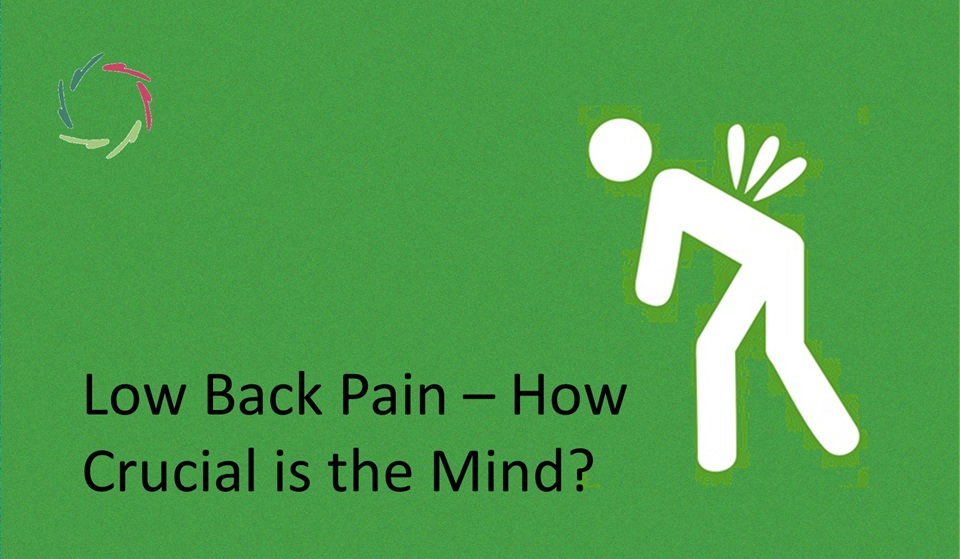
Low back pain is one of humanity’s most common and costly conditions — yet modern medicine keeps missing its deeper source. Decades of research now confirm what experience already knew: the mind is not a bystander but a key player. This blog explores how psychological factors shape back pain, why current treatments often fail, and Read the full article…