Deep Purpose
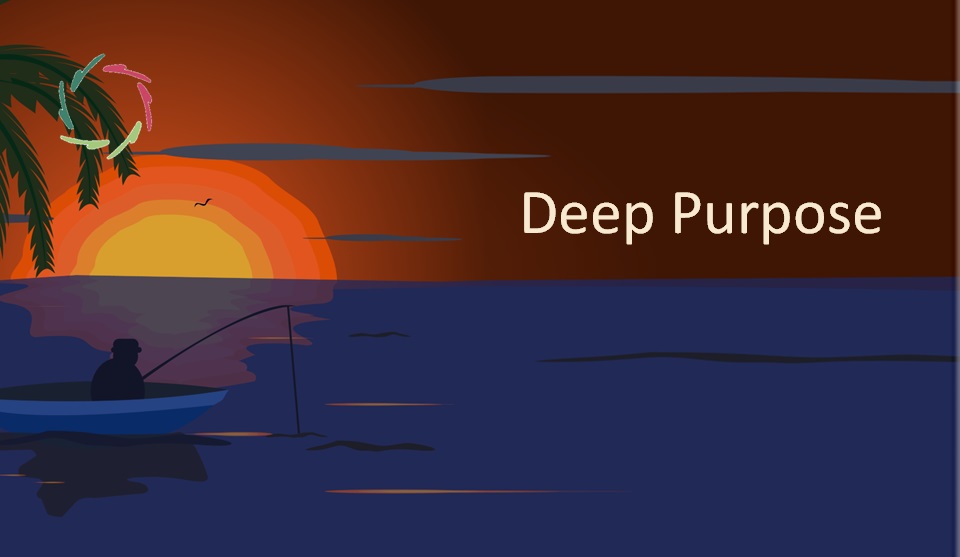
“He did it on purpose.” Maybe, but what is ‘purpose’? And an even more profound question: What is ‘deep purpose’?
Complexity is needed for purpose.
A jumbo jet is complicated but not complex. Therefore, a jumbo jet doesn’t have purpose. It can have A purpose given by those who use it. The jumbo’s so-called purpose is nothing but their purpose. Without them, the jumbo is a bunch of steel, etc., doing nothing ― for lack of purpose. Likewise, no machine has any purpose by itself. It gets a purpose by being useful to entities with purpose.
On the other hand, a bacterium is complex. Also, it has purpose, namely, to survive and thrive and do anything needed for that purpose ― as anything that lives.
What’s the purpose of purpose?
Good question.
Eventually, purpose has no purpose because it is the purpose. For instance, life has no purpose outside of life itself. Life doesn’t serve a purpose. That is the main characteristic of life.
This may be less obvious from the outside. For instance, do plants not grow for the purpose of being eaten by animals? Does it not all fit in one picture, being that of God or nature, or human hegemony on earth? The answer is No. Any living being has it own purpose. It may be instrumentalized into the purpose of another living being, but that is only an instrumentalization, not the purpose of that (first) being.
Does any purpose ‘work’ without a deep purpose behind it?
Simply, no.
Also, a purely rational purpose doesn’t work (with real people) unless the rationality itself is part of one’s deep longing. A scientist may think that his scientific arguments are enough to convince people to act accordingly. They are not, obviously, except to the scientist and like-minded people.
So, we go to deep purpose ― at the symbolic level.
One feels deeply involved. One may be ready to spend a lot for deep purpose, even one’s life.
Concretely, the surface-level purpose may be a person, a country, an idea, an ideology, or anything else. This is the symbol for what is symbolized by a symbolizer. In principle, ‘deep purpose’ may be seen as any of these three. The symbolizer may find himself in the purpose through overlap.
However, mistaking oneself between the deep purpose and the surface-level symbol is frequently done. This is not seldomly the result of an over-zealous search for clarity. As with anything depth-concerned, the level of clarity of any deep purpose has boundaries. Wanting to know one’s purpose with maximum clarity jeopardizes the presence of any deep purpose from the start.
Deep purpose is very energetic
That’s the other side of the coin.
Being congruent with each other through their shared purpose, purposeful motivations are aligned in one direction instead of acting against each other. Therefore, the ‘energetic flow’ (deep motivations) goes with little obstruction.
If this goes profound, it can be seen as spiritual. For instance, a religious person – from any denomination – can feel deep purpose being present within the religion. A person who loses his religion may thus lose any deep purpose altogether ― not necessarily, but possibly. Such a pity. But eventually, with deep purpose, is any religious surface-level storytelling still needed?
In my view, no. Deep purpose is the core of Open Religion.
Related Posts
The Meaning of ‘Meaning’
What is the meaning of something? What is the meaning of life? What is the meaning of your life? These questions are familiar, almost worn — yet strangely inexhaustible. This blog turns to the question that hides behind them all: what is the meaning of meaning itself? Not to close it with a definition, but Read the full article…

Be Your Friend
For centuries, we’ve been at war — externally and internally. The history of the world, including or especially that of Western culture, has been shaped by two kinds of aggression. One seeks enemies outside, conquering and subjugating them. The other turns inward, forcing individuals to suppress and control parts of themselves. The result? A world Read the full article…
Diversity ― Inclusion ― Equality
Diversity, inclusion, and equality – often bundled as D.I.E. – are among the most widely embraced values in today’s world. They are promoted in policies, institutions, and media. And yet, they are also frequently met with discomfort, resistance, or quiet fatigue. This blog is an invitation to look deeper. Not to defend or reject D.I.E., Read the full article…