The ‘Auto’ in Autosuggestion

Four letters ― a world of difference within them.
Suggestion
So friendly and so close and overlapping that there is a spontaneous reaction before you consciously know it. This is the aim of AURELIS autosuggestion. There is no coercion involved at all. [see: “Autosuggestion versus Hypnosis”]
Please, will you do this for me ― which is also for you? In this overlap, rational and total-person-oriented, you may recognize Compassion. [see: “Compassion, basically”]
Auto
This is ancient Greek for ‘self,’ of course.
Intriguingly, γνῶθι σεαυτόν (gnoothi seauton, know thyself) was one of three maxims written at the entry of the temple of Apollo at Delphi. To me, the ancient meaning of ‘auto’ in this proverb wasn’t about money earned or power in society, or even any conceptual measure at all. Remember, we’re at Delphi, the center of a mystery religion. People were supposed to visit it carrying their deepest questions, hoping for an answer.
I guess the answer always came down to the same, related to ‘self’ ― more specifically, the deeper self.
With the deeper self, we’re also at AURELIS.
Only now, there is also the science to back it up [see: “The Post-Postmodernist Brain”], and a few millennia of trial and error from which humanity seems to have learned nothing, but nevertheless. History is available, and tons of culture are at anybody’s fingertips.
Put in a simplified way, the deeper self is the conglomerate of broader and ever broader mental-neuronal patterns of which one is conscious, barely conscious, or non-conscious. [see: “What is ‘Depth’?“]
The broader the pattern, the more I see it as ‘deep.’ This is not necessarily the same as ‘far away from conscious processing.’ A wise person can say profound things rather consciously ― take Socrates, who liked to use the above maxim.
Auto-suggestion
This is vertical communication, right towards depth, to know thyself and kindle thyself to action. One may have some surface goal, such as diminishment of pain or addiction. In such a case, autosuggestion is also the communication of this goal.
While doing so, the goal becomes deeper, also in order to be understandable down there. The deeper self doesn’t get exclusively conceptual stuff. For many, this may be the main challenge in using anything autosuggestion-related.
Practice, guidance, and putting real effort in trying to make it happen as by itself.
Nobody ever said it would be easy, not in ancient Greece, nor now. Eventually, important is what happens in depth. That is the real ‘auto’ ― not the same as mere-ego. [see: “Speak to Ego and You Form Ego“]
If you want to attain depth, you have to put aside mere-ego, even if only for a little while. This may seem easy. Think again. For a starter, who is doing the thinking now?
This is what I mean with real effort: starting all over again with this last question, and again, and again, for instance, before listening to some piece of autosuggestion. Without this effort, one way or another, you’re kidding yourself.
Crucial in this is utmost friendliness, for the purpose of ethics as well as efficiency.
Related Posts
Art (an AURELIS Viewpoint)
Art is often mistaken for a skillful arrangement of colors or a familiar aesthetic that soothes or impresses. But true art is not a trick of technique. True art grows — from the inside out. It invites, resonates, and moves something deep within the observer. This is where AURELIS and art meet: in the realm Read the full article…
The AURELIS Resonance
AURELIS is radically open, which means its coherence cannot come from boundaries or rules. It must arise in a different way — through resonance. This blog explores why resonance is the natural connective force in a depth-seeking project, and how it enables a free yet strong community. It also shows how resonance appears in individuals, Read the full article…
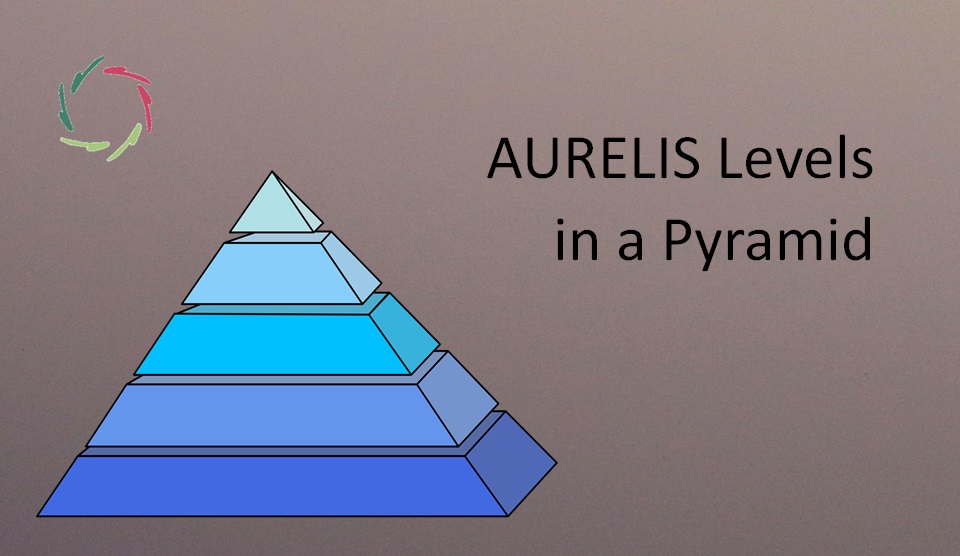
AURELIS Levels in a Pyramid
This is what AURELIS (+ Lisa) is about. From abstract to concrete, a lot has been worked out or may soon be ready for deployment. All levels are profoundly consistent. Please also take a look at: Introducing AURELIS (Animated Video). Or you may prefer AURELIS in a nutshell (Animated Video). You find here a written Read the full article…