Poetry is Not the Absence of Rationality
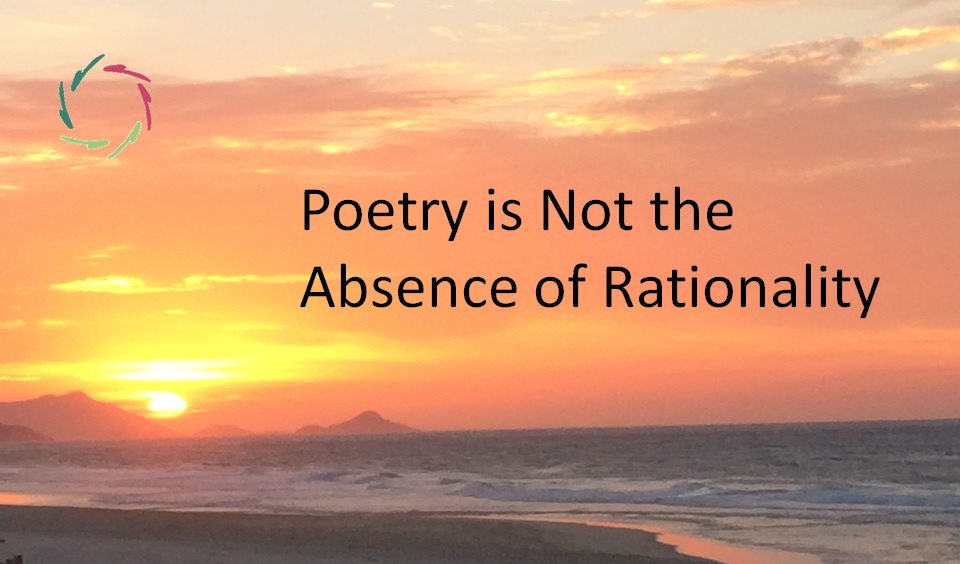
Nevertheless, to many people, it seems to be so. I find this dangerous. It sets both against each other and precludes a nice being-human in full potential.
[see also: “Rationality and Poetry”]
Mistrusting ‘the expert’
Experts frequently bend on their rational stance to lend them authority to speak and even decide what others should do. Of course, since they have studied a lot, they have the impression of carrying a lot of rational baggage.
An expert is also in many cases someone who in practice learns to use many rules of thumb to proceed quickly from issue to solution. Ask the expert why he made some conclusion and he appears not to be able to conceptualize this even though he himself goes about his daily business in blissful ignorance of such ignorance.
Then, in many cases, mostly in human sciences, it doesn’t work as should be. For instance, one of my favorite themes, in psycho-somatics. What it leads to: rampant catastrophes worldwide. Maybe even you, dear reader, have personally felt or seen in someone else that “something isn’t right.”
The expert, still clinging to his rationality, gets mistrusted. Rationality gets mistrusted.
=> Birth of New Age and Alternative Medicine and…
as an endeavor to keep poetry safe from rationality, to keep being able to live in a poetic, meaningful world, to feel the warmth of human contact devoid of an onslaught of mechanistic thinking, to remain organic, romantic, essentially poetic.
Quite positive, although also frequently naïve and self-contradictory in trying to appear rational and anti-rational at the same time.
Of course, as always, there is much pseudo-would-be, ego-central, where-is-the-money kind of misuse of this naiveté. Moreover, it’s fodder for manipulative demagogy, since rationality which should be a therapy against the latter, gets dismissed.
Fake news becomes meaningful news, replacing ‘rational’ news.
Unfortunately, without rationality, people readily get lost in poetry. What should be very beautiful, can get very ugly.
Poetry is completely compatible with rationality.
Putting rationality as anti-poetic or poetry as anti-rational is very bad. In essence, they are independent of each other. In practice, they are both needed, maximally, to build and keep a nice, humane world for ourselves and our children.
According to me, of both, poetry is most important. Without it, nothing has any meaning, including rationality.
So, it is tremendously important to see to it that poetry can in every case be fully implemented in a very rational world. In fact, the core purpose of rationality should be poetry. This is a huge responsibility for ‘rational’ people, including experts.
Rationality should never be put in the way of poetry.
Looking at it from afar, as well as looking through it from afar, I think that this is also a key issue in the ‘battle’ between progressives – in search of rational progression – and conservatives – in search of sometimes raw but always meaningful sense – in the US nowadays.
As I said, fodder for demagoguery with probably, underlying, an implicit strategy of ‘divide and conquer’. Who’s getting richer, mightier? Powah, who’s supposed to get really happier?
That is such a pity, such a pity, such a pity.
Without poetry, we are dead already. Without rationality, we will eventually die through lack of poetry, meaningfulness, taking care of this planet and of each other.
There is no need for any battle at all.
Related Posts
About Human Depth
Everybody knows it, and nobody knows it. It is nowhere and everywhere As a youth, I used to read a lot of ‘elite literature’ that costs almost nothing for what it’s worth, has nothing to do with how-to-earn-money, and everything with depth. The writers are frequently found in history books of literature. What they wrote Read the full article…
The Heart’s Eye and A.I.
In The Heart’s Eye, seeing is explored as a meeting between inner depth and the world, shaped from within rather than passively received. In the age of A.I., this raises a natural question. Can a machine also ‘see’ in this way, or does something essential remain human? This blog explores that question gently, moving beyond Read the full article…
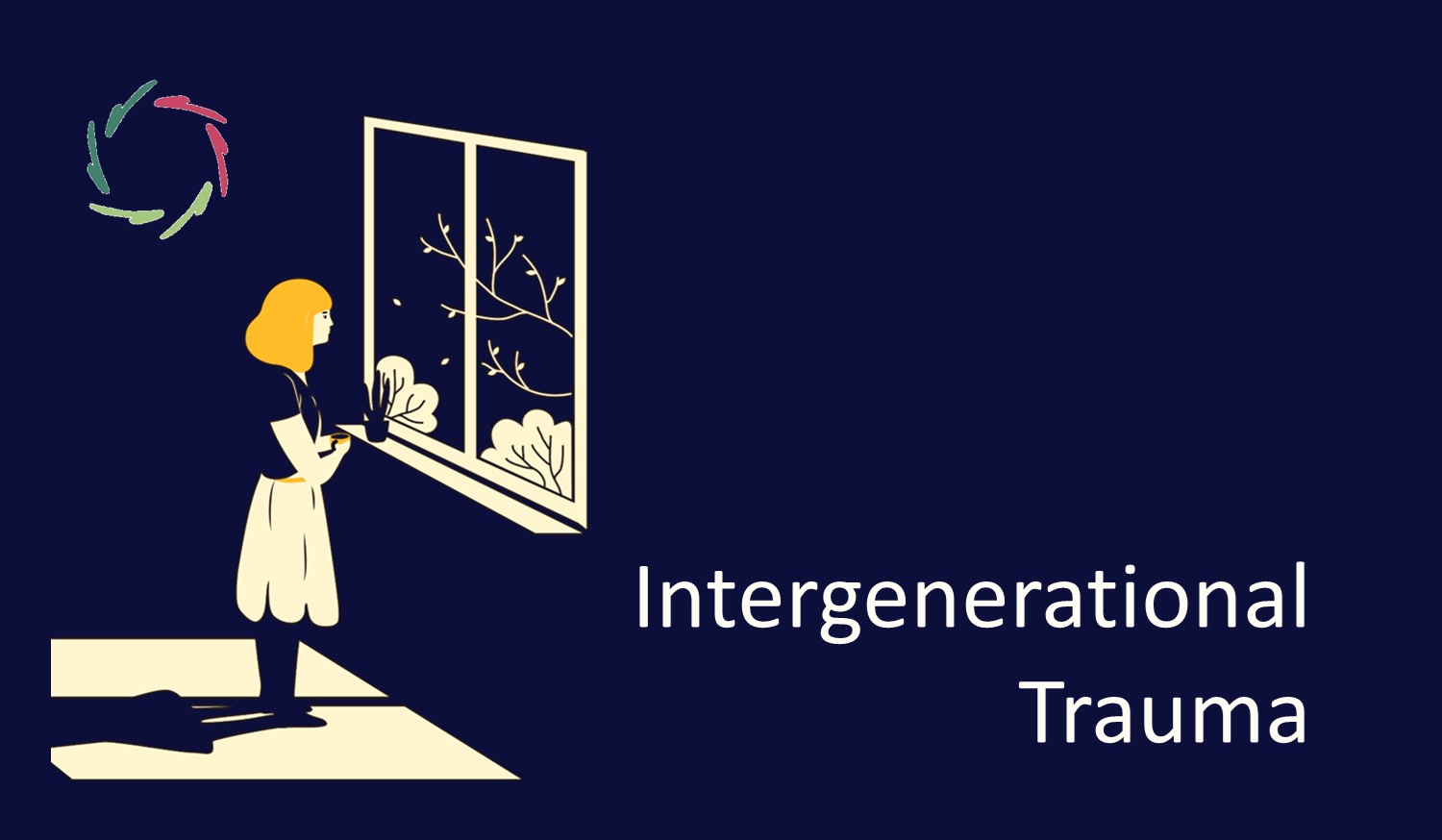
Intergenerational Trauma
Intergenerational trauma, passed down through generations, can leave deep scars and establish patterns that influence how people perceive and interact with the world. Addressing it is a profound and challenging task that requires more than a surface-level approach. It demands personal growth, deep insight, and Compassion. Please read also Cultural PTS. The manifestation of intergenerational Read the full article…