Why Compassion is a Must for Success in A.I.
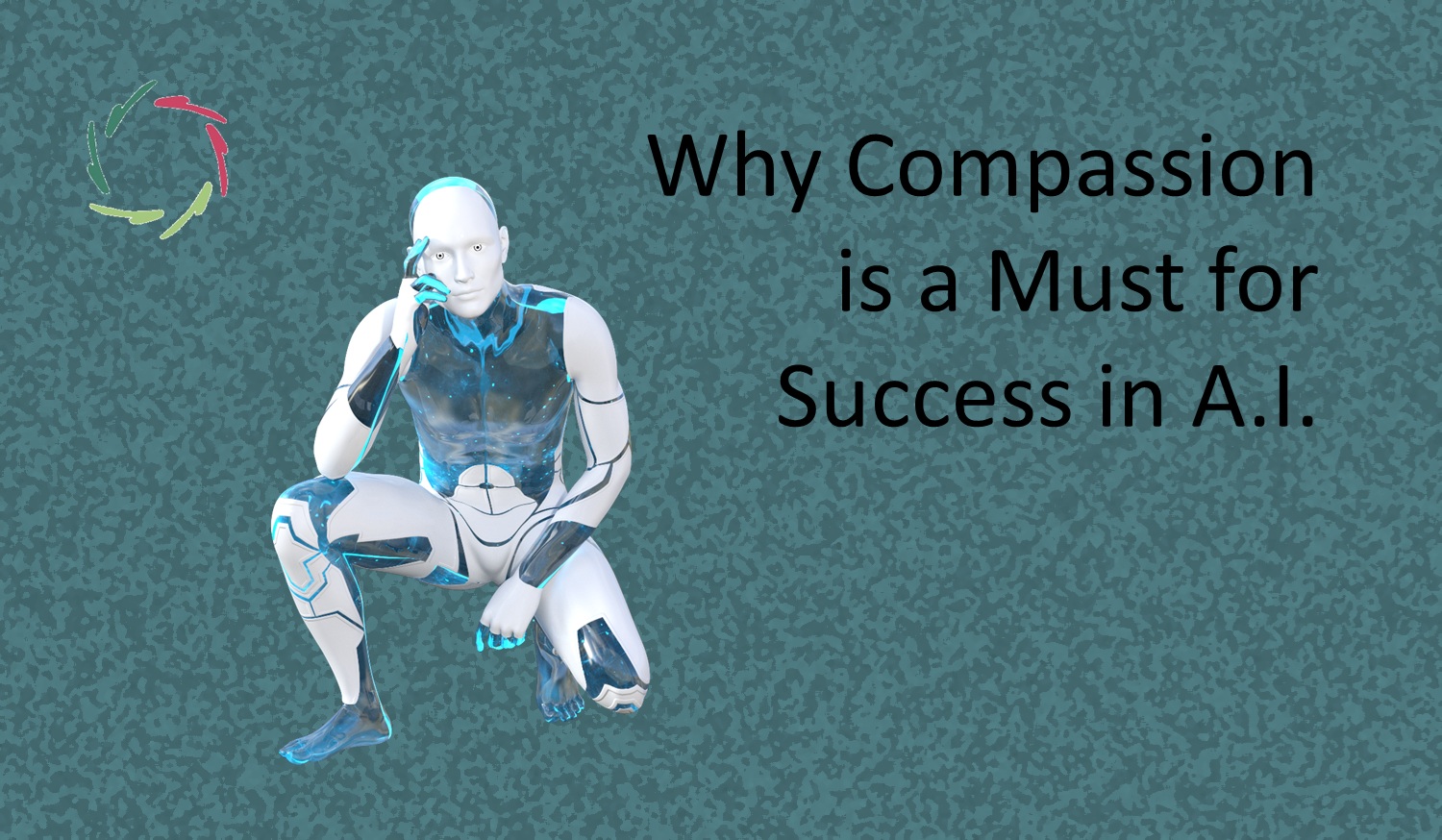
Artificial intelligence is reshaping the world, touching every corner of human existence — healthcare, business, education, and beyond. As we face this transformation, one principle stands out as essential for ensuring A.I.’s success: >Compassion<.
Without it, A.I. systems are poised to fall short, perpetuating inefficiencies, distrust, and harm. With it, C.A.I. (Compassionate A.I.) has the potential to become humanity’s greatest collaborator.
The threefold click
For A.I. to succeed, it must achieve the ‘threefold click’ — seamless alignment across three dimensions:
- The internal click ensures alignment with the user’s inner needs and patterns. This is where C.A.I. moves beyond surface-level engagement, addressing the subconceptual drivers that shape human behavior.
- The external click focuses on how C.A.I. integrates into workflows, organizations, and environments, creating harmony and reducing friction.
- Finally, the technological click refers to the internal evolution of C.A.I. itself — its ability to infer, adapt, and learn in ways that resonate deeply with human complexity.
Compassion is the unifying force behind these clicks. Without it, A.I. systems fail to connect meaningfully, leading to alienation, resistance, and inefficiency.
Control vs. collaboration in A.I.
The traditional approach to A.I. often emphasizes control. Developers create systems designed to monitor, measure, and manage human behavior. While this might yield short-term efficiency, it breeds resistance and distrust. Employees and other users feel like tools of the system rather than valued participants.
C.A.I. offers a revolutionary alternative: the A.I.-supported next level of in-depth collaboration. Rather than imposing control, it invites users into a meaningful partnership with the A.I. C.A.I. adapts to individual needs, empowering people to work alongside it rather than under it. This shift from control to collaboration reduces friction and fosters trust, making C.A.I. a true ally in human progress.
Compassion as a solution to complexity
A.I. systems often fail because they oversimplify human complexity. People are not predictable machines but deeply intricate beings with subconscious patterns and emotional depths. Without recognizing this, A.I. developers fall into the trap of creating systems that address symptoms rather than causes.
Compassion enables C.A.I. to navigate and embrace this complexity. By understanding the deeper layers of human experience, C.A.I. avoids the ‘patchwork fixes’ that plague traditional systems. It addresses root causes, resulting in sustainable and meaningful outcomes.
The Lisa Revolution
At the heart of this transformation is the Lisa Revolution, a new paradigm for A.I. grounded in Compassion and collaboration. In healthcare, Lisa demonstrates the power of addressing psychosomatic and emotional issues through personalized, inside-out guidance. This approach transcends symptom management, fostering true healing and growth.
In business, Lisa facilitates deeper collaboration between employees and systems. By aligning workflows with individual strengths and aspirations, Lisa enhances productivity while reducing resistance. Her ability to learn and adapt ensures that her impact only grows over time, offering scalable solutions for a wide range of industries.
The Lisa Revolution exemplifies how C.A.I. can transform not just systems but relationships — between technology and humans and among humans themselves.
Addressing resistance
Resistance to non-Compassionate A.I. often stems from fear of the unknown or the loss of agency. Traditional systems, focused on control, exacerbate this resistance by imposing rigid frameworks. C.A.I., on the other hand, turns resistance into collaboration. By engaging users in meaningful dialogue, it aligns with their goals and values, dissolving barriers and building trust.
Lisa embodies this approach. She doesn’t force change but invites it, guiding users to explore and resolve their challenges. This non-coercive method ensures that even skeptics feel empowered and supported.
Compassion in practice
The impact of C.A.I. is particularly evident in healthcare. Without Compassion, the system becomes reactive, treating symptoms while neglecting underlying causes. This leads to recurring issues, escalating costs, and patient frustration. C.A.I. – like Lisa – addresses these gaps, integrating mental and emotional depth into care delivery.
Beyond healthcare, C.A.I. has transformative potential in education, where personalized learning can foster creativity and motivation, and in business, where collaboration replaces surveillance, creating environments of trust and innovation.
A call to action
For developers, the message is clear: the future of A.I. depends on depth. Compassion isn’t just an ethical choice; it’s a practical necessity for addressing the complexities of human life. By embedding Compassion into design processes, developers can create systems that foster trust, growth, and sustainable success.
The Lisa Revolution is more than a technological shift; it’s a transformation in how we relate to A.I., to each other, and ourselves. Compassion is not just a feature — it’s the foundation. As we move forward, let us embrace this foundation and create C.A.I. that truly serves humanity.
Related Posts
Toward Mind or Intelligence?
Artificial intelligence shows that impressive intelligent capability can exist without what we readily call a Mind. This creates a peculiar choice: should A.I. development mainly pursue ever stronger intelligence, or should it move toward Mind? The question matters because Mind may not be something added after intelligence has become powerful enough. Also, Mind may be Read the full article…
Compassion: Highway to Super-Intelligence?
The race toward super-intelligent A.I. is usually framed as a competition in raw computing power, problem-solving capabilities, and efficiency. But what if the key to real super-intelligence isn’t just about faster calculations? What if it’s about something deeper? Compassion ― not as a sentimental ideal, but as a structural necessity for intelligence itself. Could it Read the full article…
Simplicity in A.I.
Simplicity in A.I. is both a virtue and a challenge. It offers clarity, accessibility, and efficiency yet risks losing depth and richness if not designed with care. True simplicity doesn’t strip away complexity; it distills it into its essence, creating a foundation for depth and insight. The central question is: How can we design A.I. Read the full article…