Ending Life Compassionately
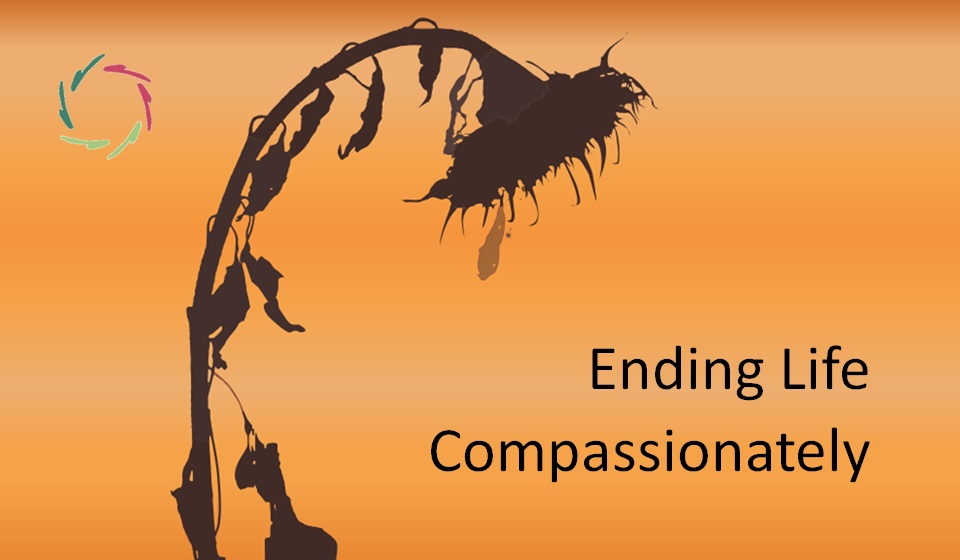
Any life. This text is foremost about the ending of one’s own life. It can be seen more broadly.
Science and setting
If possible, the end of life should not be set in a clearly unscientific setting. Even if this is most easy and comfortable, getting it scientifically correct can lead to additional possibilities of depth that are very much desired.
Without exaggeration.
If there is no choice, depth comes first.
Science (common sense on steroids) is for people, not people for science. Especially at the end of life, the human experience should prevail. The symbolic setting can help very much in making the experience profoundly meaningful.
Still, there is no need for any tension between science and setting. Any such tension would be inappropriate.
Science can be warm and friendly. It mainly depends on the questions asked. The fact that it sometimes appears cold and hard speaks for itself.
The end of life is a good time to let go.
Letting go even of what it is that one should let go.
It’s about the ego, of course. But in what sense? After a lifetime of happenings and experience, this may be a good time to ‘enter a new phase’ in which the ego, if not done before, can let go. Even if slightly, it’s worth it.
“There will be life after death. It will be a good life.”
Having this experience, one way or another, is perhaps the ultimate act of Compassion. However, it’s not just an ego act. It’s a total-self act.
Also a dying person has some responsibility, if only out of self-respect.
Letting go = coming to terms with this.
Again: without knowing in what sense, if you like. Getting into the beyond is done by getting into the beyond ― not holding on to what has been.
Thus, being present (Present!) with a dying person is the best gift ― also if it’s yourself. Not ‘just’ being present, but entirely, openly, daringly, sweetly, and infinitely patiently.
Much so as if you might be the dying one or another one, and it doesn’t matter.
It doesn’t matter in letting go.
You’re good.
It’s always OK.
Dying is entering eternal love.
Related Posts
The Brainy Trinity
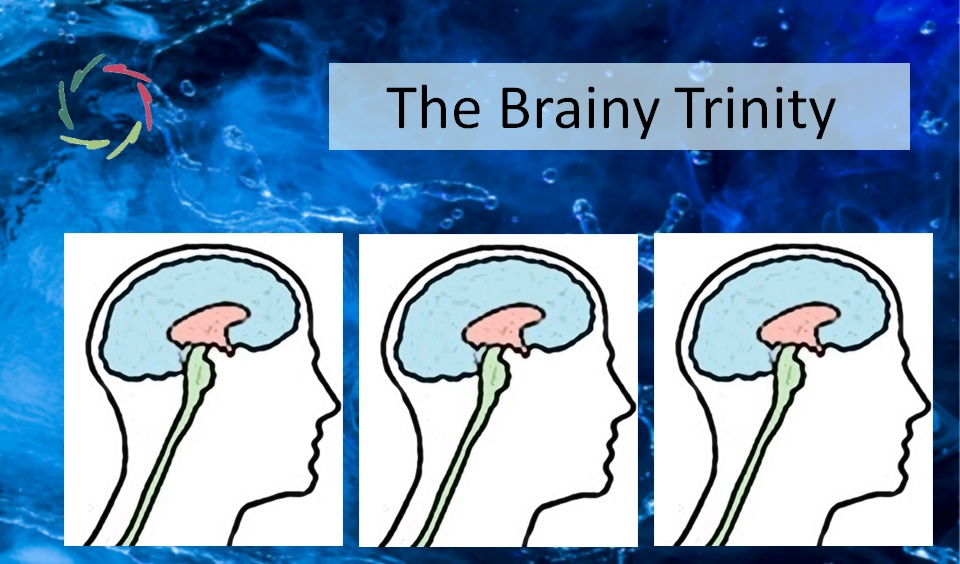
The ‘triune brain’ is a popular concept: reptilian – mammalian – human. Yet the brain functions as a whole. This has huge implications. Evolution, no engineering Evidently, a mechanically engineered brain would be very different from the organically evolved one that we may call ‘home’ in the most literal sense. We are organic. Any naturally Read the full article…
1 Psyche and Soma, Two Sides of One Coin
‘Body-mind unity’: necessary vision for further scientific development of medicine. Psyche and soma and a lot of questions Psyche and soma: mind and body. They are both important, so we learn during our student years and also after that in and through practice. But how do we give to the psyche a proper place in Read the full article…
A Scheme of Human Mind
This blog focuses on an abstract scheme of the human mind, illustrating the relationship between the conceptual and subconceptual domains of mental processing over time. Abstract as it is, this explains many human affairs — positive and negative. Half the scheme The horizontal line indicates time. The scheme is simple. Each of us experiences a Read the full article…