Control-Based Therapy – Profound or Superficial?
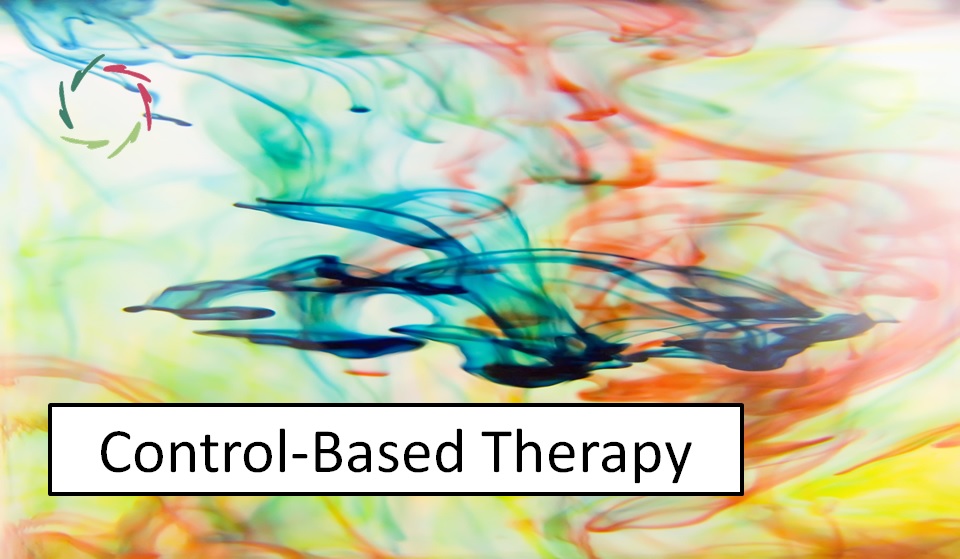
A car needs no more than superficial control. An organism instead needs deep control, which may be prevented by superficial control, like the surface reflections of a pond may prevent one from seeing its depth.
Life is about controlling the environment.
Even more, life is about controlling the inner milieu. Controlling the environment aims to control the inner milieu. If this is OK, the living organism is OK.
From its very start 4 billion and a bit years ago on planet earth, life is about control
by definition.
A living agent acts because it wants to go on living. ‘Wants to’ can be understood abstractly in this sentence, without common associations with ‘wanting.’ For instance, put complex molecules together within some lipid envelope. Is this a thing or original life?
Does it ‘want control’?
A living agent wants to preserve its inner milieu within an ever-changing environment that ‘wants’ to heighten entropy. [see: “Order out of Chaos?“] Therefore, the living thing needs to sense the state of the environment. Then it also needs to react to what it has sensed, in a proper way.
Sensing and reacting → the concept of control
A thermostat controls the temperature of the room you may be sitting in right now. Does this makes the thermostat alive? No. Control is but one of the characteristics of life. Complexity is another one.
So, we arrive at this: Living things seek control in complexity. Animals seek control in super sophisticated ways, compared to, for instance, bacteria. We, humans, are extremely complex control-seeking devices, organisms, agents, creatures. If something goes genuinely wrong, we seek
therapy.
A disease can be seen as an ‘out of control’ situation, by definition.
- Ease = when in control.
- Dis-ease = when control has been lost.
All in all, if something doesn’t work out, we seek repair in order to regain lost control. In modern times, we call that ‘therapy.’ If we lose control of our mind, we seek psychotherapy, which lends clients the idea they gain control. Contented clients! Until now, there have been thousands of psychotherapies that purport to lend control, one way or another.
The ones who do so in the most obvious ways are most successful.
Cognitive-behavioral therapy (CBT) has control in its genes.
What kind of control?
The most critical distinction in this is whether the control is from mere-conscious conceptual ego versus the human being as a total person ― thus, according to mind-body unity and the presence of meaningful non-conscious patterns. [see: ” Your Mind-Brain, a Giant Pattern Recognizer“]
I see an analogy with pleasure versus happiness. Both are important. Attaining pleasure is easier than attaining happiness. The latter requires more work but goes deeper. It is more meaningful and sustainable. To most people, it is worth much more.
Superficial control may lead to pleasure. Deep control leads rather to happiness. Again, both are important. The latter is more meaningful and sustainable.
Difficult depth
In general, depth is harder to pinpoint in scientific experiments. That does not mean it is less real. It may be merely less visible, less scientifically ‘operational’ using present-day instruments. And less marketable.
With the proper use of A.I., this will change dramatically.
One can compare it with the essential change through telescopes towards discovering a universe around us. We are again at the brink of discovering a universe, this time inside us. Actually, we already know it’s there (here).
Well then. One cannot control a universe. It can only control itself.
To the latter, a typically control-based therapy is not suitable.
Related Posts
Wounded Healing
Having been wounded helps an (AURELIS) coach in-depth to get nearer to coachees ― especially if one has learned/grown from such experiences. The wounded healer This is a healer/coach who can understand another wounded person, not just intellectually, but even more experientially and profoundly. This may frequently be more important than capturing the whole factual Read the full article…
A Global Vision for Mental Health
Mental health isn’t confined by borders or cultures. It affects everyone, everywhere. Yet, despite its universal relevance, the world lacks a cohesive strategy to address mental health as a global priority. Without a unified vision, we risk fragmented efforts that fail to create meaningful change. A global approach to mental health, rooted in shared values Read the full article…
Health is a Fundamental Human Right
Health is a shared, universal goal that transcends borders, ideologies, and economic divides. Declaring that health is a fundamental human right acknowledges its essential role in humans’ and humanity’s dignity and flourishing. To achieve meaningful progress, health as a human right must be cultivated, nurtured, and extended into the profound interconnections between individuals and society. Read the full article…