No Rationality without Poetry
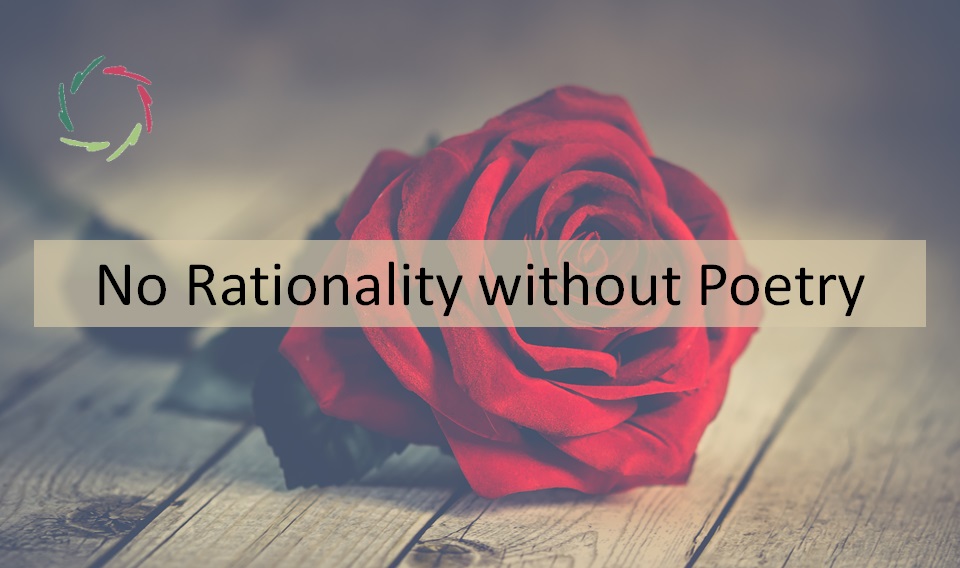
Rationality without poetry (‘depth’) is meaningless. Moreover: it’s not even rational. Thus, better call it ‘rationality’ (between brackets).
[see: ‘AURELIS USP: ‘100% Rationality, 100% Depth’]
Rationality is not only about concepts
Of course, conceptual thinking is of huge importance. No doubt. However, through correct conceptual thinking, one can arrive at its own limits:
- 100% conceptual thinking – apart from mathematics, arguably – is not humanly possible. [see: ‘About Concepts’]
- There is a realm of reality that cannot be fully conceptually grasped. [see: ‘About ‘Subconceptual’]
Rationality is – by definition – about taking into account reality as a whole. Thus, the borders of conceptuality are not the borders of rationality.
Think ‘poetry’ (in general, not only poems). Rationality is also about this.
Do you think poetry exists?
Well then: poetry is precisely beyond conceptuality. This is even why it exists.
Thus:
One should not equivocate ‘rationality’ with ‘getting rid of poetry’.
Half a rationality is no rationality at all.
‘Getting rid of poetry’ is only what it directly means: ‘getting rid of’. I hope, dear reader, that you don’t abuse rationality for such a meager endeavor.
Nevertheless, I do see it being abused this way
even by people who are otherwise rational.
This abuse is plainly not rational. The result is irrationality. Because this may nevertheless seem so close to rationality, let’s put the term ‘rationality’ between brackets to denote a lack of poetry inside:
Rationality MINUS poetry IS ‘rationality’.
Unfortunately, ‘rationality’ is a huge source of dividedness, worldwide.
People who value poetry and see ‘rationality’ being used as an instrument for abusing the same, may turn away from rationality (without brackets) altogether.
Simply put, they:
- equivocate rationality with ‘rationality’
- see the abuse of poetry through ‘rationality’
- turn away from rationality.
How pitiful is this?
And with huge consequences…
Specifically, I see as one of the most appalling consequences: many people (+/- 6 billion, more precisely) are stuck between one’s own deeply felt – and valuable – religious feelings and the necessity to believe in some Santa Claus stuff.
Because ‘rationality’ cannot manage depth, eventually depth has mainly irrational outlets…
It’s even worse if ‘rational’ people point their finger to depth as source of irrationality.
The source of course is multi-faceted, including ‘rationality’.
Intercultural divides. Intra-cultural divides.
What a waste!
Related Posts
Beyond Vagueness: Flexible Understanding
As seen in >Vagueness of Mind<, vagueness can hold depth, nuance, even a kind of sacred richness. But after standing in the mist for a while, a question begins to arise: What now? Must we live forever in not-knowing? Not necessarily. There is a way forward toward a kind of understanding that stays open, alive, Read the full article…
From Instincts to Insights
Instincts are the raw, primal energies that have guided life for millennia. In humans, however, they transcend mere survival to become catalysts for creativity and connection. This transformation, from reaction to realization, reflects our capacity to integrate instincts with awareness, shaping them into sources of profound meaning and growth. This blog explores how instincts, when Read the full article…
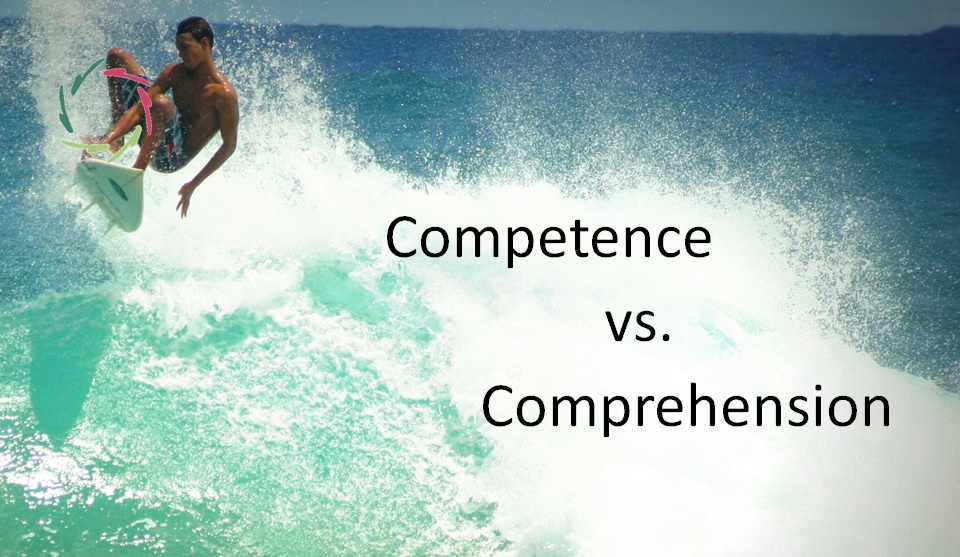
Competence vs. Comprehension
We don’t usually make the difference between competence and comprehension in anything that we regard as under conscious control. That may be wrong in many cases and, at present, increasingly dangerous. Competence, comprehension Competence is about what an agent can do. Comprehension is about the understanding of this agent concerning his own doing. To what Read the full article…